
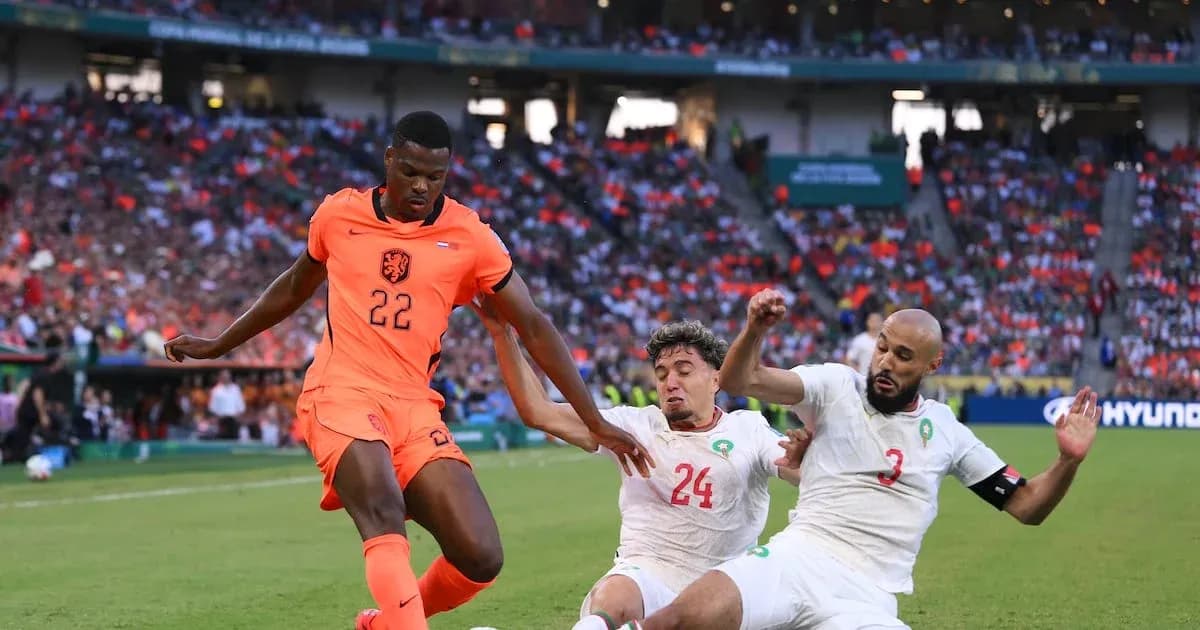
Morocco Triumphs Over Netherlands in World Cup Penalty Shootout
Morocco’s players chased Ismael Saibari in wild, disbelieving circles, then swallowed him in a heap of bodies and noise. Somewhere at the bottom of it all, the man who had taken the final kick disappeared under green shirts and flying limbs. Morocco had done it again. Another European heavyweight pushed aside. Another World Cup run alive and dangerous.
On the other side of the night stood Cody Gakpo, alone for a moment in the centre circle, eyes wet, finger raised to the sky.
Gakpo’s goal, and a deeper grief
When Gakpo slammed the ball in on 72 minutes, the Dutch bench emptied. This wasn’t a routine celebration; it was a rush of orange in solidarity. The forward had chosen to play despite the announcement that he and his partner had lost their unborn son. His team-mates knew. They ran to him not just because he had scored, but because he had chosen to stand there at all.
He turned back toward halfway, pointing upwards, Denzel Dumfries wrapping an arm around him as the emotion finally broke through. In another version of this story, that is the winning goal, the neat headline about football’s power to heal writes itself, and the night ends in a consoling kind of symmetry.
Football rarely agrees to that kind of script. It has its own sense of timing, and it can be vicious.
Koeman blinks, Morocco take the ball
Ronald Koeman had already made the first big call of the tie. The Netherlands arrived with the best scoring record of the group phase: seven past Sweden and Japan, three more against Tunisia. No one had found the net more often. Yet when the stakes rose, he did not trust that attack.
Out went the usual 4-3-3. Out went Tijjani Reijnders. In came a back five, a safety-first structure designed to lock the game down and squeeze space for Morocco’s creators. The message was clear: keep it tight, live with less of the ball, play the percentages.
The cost was immediate. The predicted end-to-end contest never materialised. Morocco took the ball and kept it, finishing with 70% of possession, while the Netherlands retreated into themselves. For long stretches, they barely laid a glove.
Bart Verbruggen had to be sharp early, denying Neil El Aynaoui and Achraf Hakimi in quick succession with athletic stops. Morocco, though, never quite found their usual fluency against the orange roadblock in front of them. Hakimi probed with clever underlapping runs, only to be met by a crunching, last-ditch tackle from Micky van de Ven on one such surge.
At the other end, the Dutch offered next to nothing until just before half-time, when Van de Ven stepped forward and thundered a long-range effort that Yassine Bounou tipped over. It was a warning of what his left foot can do, but also a reminder of how little Koeman’s plan was producing.
He would later defend it all. Unrepentant, he argued Morocco were a different level of opponent to those they had already dismantled. For a while, the scoreline backed him.
A spiky tie, an old ghost in the stands
The football simmered rather than flowed. This was a spiky, fractious contest layered with history and shared ties between the countries. Every 50-50 seemed to leave someone on the turf. Jan Paul van Hecke, in particular, found himself in the firing line, suffering three heavy collisions before half-time, the last leaving his head bloodied.
In the stands, the mood was no softer. Local fans gleefully reminded the Netherlands of the date: 12 years to the day since their controversial last-16 win over Mexico, sealed by a late penalty after Arjen Robben’s infamous tumble. Dutch touches were booed, Morocco’s every interception cheered. The atmosphere crackled, even when the football did not.
Morocco emerged from the interval with more purpose. Hakimi led the charge, angles and runs sharpening, tempo rising. The Netherlands, pinned back, had no real control. They clung on and waited for a moment, any moment, to turn.
It came from a water break.
Hydration break, hammer blow
Halfway through the second period, play stopped for one of Fifa’s hydration breaks. A small pause, a sip of water, a tactical tweak. It was always likely one of these interruptions would tilt a knockout tie. This one did.
Koeman used it to roll on Wout Weghorst for the ineffective Brian Brobbey. Within seconds of the restart, Verbruggen launched a clearance, Weghorst rose and flicked it on, and suddenly the Dutch were running in behind. Crysencio Summerville darted through, hooked the ball across as he was challenged, and there was Gakpo.
One touch, one finish, one outpouring.
For a few minutes, it felt like 2010 again, the Netherlands thriving on a kind of rope-a-dope, absorbing punishment and landing the punch that mattered. Morocco had been the better side, but the scoreboard favoured Koeman. He was close to being able to claim vindication, close to turning that conservative plan into a manager’s masterstroke.
The game, though, still had time to twist.
Diop’s late intervention
As the clock ticked into added time, Morocco pushed once more. Substitutes chased lost causes, crosses flew in, the Dutch tried to drag the game over the line. Then Chemsdine Talbi found a yard.
He checked on to his right, looked up, and shaped a superb cross to the far post. Issa Diop rose above everyone, meeting it with a thumping header that ripped into the net. Morocco had the equaliser they deserved. Dutch faces fell, shoulders sagged. Gakpo’s night of private grief and public courage would not bring victory.
Extra time came and went in a blur of tired legs and tight nerves. Verbruggen produced one outstanding save from Soufiane Rahimi, stretching to keep the tie alive, but chances were scarce. The game had been tense; now it was simply fearful. No one wanted to be the one who made the mistake.
Penalties would decide it.
Penalties, and a sliding-doors moment
Both sides faltered from the spot. The pressure sat on every run-up, every breath. Then came the incident Koeman would later call a sliding-doors moment.
Verbruggen read Rahimi’s effort, reached it, and seemed to have made the save. The ball, though, spun awkwardly, kissed his trailing heel and trickled over the line. A fraction of spin, a cruel deflection, a nation’s hopes jolted.
Quinten Timber then dragged his kick horribly wide. Hakimi rattled a post. The shootout lurched, teetered, threatened to turn either way. Eventually, Bounou and Saibari stood as the heroes, Morocco emerging 3-2 winners from 12 yards.
The Dutch, who had come to this World Cup talking about progress and evolution, walked away with regret and questions about their own ambition. Morocco walked on, Canada next in their sights, carrying not just their own hopes but those of a continent suddenly sensing that Europe’s grip on this tournament has loosened.





