Michael O’Neill's Decision: A Boost for Northern Ireland's Euro 2028 Hopes
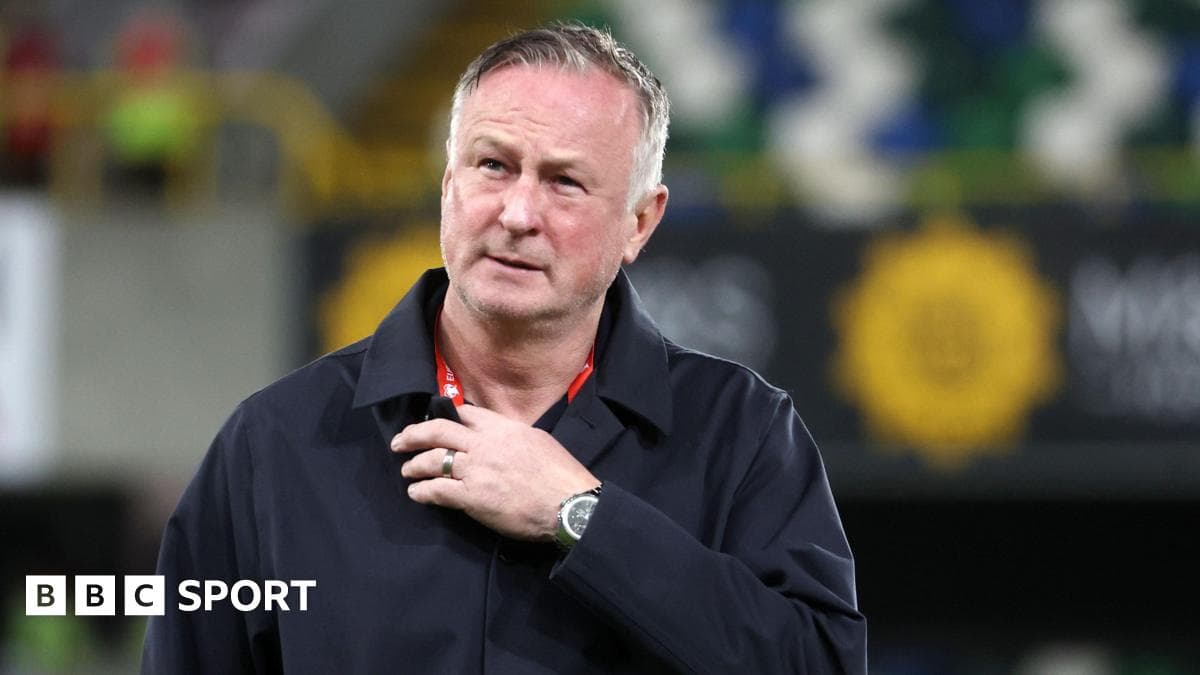
The Irish Football Association did not need a press release to measure the mood. Michael O’Neill’s decision to turn his back on a longer-term deal with Blackburn Rovers and stay with Northern Ireland was met with something far more telling than a statement: relief. Real, tangible relief.
Blackburn wanted him. Of course they did. The 56-year-old had walked into Ewood Park on an interim basis and dragged a drifting Championship side away from the relegation trapdoor. From “lost cause” territory, as Stephen Craigan put it, to safety. That kind of rescue job does not go unnoticed in club boardrooms.
But O’Neill has chosen the international touchline again. Chosen the longer road.
Euro 2028 in sight
The logic is clear. Euro 2028 will be staged across Great Britain and the Republic of Ireland, and Northern Ireland do not want to be bystanders at a party in their own neighbourhood. O’Neill has already taken them to one major finals – Euro 2016 in France, a campaign that still glows in the national memory – and the target now is to do it again with a very different kind of squad.
This time, it is about youth. Conor Bradley, Trai Hume, Dan Ballard, Shea Charles: a generation that has injected pace, aggression and optimism into Windsor Park. They are raw, still learning the rhythms of international football, but they have changed the feel around the team.
“I’m delighted he’s staying. I think the progress of the young group over the past two or three years has been a joy to watch,” said Craigan, the 54-cap former defender and now regular analyst on Northern Ireland duty.
He knows what a managerial change at this stage might have done.
“At this early stage of their development in international football, a change of manager may just have upset them a little bit with regards to their rhythm and their fluency and any cohesion they have built up over the last couple of years.”
The decision lands at a crucial moment. Northern Ireland face Guinea in Cadiz and France in Lille in early June, then a Nations League campaign in the autumn against Georgia, Hungary and Ukraine. Those are not just fixtures on a calendar; they are building blocks for a squad still accumulating caps and scars.
Belief, trust and a manager who has done it before
The bond between this group and their manager has become a theme in every camp.
“The one thing you always hear when the players are interviewed, they speak very highly of Michael, they like the way he works,” Craigan said. “He has clearly improved a lot of them individually, even with regards to just tactical shape. The players have taken things on board and have made great strides.”
That matters. Young players need certainty, not churn. They need to know the man in charge believes in them.
“They know there’s more to come from them. Michael knows there’s more to come from them, otherwise he wouldn’t have agreed to stay,” Craigan added. “So when the players know the manager has belief and trust in them and is excited by what they can give over the next few years, that will give them a huge shot of confidence.”
The short-term benefit is obvious. The summer friendlies and the Nations League now sit under a stable structure rather than an interim stop-gap. The longer-term picture is sharper still: Euro qualification is not a vague dream pinned to a distant date. It is the next step.
“2028 was always the target for this group of players,” Craigan said. Inside that plan, promotion to Nations League B, with the bonus of a World Cup play-off route, has already been banked. Experience has been the currency; caps the measurement. Now the expectation rises.
“The next step is going to be qualifying for a major tournament and I just think having Michael there beside them, having done that before, will give the players plenty of hope.”
A manager in demand – and a contract question
O’Neill’s stock has risen again after Blackburn. That reality hangs over the IFA’s celebrations. If one club came calling and were impressed by his impact, others will have taken note.
“There is no doubt he will have turned heads, making such an impact in what almost looked like a lost cause,” Craigan said.
That leads to an awkward but unavoidable question: how long can Northern Ireland rely on loyalty alone?
“Unless the IFA extend his contract there clearly is the potential of another club coming in. They will have a release clause of a certain amount of money. That’s always the case with any manager’s contract, whether it be club or country.”
Craigan’s view is blunt. If the association want to protect their project, they must act.
“Michael has to think about putting down some roots and saying, ‘I’m going to be an international manager, that’s it’, and the IFA have to say, ‘we want you to stay here for another three years beyond your current two years you have left on your contract, extend it’.”
The terms, he argues, should be clear and firm.
“If they did look to extend his contract, which I would be more than happy for them to do, it probably has to be more stringent as regards club football. There would be no more loans involved as regards helping clubs out. It would either have to be a clean break or it’s not. I think that’s something the IFA should be looking at from that perspective.”
In other words: no more half-measures. If Northern Ireland are building towards 2028, they cannot afford to keep wondering if the architect will be lured away mid-construction.
“It has to be weighed heavily towards the IFA to try and protect them for every eventuality and I’m sure if Michael gets the terms he would like I don’t see any reason why he wouldn’t sign it.”
From “untidy” uncertainty to a clear summer
The timing of O’Neill’s call matters almost as much as the decision itself. Players know when a situation is in flux. They sense when a manager is halfway out the door.
“It would have been uncomfortable for them coming into these games,” Craigan admitted. “It would have been easy for them not to arrive for international football in June if Michael hadn’t been there and there had been an interim manager in charge. It would have looked a little bit untidy but the fact that he has made this decision gives the players a major boost.”
Instead of walking into camp with questions swirling, Bradley, Hume, Ballard, Charles and the rest will report knowing the man who picked them, backed them and shaped them will be on the training pitch again. That clarity strips away excuses.
Northern Ireland still have obvious work to do. They must sharpen the top end of the pitch, add creativity, find a consistent goalscorer. That often comes as players mature, as forwards learn the dark arts of international football. The platform, though, looks solid.
“They look like a really strong unit and I think having Michael leading them will give them great confidence, especially coming into two international games in the summer,” Craigan said.
The Euro 2016 story gave Northern Ireland a modern reference point of what is possible. O’Neill’s decision to stay ensures the next chapter will be written by the same hand. Whether it ends on another major stage, under the lights of Euro 2028, now depends on how quickly this young core can turn potential into ruthless, qualifying points.
The manager has made his choice. The challenge now passes back to his players.