Los Angeles FC II Edges St. Louis City II in Intense Cup Clash
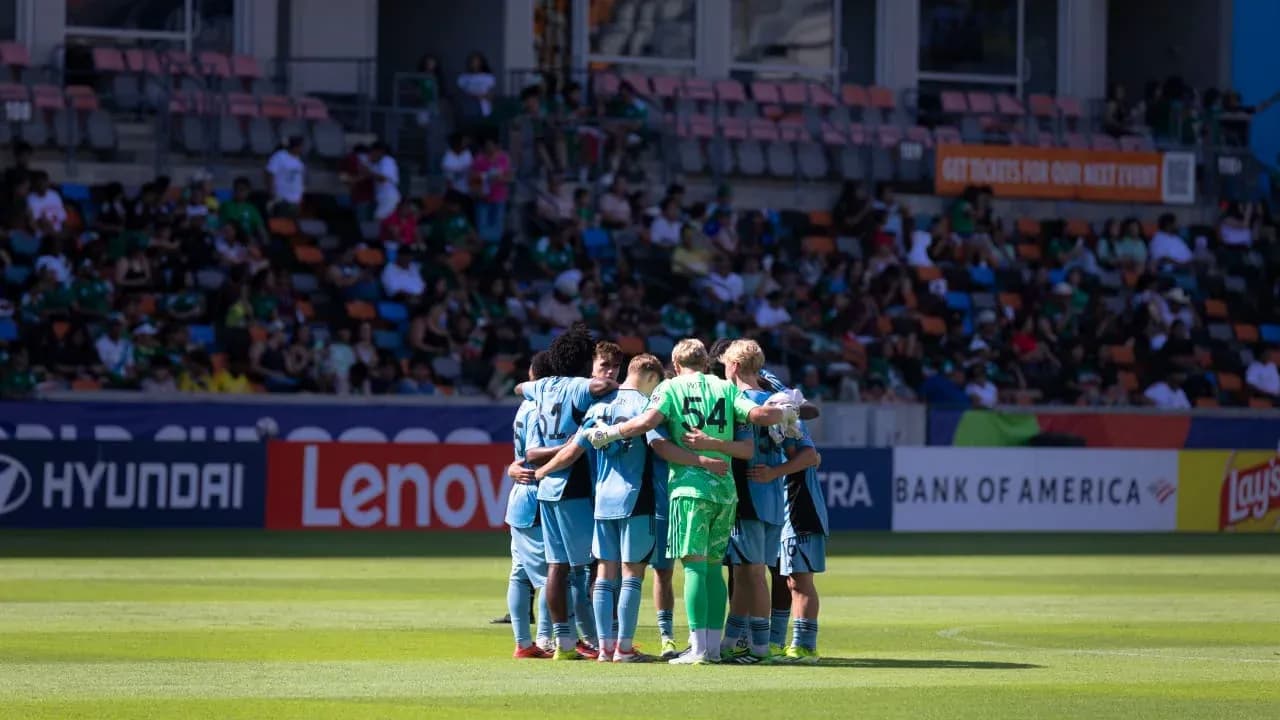
Under the lights of Titan Stadium, Los Angeles FC II and St. Louis City II pushed each other to the edge and beyond, needing 120 minutes and a penalty shootout to separate two sides whose seasons have been defined by very different kinds of volatility. Following this result, the Pacific Division leaders edged through 7-6 on penalties after a 1-1 draw in regulation, a scoreline that felt like a compromise between LA’s attacking chaos and St. Louis’s more balanced, if recently faltering, structure.
Heading into this game, Los Angeles FC II sat 1st in the Pacific Division and 4th in the Eastern Conference table with 21 points from 12 matches, built on a stark split between home dominance and away fragility. At home they had won 5 of 6, scoring 11 and conceding 7; on their travels they had taken just 2 wins from 6, with 11 goals for and 16 against. Overall, their league campaign had produced 22 goals for and 23 against, a goal difference of -1 that underlined how thin the margins have been despite their lofty rank.
St. Louis City II arrived as a study in contrasts: 3rd in the Frontier Division and 3rd in the Eastern Conference with 24 points from 12, a stronger overall record but on a worrying slide. Their form line of “LLLLW” masked an earlier eight-game winning streak, and overall they had scored 23 and conceded 17 in total league play, for a goal difference of 6. At home they had been ruthless (5 wins from 6, 14 goals for and 9 against), while away they were more measured but still positive: 3 wins and 3 defeats, 9 goals scored and 8 conceded.
I. The Big Picture: Styles Colliding in a Cup Frame
Although the league data is framed around group-stage play, this tie carried the tension of a knockout. LAFC II’s seasonal DNA is clear in their numbers: in total this campaign they have averaged 2.0 goals for per match both at home and away, but have also conceded 2.1 per game overall, with a particularly fragile away average of 3.0 goals against. St. Louis, by contrast, have combined a solid attack with a more reliable defensive platform: in total this campaign they have averaged 2.1 goals for and 1.6 against, with a notably tighter away defence at 1.7 goals conceded on their travels.
That tension — LA’s willingness to trade punches against St. Louis’s more structured approach — played out across 120 minutes that finished level at 1-1, forcing the psychological crucible of a shootout. There, the home side’s attacking confidence translated into composure from the spot, converting 7 penalties to St. Louis’s 6.
II. Tactical Voids and Discipline: Managing the Edges
No formal list of absentees was recorded, and neither side’s lineup data includes formations, but the personnel sheets still tell a story. Los Angeles FC II leaned on a core that has been forged in high-scoring contests. The starting group of E. Scally, K. Nielsen, C. Diaz, G. Whitchurch, E. Diaz, S. Nava, J. Terry, E. Rodriguez, M. Evans, T. Mihalic and C. Kosakoff suggests a side comfortable rotating young, energetic profiles, reinforced by a deep bench of nine substitutes including S. Liu, M. Aiyenero and J. Santiago.
St. Louis City II travelled lighter, with only five substitutes available behind a starting XI of L. McPartlin, S. Paris, J. Wagoner, C. Pearson, A. De Gannes, P. McDonald, A. Gbadehan, R. Lynch, E. Carlock, L. Cornelius and P. Ault. Over 120 minutes, that relative lack of depth was always likely to bite, particularly against an LA side used to playing at a high tempo.
Discipline has been a shared fault line for both clubs all season. Heading into this game, LAFC II’s yellow-card profile showed a pronounced spike immediately after half-time: 30.43% of their cautions arriving between 46-60 minutes, with further clusters at 0-15, 31-45 and 76-90 (each at 17.39%). Their red-card story is even starker: in total this campaign they have collected two reds, split evenly between 46-60 and 61-75, each window accounting for 50.00%. This is a side that often plays on the edge as the game opens up after the break.
St. Louis’s yellow cards are more evenly spread but still reveal a pattern of rising aggression as matches wear on: 22.22% of their cautions fall between 31-45 minutes, 25.93% between 46-60 and another 25.93% between 61-75. Their three red cards in total are distributed one apiece across 46-60, 61-75 and 76-90, each time band representing 33.33%. For a 120-minute contest, that meant the middle third of the match was always likely to be combustible — and it was in that zone that this game’s rhythm became fractured and tense.
III. Key Matchups: Hunter vs Shield, Engine vs Engine
Without individual scoring and assist data, the “Hunter vs Shield” battle has to be read through team tendencies. LAFC II’s attack, averaging 2.0 goals per game in total this campaign, ran into a St. Louis defence that, on their travels, has conceded just 1.7 per match. That duel produced a stalemate in open play: Los Angeles found a way through once, but St. Louis’s structure largely held, consistent with a side that has already kept 3 clean sheets overall (2 at home, 1 away).
Conversely, St. Louis’s own attacking edge — 2.7 goals per game at home, 1.5 on their travels — confronted an LA defence that has been porous in league action, especially away, but sturdier at home where they concede 1.2 per match. The 1-1 scoreline fits that compromise: LA’s defensive numbers at home suggest they rarely get completely overrun, and St. Louis’s away attack, while efficient, is less explosive than at home.
In midfield, the “Engine Room” was defined by volume and rotation rather than star power. LA’s cluster of central profiles — players such as S. Nava, J. Terry and M. Evans — had the advantage of a deeper bench, with options like D. Guerra and S. Kaplan available to refresh legs and adjust the press. St. Louis’s central unit, built around figures like P. McDonald and A. Gbadehan, had to manage their energy more carefully across 120 minutes, particularly as the match stretched into extra time.
IV. Statistical Prognosis: Margins, xG Shadows and a Penalty Denouement
Without explicit xG values, the expected-goals story has to be inferred from season-long patterns. LAFC II’s matches in total this campaign average 4.1 goals (2.0 for, 2.1 against), while St. Louis’s average 3.7 (2.1 for, 1.6 against). On paper, that projects a contest tilted slightly toward attacking output, perhaps in the 2-2 region. Instead, the sides produced just 1-1 across 120 minutes, suggesting that both defences performed above their usual baseline or that finishing lagged behind chance creation.
Penalty narratives also matter. St. Louis came into the tie with a perfect record from the spot: in total this campaign they had taken 1 penalty and scored it, a 100.00% conversion rate. LAFC II, by contrast, had not been awarded a penalty in league play, with 0 taken and 0 scored. Yet when the season’s first extended shootout arrived, it was the home side who carried the moment, converting 7 times to St. Louis’s 6.
Following this result, the broader tactical lesson is clear. Los Angeles FC II’s high-event, high-risk profile can be tempered in knockout environments, especially at home where their defensive numbers are more controlled and their attacking verve is supported by depth and familiarity. St. Louis City II, for all their superior overall goal difference and earlier winning streak, were drawn into a slower, more attritional game than their season averages suggest, and in that narrower margin, their recent form line of “LLLLW” hinted at a fragility that eventually surfaced from the spot.
In a season where both sides have lived on the knife-edge of fine margins, Titan Stadium simply distilled their identities into 120 minutes and a penalty lottery — and it was the Pacific Division leaders, battle-hardened by chaos, who found just enough composure to survive.