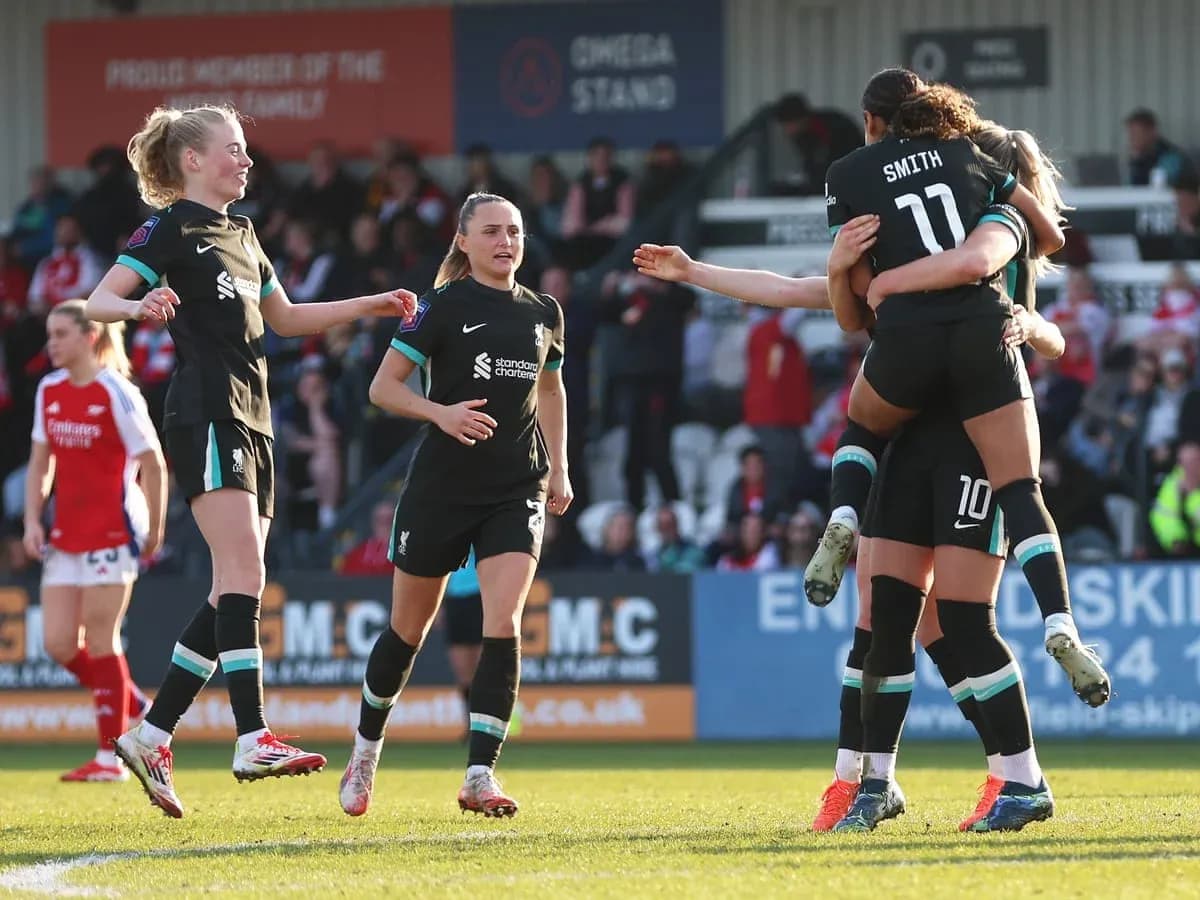
Liverpool W vs Arsenal W: FA WSL Clash of Ambitions
Anfield hosts a meeting of contrasting ambitions on 16 May 2026 as Liverpool W welcome title-chasing Arsenal W in the FA WSL. The stakes are clear: Liverpool are trying to scramble away from the bottom end of the table, while Arsenal arrive as the league’s most explosive attack, locked in a battle at the top and already assured of Champions League qualification.
In the league, the gap is stark. Liverpool sit 11th with 17 points from 21 games and a goal difference of -11, while Arsenal are 2nd on 48 points from 21 matches with a formidable +37 goal difference. It is a classic underdog-at-home scenario, but one layered with recent cup drama and a clear stylistic clash.
Form and momentum
Across all phases, Liverpool’s season has been a grind. Their statistical form string reads “LLLLLLDDLLDDWLWLWDWLL”, underlining long losing streaks and only brief upticks. In the league, they have 4 wins, 5 draws and 12 defeats from 21 matches, scoring 20 and conceding 31. At home they are more competitive: 3 wins, 3 draws, 4 losses, with 12 goals for and 12 against. Anfield (and previously St Helens/Prenton Park) has at least offered balance; away from home they have lost 8 of 11.
Arsenal, by contrast, come in as one of Europe’s form sides. Their all-phases record shows 13 wins, 6 draws and just 1 defeat in 20 league fixtures captured in the stats block, with a form string “WWDDLWWDDWWDWWWWWWDW”. They average 2.5 goals scored per game and concede only 0.7. Away from home they have 6 wins, 3 draws and 1 loss in 10, scoring 22 and conceding 7. The numbers point to a side that travels with authority and rarely gets opened up.
Tactical landscape
Liverpool’s season data suggests a team that has been searching for the right balance. They have used a 4-1-4-1 most frequently (8 times), with 4-2-3-1 and 5-4-1 also in the mix. That flexibility hints at reactive game plans tailored to opponents. Against a high-powered Arsenal attack, a 4-1-4-1 or 5-4-1 block feels likely: a compact mid-block, a single pivot screening the back four or five, and quick counters through their more dynamic forwards.
They score 1.2 goals per game at home and concede 1.2, which is respectable for a side in 11th. However, they have failed to score in 3 of 10 home matches and 9 league games overall, so creating clear chances against elite opposition has been a recurring problem.
Arsenal’s tactical identity is much clearer. The 4-2-3-1 is their base (9 lineups), with occasional shifts to 4-4-2 and 4-3-3. They dominate territory and possession, pin teams back with their wide players, and rely on rotations between the central striker, No.10 and wingers to overload the half-spaces. Their average of 2.7 goals per home game and 2.2 away reflects both volume of chances and quality of finishing.
Defensively, Arsenal are disciplined. Ten clean sheets across all phases and only 13 goals conceded in 20 league games highlight a structure that rarely loses control. They have failed to score just three times all season, so shutting them out requires a near-perfect defensive performance.
Key players and match-ups
For Liverpool, Beata Olsson is a central attacking reference. With 4 league goals and 2 assists from 15 appearances (12 starts) and a rating of 6.83, she is their most productive scorer in the provided data. Her 11 shots, 6 on target, and ability to link play (102 passes, 7 key passes) make her vital when Liverpool transition from deep. She will likely operate as the spearhead in a lone-striker setup, tasked with holding the ball, drawing fouls, and bringing midfield runners into play.
Mia Enderby offers energy and direct running from midfield. With 3 goals and 2 assists in 21 appearances (16 starts) and 21 dribble attempts (11 successful), she is one of Liverpool’s main ball carriers. Her duel numbers (88 total, 41 won) show a willingness to compete physically, which will be crucial against Arsenal’s double pivot.
Arsenal’s attacking depth is their great advantage. Alessia Russo leads their scoring chart here with 6 goals and 2 assists in 20 appearances, backed by 32 shots (22 on target) and a strong overall rating of 7.45. She is both finisher and link player, comfortable dropping off the line to combine and then attacking the box. Her duel volume (128, 63 won) underlines how often she is involved in the thick of play.
Stina Blackstenius adds a different profile. With 5 goals and 2 assists from 19 appearances but only 7 starts, she has been a high-impact option, particularly off the bench. Her 26 shots, 14 on target, and 6.95 rating suggest she can change a game’s tempo late on if Liverpool tire.
In midfield, Olivia Smith has emerged as a creative and energetic hub. Four goals, two assists, 19 key passes and a 7.31 rating from 18 appearances point to a player who can both break lines and arrive in scoring positions. Her 93 duels (51 won) and 19 fouls drawn show she is also adept at winning territory and set-pieces.
Chloe Kelly, with 4 goals and 1 assist in 15 appearances, adds width and one‑v‑one threat. Her high card count (4 yellows) also hints at an aggressive edge in pressing and duels on the flank.
From the spot, both teams have been reliable in the limited data we have. Liverpool have scored 2 of 2 penalties, Arsenal 1 of 1, with no misses recorded at team level. No individual in the top-scorer list has scored or missed a penalty in the league data provided.
Discipline and game management
Liverpool’s yellow card distribution is heavily weighted towards the final half-hour and stoppage time, with 61-75 minutes and 91-105 minutes being their most card-prone ranges. They have also received 2 red cards across all phases. That suggests pressure and fatigue can lead to late fouls and potential numerical disadvantages, a major risk against a side that often finishes strongly.
Arsenal’s yellow cards also cluster late (61-90 and stoppage time), but they have no red cards recorded. Their ability to maintain control without major disciplinary lapses has been part of their consistency.
Head-to-head: recent history
The last five competitive meetings (league and FA Women’s Cup) show Arsenal with a clear edge:
- 06 December 2025, Emirates Stadium (FA WSL): Arsenal W 2-1 Liverpool W – Arsenal win.
- 22 March 2025, Emirates Stadium (FA WSL): Arsenal W 4-0 Liverpool W – Arsenal win.
- 09 March 2025, Mangata Pay UK Stadium (FA Women’s Cup quarter-finals): Arsenal W 0-1 Liverpool W – Liverpool win.
- 15 December 2024, St Helens Stadium (FA WSL): Liverpool W 0-1 Arsenal W – Arsenal win.
- 28 January 2024, Prenton Park (FA WSL): Liverpool W 0-2 Arsenal W – Arsenal win.
Across these five, Arsenal have 4 wins, Liverpool 1, and there are 0 draws. Notably, Liverpool’s lone success came in a 0-1 away win in a high-stakes FA Women’s Cup quarter-final in March 2025, proof they can set up effectively to frustrate this opponent in a knockout-style scenario.
The verdict
All indicators point towards Arsenal as strong favourites: superior league position, vastly better goal difference, a prolific attack, and a recent head-to-head record tilted 4-1 in their favour. Their away record is robust, and their defensive numbers suggest they can both control territory and limit chances.
Liverpool’s best hope lies in the home factor and their ability to reproduce the compact, resilient performance that delivered that 0-1 cup win in March 2025. A disciplined low block, aggressive transitions through Enderby, and clinical finishing from Olsson will be essential, along with avoiding the late-game disciplinary issues that have plagued them.
Arsenal, with Russo, Blackstenius, Smith and Kelly all offering different attacking threats, simply have more ways to win the game. If they impose their 4-2-3-1 structure and move the ball quickly enough to pull Liverpool’s midfield out of shape, the pressure should eventually tell.
Expect Liverpool to compete and try to make it a tight, attritional contest at Anfield, but the balance of evidence suggests Arsenal have the quality and depth to leave with another important away victory in their title push.