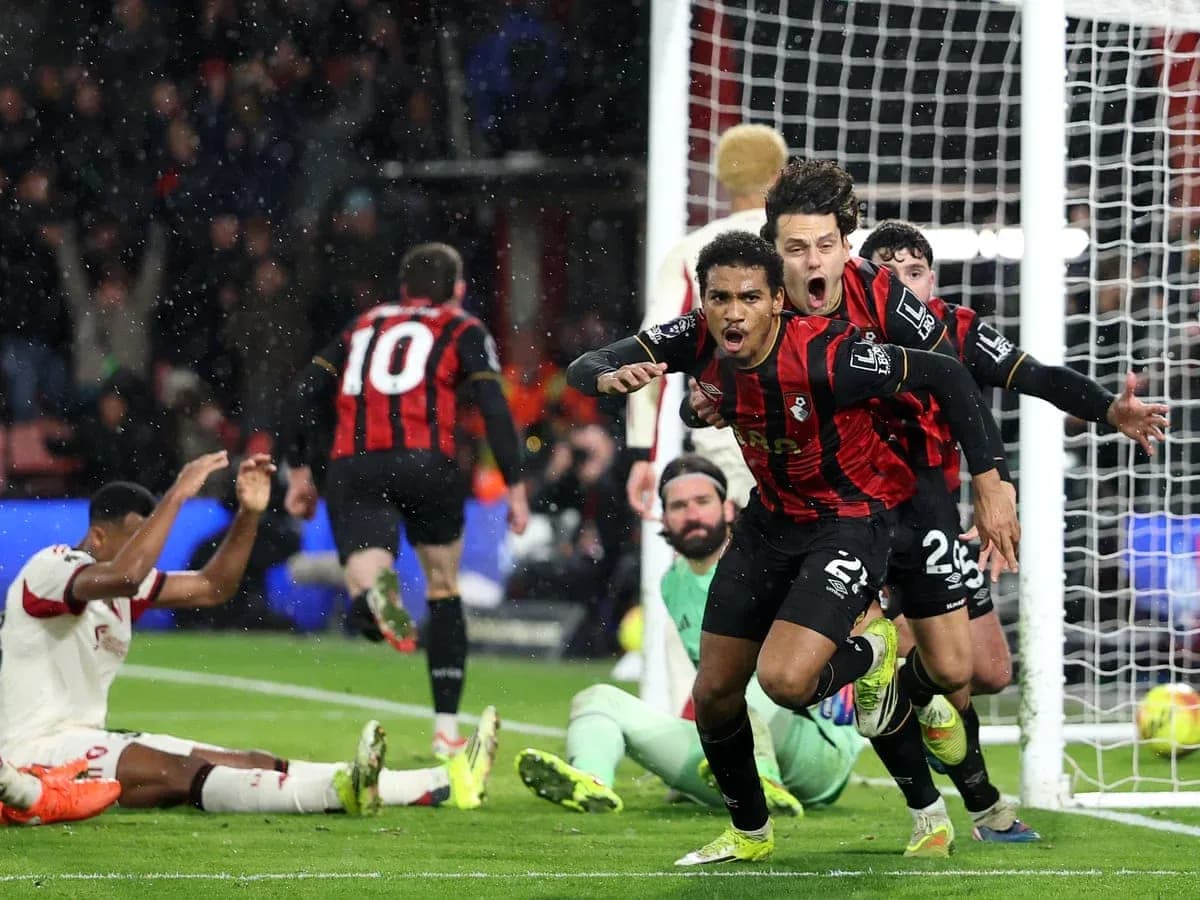
Liverpool and Fulham Share Points in Tactical Stalemate
Anfield under a grey September sky, a 0-0 that felt less like a stalemate and more like a tactical thesis. Liverpool and Fulham walked off with a point apiece, but the story of this fixture is written in structures, absences and evolving identities rather than in goals.
I. The Big Picture – Two 4-2-3-1s, Two Very Different Realities
Heading into this game, Liverpool sat 7th in the Premier League with 6 points from 4 matches. Their overall record of 1 win, 3 draws and no defeats, with 6 goals scored and 4 conceded, painted a picture of a side still settling under Andoni Iraola but already hard to beat. At Anfield, though, they had been curiously restrained: 2 home games, 2 draws, 2 goals for and 2 against, an exact equilibrium that this 0-0 did nothing to disturb.
Fulham arrived in a very different mood. In 18th place with just 1 point from 4 matches, their overall goal difference of -3 was the product of 4 goals scored and 7 conceded. On their travels, they had taken a single point, scoring 0 and conceding 1 away from home. This was a team trying to stabilise, to prove that Álvaro Arbeloa’s ideas could hold up in one of the league’s most hostile environments.
Both coaches set their sides out in a 4-2-3-1, but the shapes carried contrasting intentions. Liverpool’s version was expansive and technically rich: Alisson Becker behind a back four of K. Tsimikas, Virgil van Dijk, J. Jacquet and R. Araújo; a double pivot of D. Szoboszlai and R. Gravenberch; and a fluid band of three – B. Barcola, Florian Wirtz and Víctor Muñoz – orbiting around Alexander Isak as the lone forward.
Fulham mirrored the structure but not the ambition. B. Leno anchored a disciplined defensive line of A. Robinson, C. Bassey, D. Affengruber and T. Castagne. In front, S. Berge and S. Charles formed a tall, screening double pivot. The attacking trio of A. Iwobi, Joshua King and Oscar Bobb supported Gonzalo García, but their first responsibility was containment, not chaos.
II. Tactical Voids – Absences That Bent the Game’s Geometry
The team sheets were shaped as much by who was missing as by who played. Liverpool were without C. Bradley, F. Chiesa, H. Ekitike, J. Gomez and G. Leoni – all listed as missing this fixture with various injuries, from knee and back problems to an Achilles tendon issue. The absence of Chiesa and Ekitike stripped Iraola of two vertical threats who thrive on attacking space, nudging him further toward a possession-heavy, combination-based approach between the lines.
Without Gomez, the right side of Liverpool’s defence leaned heavily on the emerging partnership between Araújo and Jacquet, with van Dijk the calming constant. That spine, plus Alisson, underpinned a defensive record that had already seen Liverpool concede only 4 goals in total across 4 league matches and keep 2 clean sheets overall. This match added another layer of assurance to that platform.
Fulham’s main absentee, T. Cairney with a knee injury, mattered more in terms of control than structure. Without his tempo-setting presence, Arbeloa doubled down on physicality and work rate in midfield through Berge and Charles, accepting that he would have to live without a natural rhythm-setter in order to survive Anfield’s waves.
Disciplinary trends also framed the risk profiles. Liverpool’s season card pattern shows a notable 40.00% of their yellow cards arriving between 46-60 minutes, with 20.00% in the final 15 of normal time. Fulham, by contrast, save their aggression for the end: 60.00% of their yellows come between 76-90 minutes. That late-game spike hinted at a side often under siege, scrambling to hold on – a pattern that fit the narrative of this fixture, even if the referee’s notebook stayed relatively light.
III. Key Matchups – Hunter vs Shield, Engine Room vs Enforcer
The headline duel was clear: Alexander Isak, already on 3 league goals overall from 4 appearances, against a Fulham defence that had been porous at home but more disciplined away. Overall, Fulham had conceded 7 goals in 4 games, an average of 1.8 per match, but on their travels that average dropped to 0.5, with just 1 goal conceded in 2 away fixtures heading into Anfield.
Isak’s profile this season underlines his role as the spearhead: 10 shots overall, 6 on target, a 7.33 average rating, and the ability to both run in behind and combine with the line of three behind him. Yet Fulham’s central pairing of Bassey and Affengruber, screened by Berge and Charles, compressed the central lane ruthlessly. They accepted Liverpool’s territorial dominance but denied Isak the kind of clean, penalty-box touches that had fuelled his early-season scoring.
Behind him, the “engine room” duel was fought between Liverpool’s creators and Fulham’s enforcers. Szoboszlai and Gravenberch, with Wirtz floating ahead, tried to manipulate Fulham’s double pivot, pulling Berge and Charles into wide and vertical dilemmas. But Arbeloa’s block held, compact and narrow, forcing Liverpool into wider zones where Barcola and Víctor Muñoz probed but rarely broke the line decisively.
On the Fulham side, Joshua King represented both their brightest attacking spark and their most complete two-way midfielder. With 2 goals overall, 9 shots and 7 tackles this season, plus 2 successful blocks, he has been their reference point between midfield and attack. Here, his brief was double: track Liverpool’s interior midfielders without the ball and lead counters when the chance arose. He dropped into the half-spaces to help Oscar Bobb and Iwobi link transitions, but Liverpool’s rest defence – van Dijk stepping early, Jacquet covering depth, Araújo aggressive in duels – largely smothered those breaks.
IV. Statistical Prognosis – A Clean Sheet That Tells on Both
Following this result, Liverpool extended their unbeaten start to 4 matches, with an overall record of 1 win and 3 draws, 6 goals for and 4 against, leaving their total goal difference locked at +2. At home, they remain winless but unbeaten: 2 draws from 2, with 2 scored and 2 conceded. Their overall scoring rate of 1.5 goals per match and overall concession rate of 1.0 suggest a side that, over time, should win more than they draw – but the Anfield-specific pattern of control without cutting edge persists.
Fulham, meanwhile, left with something more valuable than a single point. Their overall record now stands at 0 wins, 1 draw and 3 defeats, 4 goals for and 7 against, confirming a total goal difference of -3. Yet on their travels, they have conceded just 1 goal in 2 matches and kept 1 clean sheet away from home. The contrast with their home defensive record – 6 conceded in 2 games – is stark, and hints at an identity: compact, reactive and more secure when they are the underdog.
Without penalty drama to tilt the narrative – Liverpool have taken 1 penalty overall this season and scored it, while Fulham are yet to win one – the match settled into a contest of structures and patience. Liverpool’s 4-2-3-1, which they have used in all 4 league games, again produced territorial dominance and shots from promising zones, but without the injured direct runners like Chiesa and Ekitike, the final thrust was missing.
Fulham’s 4-2-3-1, also their constant shape across 4 matches, proved it can scale up to elite opposition when the distances are right and the midfield works. Berge and Charles clogged the central channels, the back four held their line, and Leno did the rest.
The xG story, if we could see it, would likely lean Liverpool’s way – a home side with more possession, more entries and more half-chances. But the defensive solidity metrics matter just as much. Liverpool added another clean sheet to their season tally, underlining a platform that can sustain a top-seven push. Fulham, by chiselling out a 0-0 at Anfield, signalled that while their relegation-zone standing remains a warning, their away defensive structure is no soft touch.
In the end, this was less about what happened and more about what it suggested: Liverpool as a side one final pass away from turning draws into wins, Fulham as a team discovering that survival may begin with nights like this – backs to the Kop, lines tight, and a point wrestled from a stadium that rarely forgives.