
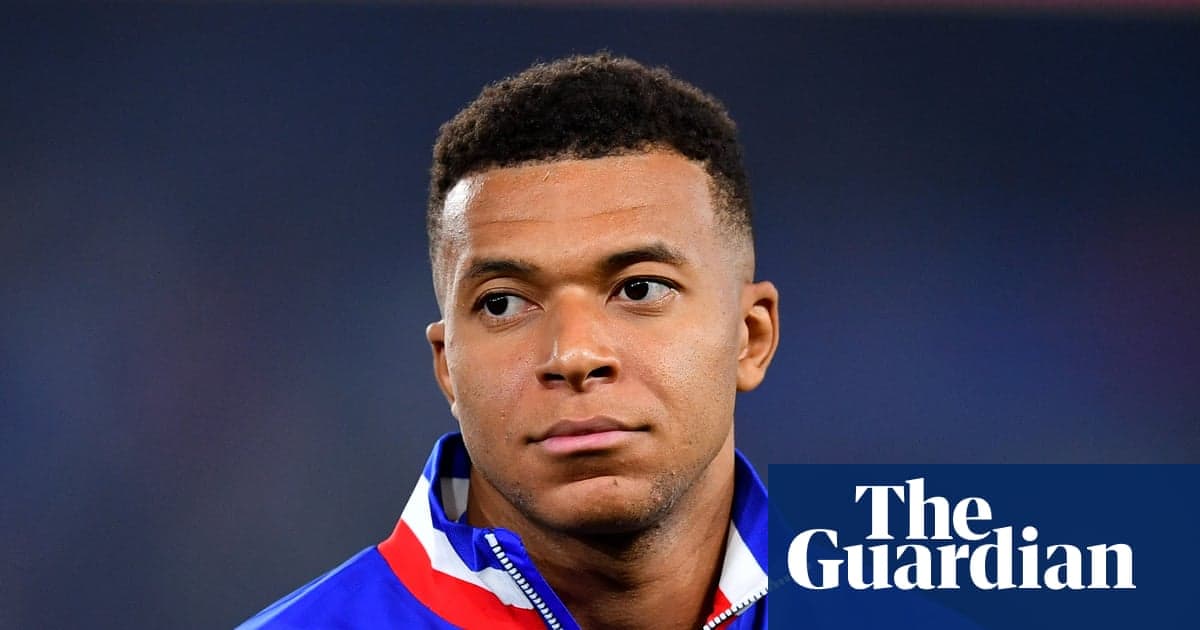
Kylian Mbappé Takes a Stand Against Marine Le Pen's National Rally
Kylian Mbappé has spent a career deciding games in an instant. Now France’s captain has stepped firmly into another arena, and this time the opponent is Marine Le Pen’s far-right National Rally.
The 27-year-old, born in 1998 in the Paris suburbs to a family with Algerian and Cameroonian roots, used an interview with Vanity Fair to voice his alarm at the prospect of the RN winning next year’s presidential election. It was a clear, unvarnished warning.
“I know what it means and what consequences it can have for my country when people like them come to power,” he said.
Those words landed with a thud in French politics. They also lit the fuse.
Bardella swings back
Jordan Bardella, 30, the sharp-suited president of the National Rally and Le Pen’s political heir apparent, did not let the remarks pass. He reached straight for football’s most painful pressure point: Mbappé’s club career.
Mbappé left Paris Saint-Germain in 2024 for Real Madrid, chasing the Champions League crown that had eluded him in Paris. PSG promptly won the trophy the following season without him.
“I know what happens when Kylian Mbappé leaves PSG: the club wins the Champions League! (And maybe soon a second time),” Bardella posted on social media, turning a sporting dig into a political jab.
The message was obvious: stick to football, leave politics to the politicians.
Le Pen joins the attack
Marine Le Pen, speaking on RTL radio, chose a similar line but wrapped it in a touch of irony. She claimed Mbappé’s opposition to her party was almost comforting.
She pointed to his move from PSG to Real Madrid, suggesting his own strategy for success had failed. If his choices on the pitch had not delivered what he wanted, why should voters follow his lead at the ballot box?
“Frankly I think football fans are free enough to know who to vote for without being influenced by Mbappé,” she said.
Inside the RN, the message hardened. Julien Odoul, an RN MP and party spokesperson, argued that the captain of France must embody the entire nation, including the millions who back the far right. In his words, Mbappé should not become a “political activist”.
The subtext was clear: wear the armband, sing the anthem, lift the trophies — but keep quiet on who governs the country.
A feud with history
This is not a new clash. Bardella and Mbappé have been circling each other for years.
During France’s snap parliamentary elections in 2024, Mbappé spoke out as the RN surged. From a player who has made a point of challenging stereotypes about the multi-ethnic suburbs where he grew up, the verdict was blunt: the RN’s gains were “catastrophic”.
Bardella fired back, accusing wealthy athletes of lecturing those “who can no longer make ends meet, who no longer feel safe”. It was a classic populist counterpunch: frame the footballer as part of a distant elite, detached from everyday struggles.
That accusation resurfaced in the Vanity Fair interview. Asked if he was too rich to talk about politics, Mbappé refused to retreat.
“Even as a footballer, you’re foremost a citizen. We’re not disconnected from the world … or from what’s happening in our country,” he said. “People sometimes think that because we have money, because we’re famous, these kinds of problems don’t affect us.” Footballers, he insisted, “have our say, like everyone”.
The RN’s rise in parliament in 2024 had jolted him and many in the dressing room.
“We’re citizens and we can’t just sit there saying all will be fine and go and play,” he said. “We have to fight this idea that a footballer should just be content to play and keep quiet.”
The weight of a jersey
Mbappé does not speak in a vacuum. He leads a national team that has long been used as a mirror for France’s identity battles.
He was born the year Zinedine Zidane and the 1998 World Cup winners were celebrated as “Black-Blanc-Beur” — Black-White-Arab — a multi-ethnic side mythologised by politicians as the answer to France’s divisions. That story, often oversimplified, still hangs over every generation that follows.
This current France team, with Mbappé as its face, is again hailed as a symbol of diversity and is widely tipped to win this summer’s World Cup. Every time he pulls on the blue shirt, he carries more than sporting expectation. He carries the argument over what, and who, France represents.
That is exactly why his words sting the RN. They know he is not just any player. He is a global icon whose image is beamed into French homes every week, a man whose celebrations and gestures are mimicked on playgrounds from Marseille to Lille.
A risky counter-attack
Politically, the RN’s response is calculated — and not without risk.
William Thay, from the thinktank Le Millénaire, told Reuters that Bardella’s decision to confront Mbappé head-on is shrewd. Mbappé’s popularity, Thay argued, has dipped since his departure from PSG, dented by a perception of arrogance and underwhelming performances at Real Madrid. Attacking him now may feel safer than taking on the beloved local hero he once was in Paris.
But there is a flip side. Thay warned that the RN could undercut its own strategy by going after one of France’s biggest sporting stars while leaving unaddressed the concerns of moderate voters who fear the party will deepen social fractures.
That is the real battle line. Not just between a forward and a politician, but between two competing visions of who gets to speak for France — and whose voice carries when the country heads to the polls.
Mbappé has made his choice. The question now is whether others in his world, players and fans alike, will follow him into the political spotlight or retreat back to the touchline.





