
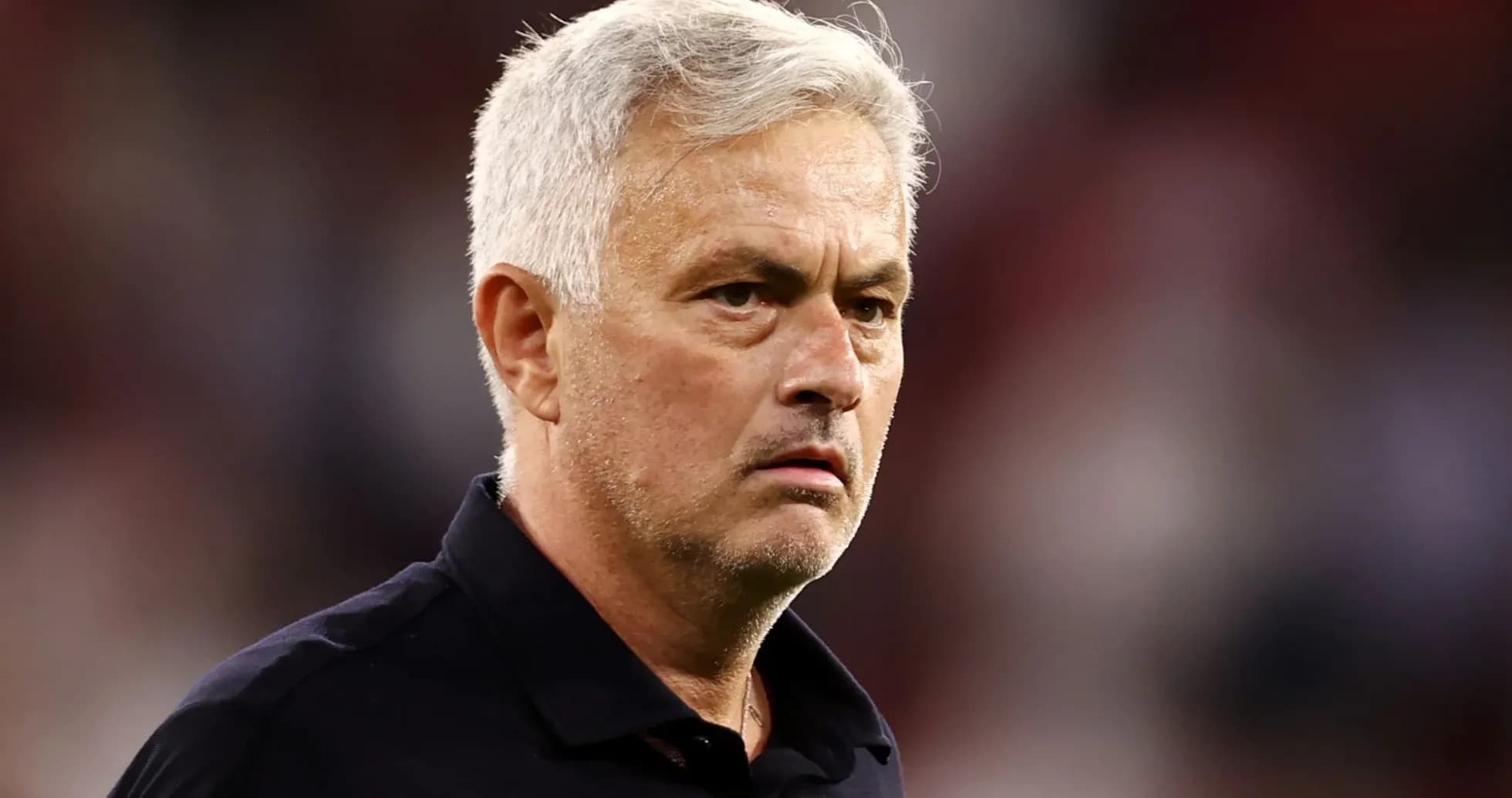
José Mourinho: Reflecting on the Europa League Final Heartbreak
José Mourinho has lived enough football nights to fill a lifetime. Champions League triumphs, domestic titles in four countries, touchline feuds that defined eras. Yet when he’s asked to choose one game to replay, one night he would drag back from the past and rewrite, his answer comes without hesitation.
“Roma - Sevilla, Europa League final. Without Anthony Taylor.”
The sting of Budapest has not faded.
The one that got away
Mourinho’s Roma side had already carved out a remarkable European story. He took the Giallorossi to back-to-back continental finals, delivering a trophy that changed the temperature of an entire city. In 2022, they beat Feyenoord to win the inaugural Europa Conference League, ending an 11-year wait for major silverware in the Italian capital and completing Mourinho’s unique UEFA treble: Champions League, UEFA Cup/Europa League and Conference League.
That night in Tirana felt like a coronation. Roma’s first European title, a fanbase intoxicated by the idea that their club finally had a coach who matched their own sense of drama and defiance. Mourinho, the serial winner, had found a city that worshipped him with a fervour he clearly still carries.
Which is why the pain of the following year cut so deep.
In the Europa League final against Sevilla, Roma pushed, fought and suffered. The game turned into exactly the kind of tense, combustible occasion in which Mourinho has so often thrived. This time, it ended in heartbreak. A penalty shootout defeat, his first ever loss in a European final, and a night dominated by his fury at the Premier League-based officiating team led by Anthony Taylor.
The images from that evening – Mourinho raging in the tunnel, the sense of injustice radiating from every Roma supporter – became part of the story. Everyone moved on professionally. The emotions did not.
Speaking on the Beast Mode On Podcast with Adebayo Akinfenwa, Mourinho made it clear that if he could replay just one match in his 26-year managerial career, it would be that final. Same stakes. Same opponent. Different referee.
A city that “went mad”
For all the trophies scattered across his CV, Mourinho’s voice still lifts when he talks about Rome. Asked to pick the achievement that makes him most proud, he didn’t reach for the Champions League with Porto or Inter, nor the title races won at a sprint with Chelsea or Real Madrid.
“I did a few!” he said, before going straight back to that first season with Roma and the Conference League triumph. “When we won the Conference League in Roma, that city went mad.”
He is not exaggerating. The competition was new, the wider continent slightly sniffy about its status, but in Rome it meant everything. “I believe that we did to that city what Champions League winners cannot do in other cities,” Mourinho said. Roma, he stressed, is a place where people are “really, really, really in love with that club. A giant club with incredible passion. Absolutely incredible.”
The scenes on their return proved his point. “Of course, when we won the Conference League it was the first season of the Conference League, I don't think Europe was giving [recognition] to the Conference League what it is giving now. When we arrived in Rome and we went for the parade around the Colosseum, Circus Maximus, you realise what you gave to those people.”
For a man who has scaled almost every peak in the club game, it is telling that a third-tier European competition with Roma stands shoulder to shoulder with his grandest triumphs. It was not the size of the trophy. It was the size of the response.
Anfield, Bernabéu and the next chapter
Mourinho has always measured football not just in medals, but in intensity. Asked to name the most intimidating away ground he has faced, he didn’t hesitate there either. Anfield. Liverpool’s home, with its swirling noise and sense of occasion, remains the stadium that has tested him most.
Now his path bends back towards a very different cathedral of football. Mourinho is returning to Real Madrid for a second spell at the Santiago Bernabéu, signing a three-year contract and stepping back into a dressing room he knows can define legacies.
He calls Madrid the best dressing room, and it is not hard to see why. Jude Bellingham, Kylian Mbappé, Vinícius Júnior – a new generation of superstars ready to be moulded by a coach who has already won La Liga and the Copa del Rey with the club between 2010 and 2013.
Back then, his Madrid were snarling, relentless, built to topple one of the greatest Barcelona sides in history. This time, the cast is different, the landscape changed, but the demand is the same: trophies, and plenty of them.
Mourinho has lifted major honours in Portugal, England, Italy and Spain. He arrives in Madrid with a career’s worth of experience, a catalogue of triumphs and scars, and a memory of one night in Budapest he would change in a heartbeat.
The question now is simple: in a dressing room packed with some of the game’s brightest talents, can he write a new chapter that matters to Madrid the way that Conference League title still matters to Rome?





