Huntsville City vs Connecticut FC: A Dramatic Shootout Showdown
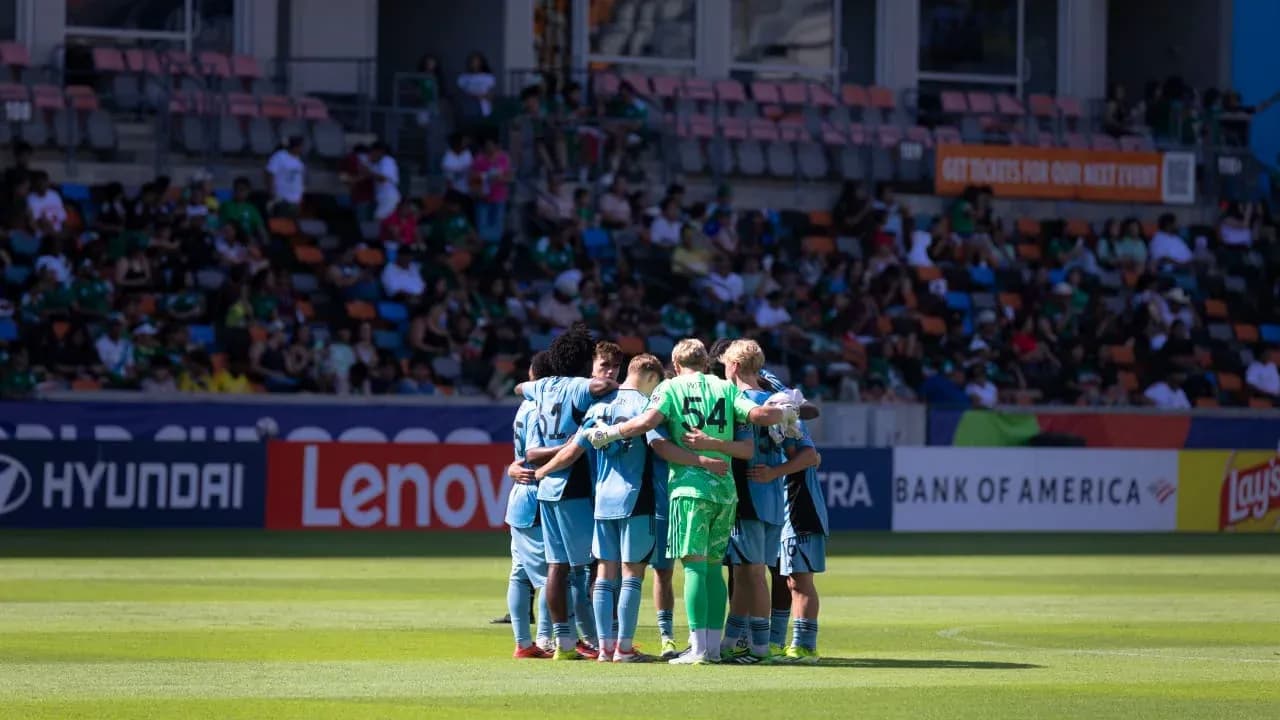
Under the lights at Joe W. Davis Stadium, Huntsville City and Connecticut FC went the full distance and beyond. Across 120 minutes they could not be separated in open play, finishing 2-2 after extra time, before Connecticut held their nerve from the spot to win the shootout 3-0. In the broader arc of the MLS Next Pro 2026 season, this felt less like a routine group-stage fixture and more like a stress test of both clubs’ footballing identities.
Heading into this game, Huntsville City were a paradox. In total this campaign they had played 12 league matches, winning 6 and losing 6 with no draws, scoring 26 and conceding 30. The goal difference of -4 (26 scored minus 30 conceded) told of volatility rather than balance. At home, they were explosive but fragile: 6 matches, 3 wins and 3 losses, with 14 goals for and 12 against. An average of 2.3 home goals for and 2.0 against made Joe W. Davis Stadium a guarantee of drama.
Connecticut FC arrived with a different profile. In total this season they had played 11 league matches, winning 5 and losing 6, scoring 17 and conceding 20 for a goal difference of -3 (17 minus 20). Their home form was modest, but on their travels they were dangerous: 7 away matches, 4 wins and 3 defeats, scoring 14 and conceding 13. An away scoring average of 2.0 against 1.9 conceded underlined a side comfortable in chaos, especially on the counter.
The 2-2 scoreline across 120 minutes mirrored both teams’ seasonal DNA: Huntsville’s high-scoring, high-risk approach against a Connecticut side that thrives in away-day firefights and then, in this case, showed superior composure in the penalty shootout.
Tactical Voids and Discipline
With no formal list of absentees, both coaches effectively had their full squads at their disposal, and that freedom was reflected in the depth on each bench. Chris O’Neal’s Huntsville City started with a clear technical core: W. Mackay in goal, a back line anchored by A. Talabi and L. Christiano, and a midfield built around the control of M. Veliz and the creativity of M. Ekk. Wide and between the lines, the likes of X. Aguilar and A. Jarvis offered the vertical threat and half-space craft that have defined Huntsville’s attacking profile this season.
On the Connecticut side, the spine was equally clear even without a named coach in the data. G. Rankenburg provided presence in goal, shielded by defenders such as R. Van Hees and J. Stephenson, while the midfield band of A. Monis, R. Mora-Arias and D. Lacy supported a mobile front line led by Caua Paixao and B. Tanyi. The bench options — including S. Sserwadda, H. Kouonang and J. Medranda — gave Connecticut the flexibility to adjust energy levels and tempo as the match dragged into extra time.
Disciplinary tendencies played a quiet but significant role in the tactical tone. Heading into this game, Huntsville’s yellow-card distribution showed a clear late-game spike: 33.33% of their cautions arriving between 76-90 minutes. They also had red cards concentrated in two windows: 31-45 minutes (50.00% of their reds) and 76-90 minutes (the remaining 50.00%). That pattern suggests emotional volatility under pressure, particularly as matches approach half-time and full-time.
Connecticut, by contrast, spread their yellows more evenly but still showed a late-game surge, with 24.24% of cautions between 76-90 minutes. Crucially, their only red card in total this campaign also came in that 76-90 window, at 100.00% of their reds. Both sides, then, are prone to disciplinary strain in the final quarter-hour, a factor that made the closing stages of normal time and extra time tactically delicate: one mis-timed press or cynical foul could have flipped the match.
Key Matchups
Without explicit individual scoring data, the “Hunter vs Shield” battle is best understood through unit-versus-unit dynamics. Huntsville’s home attack — averaging 2.3 goals per game — faced a Connecticut away defence conceding 1.9 per match. The hosts’ attacking trident of Aguilar, Jarvis and Ekk, supported by the forward runs of M. Yoshizawa and the distribution of Veliz, set out to overload the half-spaces and drag Connecticut’s back line into uncomfortable lateral shifts.
Connecticut’s answer lay in the organisation of Van Hees and Stephenson, with L. Kamrath and A. Applewhaite tasked with narrowing the channels and forcing Huntsville wide. Rankenburg’s command of his area was pivotal; against a side that scores freely at home, Connecticut needed their goalkeeper to be more than a shot-stopper — he had to be a traffic controller, constantly adjusting the line to prevent Huntsville’s runners from attacking gaps between centre-back and full-back.
On the other side, Connecticut’s away attack — 2.0 goals per game on their travels — confronted a Huntsville defence that, at home, conceded 2.0 per match. The movement of Caua Paixao and B. Tanyi, supported by Monis and Mora-Arias, targeted Huntsville’s known vulnerability in transition. With Huntsville often committing numbers forward, any turnover allowed Connecticut to spring quickly into the spaces behind Molina and Christiano, testing Mackay’s positioning repeatedly.
The Engine Room
In midfield, the “Engine Room” duel shaped the flow of the contest. For Huntsville, Veliz and Ekk were the dual fulcrums: Veliz offering tempo control and recycling, Ekk providing line-breaking passes and late surges into the box. Around them, N. Pariano and Yoshizawa were vital in compressing space when possession was lost, trying to prevent Connecticut from turning defensive actions into immediate counters.
Connecticut’s answer came from the industrious trio of Monis, Mora-Arias and Lacy. Their mandate was twofold: disrupt Huntsville’s central progression and spring forward at pace when the ball was won. Monis, in particular, operated as the enforcer, snapping into duels and setting the pressing triggers that forced Huntsville’s centre-backs to play longer than they would have liked. Mora-Arias and Lacy, meanwhile, offered vertical outlets, looking early for Paixao’s runs into the channels.
The benches added another layer to this engine-room battle. Huntsville’s ability to introduce fresh legs like F. Reynolds, L. Eke or A. Iniguez meant they could maintain intensity into extra time. Connecticut’s counter, with Sserwadda, Goddard and Medranda, allowed them to rotate their press and keep the central block compact even as fatigue mounted.
Statistical Prognosis and xG Lens
While explicit xG numbers are not provided, the season-long profiles offer a strong inferential frame. Heading into this game, Huntsville’s total average of 2.2 goals scored and 2.5 conceded per match pointed to open, chance-rich encounters in both directions. Connecticut’s total averages — 1.5 scored and 1.8 conceded — suggested slightly tighter contests, but their away pattern (2.0 for, 1.9 against) aligned more with Huntsville’s chaos than with control.
Given those baselines, a 2-2 draw over 120 minutes fits a high-xG narrative: both sides creating and conceding multiple opportunities. Huntsville’s home attacking power would have generated several high-quality chances, especially in broken play and second phases around the box. Connecticut’s proficiency on the break, combined with Huntsville’s tendency to concede 3.0 goals on their travels and 2.0 at home, hints that the visitors likely carved out clear looks whenever they could transition quickly.
From a defensive solidity standpoint, neither side came into this as a low-block specialist. Huntsville’s total of 30 goals conceded in 12 matches, and Connecticut’s 20 conceded in 11, underline that both back lines are more about surviving storms than preventing them. In that light, the penalty shootout becomes less an aberration and more a natural extension of two sides whose open-play structures invite risk.
Connecticut’s perfect record from the spot in total this season — 1 penalty taken, 1 scored, 100.00% — foreshadowed their composure in the shootout. Huntsville, too, had been flawless from 12 yards in total (1 taken, 1 scored, 100.00%), but on this night the margins turned. Connecticut’s 3-0 shootout win distilled the contest into its purest tactical truth: when two attacking, high-variance teams push each other to the edge, the side with the marginally stronger psychological and technical edge in the decisive moments prevails.
Following this result, Huntsville are reminded that their attacking verve must be balanced with greater defensive control and emotional stability in late-game phases. Connecticut, meanwhile, can lean into their identity as an away-day specialist — a team built to suffer, counter and, when it comes down to it, hold their nerve from the spot.