Hudson River Derby: NYC II Upsets RB II 3–2
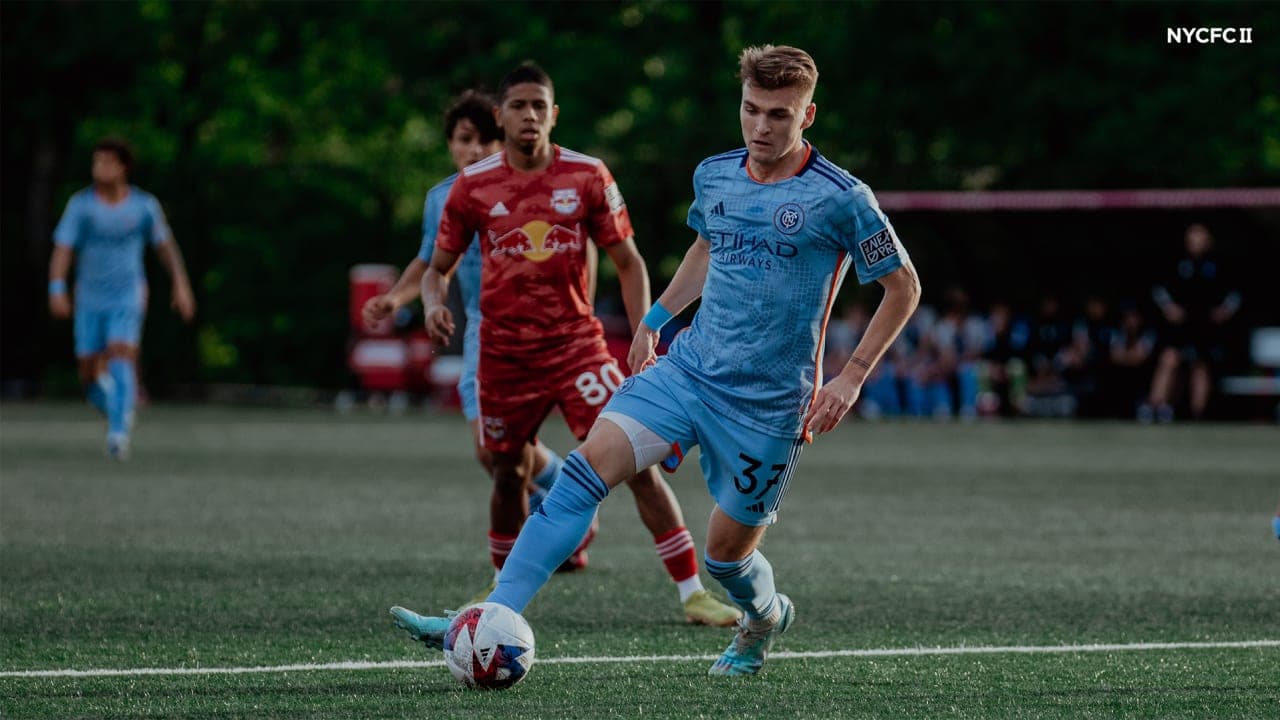
The Hudson River derby at MSU Soccer Park delivered exactly the kind of chaotic, developmental theatre MLS Next Pro was built for. New York City II edged New York RB II 3–2, overturning the league table logic that had the hosts sitting atop both the Northeast Division and Eastern Conference heading into this game, while City arrived as a mid-pack chaser.
For RB II, this was supposed to be a statement of control. Overall this campaign they had taken 23 points from 10 matches, with a goal difference of 12 built on 24 goals for and 12 against. At home, their attacking profile has been even more intimidating: 17 goals in 6 matches, an average of 2.8 per game, with only 8 conceded. The structure of their season has been clear: high-tempo, front-foot football, seven wins and no draws, living by the sword and occasionally dying by it.
City II came in with a very different statistical DNA. Overall they had 12 points from 9 games, a goal difference of -5 (11 scored, 16 conceded in the standings snapshot; 12 scored, 17 conceded in the broader stats), and a travel sickness that was hard to ignore: on their travels, they had lost 4 of 5, scoring 6 and conceding 8. Yet the volatility in their form line — LWLLWLWLW — hinted at a team capable of spikes of quality amid inconsistency.
Against that backdrop, the 3–2 away win was more than a derby upset; it was a tactical punch landed against one of the league’s most ruthless attacks.
Tactical voids and disciplinary undercurrents
Neither side had a published injury or suspension list, so the tactical voids were more structural than personnel-driven. RB II’s coach was not listed, but the XI on the pitch told its own story: a side built for verticality and energy.
A. Stokes, C. Faello and A. Sanchez formed the defensive base, with J. Masanka Bungi and D. Gjengaar likely asked to step into aggressive lanes rather than sit passively. Wide threat came from C. Harper and S. Kone, while D. Cadigan and A. Rojas provided the connective tissue between lines. Up front, N. Worth and M. Jimenez were the obvious pressure points, tasked with stretching City’s back line and attacking early deliveries.
RB II’s disciplinary profile this season had already flashed warning lights. Overall, their yellow cards cluster late: 40.00% arrive between 76–90 minutes, with another 20.00% between 61–75. They also have a single red card, shown in the 61–75 window. This is a team that sustains intensity but often tips into recklessness as matches wear on.
City II, under Matt Pilkington, showed a different kind of volatility. Their yellow cards are front- and back-loaded: 33.33% between 16–30 minutes and another 33.33% between 76–90, with 11.11% in added time (91–105). Their one red card this season has come in that 76–90 band. They start aggressively, then finish on the edge.
In a 3–2, those patterns matter. The match narrative almost certainly bent around late transitions, stretched spacing and tired decision-making, exactly where both teams’ card distributions spike.
Key matchups: Hunter vs Shield, and the engine rooms
Statistically, the “Hunter vs Shield” duel tilted toward RB II’s attack versus City’s shaky defence. Overall this campaign, RB II have averaged 2.4 goals per game, with 2.8 at home. City II, by contrast, have conceded 1.9 goals per match overall, including 1.8 on their travels. On paper, the home side’s relentless forward line — powered by the movement of Worth, Jimenez and the wide surges of Harper and Kone — should have overwhelmed a City back line that has yet to keep a single clean sheet, home or away.
Instead, City’s improvised “shield” held just enough. M. Learned anchored them from the back, supported by A. Campos, J. Loiola, K. Acito and K. Smith. Without a formal formation listed, the shape looked modular rather than rigid, but the personnel profile suggests a back line comfortable defending space if the midfield screen does its work.
That screen — C. Flax, J. Suchecki and H. Hvatum — became the true engine room of the upset. Their task was twofold: deny RB II the easy vertical lanes that have fuelled those 24 total goals, and spring D. Duque, D. Kerr and C. Danquah into counter-attacking channels. With City having failed to score in 3 matches overall this campaign and still searching for rhythm, this trio’s ability to connect first and second phases was always going to be decisive.
On the other side, RB II’s central unit of Masanka Bungi, Gjengaar, Cadigan and Rojas had to manage risk. Their season-long refusal to play for draws — 7 wins, 3 losses, 0 draws overall — hints at a midfield that will always chase the extra pass forward rather than close the game down. In a derby context, that ambition can turn into vulnerability, especially against a City side whose biggest away win this season has been 2–3: they know how to live in the chaos of high-scoring road matches.
Statistical prognosis and what this result tells us
Following this result, the numbers demand a more nuanced reading of both squads.
RB II remain an attacking juggernaut. They have yet to fail to score in any match this season, home or away, and their penalty record is flawless so far: 1 penalty overall, scored, with 100.00% conversion and no misses. But conceding 3 at home against a side that had averaged only 1.2 away goals per game heading into this match underlines a defensive soft spot: they now sit at 14 goals against overall, an average of 1.4 per match, with 1.5 conceded at home. For a would-be title contender, that balance is precarious.
City II, meanwhile, showed that their negative goal difference does not preclude big-game effectiveness. Overall, they score 1.3 goals per match and concede 1.9, but their ability to hit 3 on the road against the league’s most explosive home attack suggests an upside beyond the raw averages. Their away record — 1 win, 4 losses heading into this fixture — now has a signature victory to build on.
Tactically, this 3–2 felt like a convergence of profiles: RB II’s refusal to manage games into safe, low-event wins collided with City’s taste for high-voltage, card-laden contests. In that intersection, Pilkington’s side were more clinical.
From here, the prognosis is layered. RB II still project as a high-xG, high-risk contender, a side that will batter most defences but must tighten its late-game discipline, especially given that 40.00% of their yellows arrive in the final quarter-hour. City II, though still defensively porous, have proven they can weaponise volatility away from home.
In the long arc of the MLS Next Pro season, this derby will read as a warning: RB II’s attacking firepower is not always enough to mask structural looseness, and City II, for all their inconsistency, are a dangerous opponent whenever the game tilts into a shootout.