Group J: Messi's Last World Cup and the Rising Contenders
Anyone pencilling Argentina in for a gentle stroll through Group J would do well to rewind to 2022. Remember Lusail. Two goals overturned by Saudi Arabia, a half-time lead shredded, a World Cup that began with one of the sport’s great ambushes. The eventual champions needed second-half strikes to see off Mexico and Poland too. Procession? Argentina do drama, not parades.
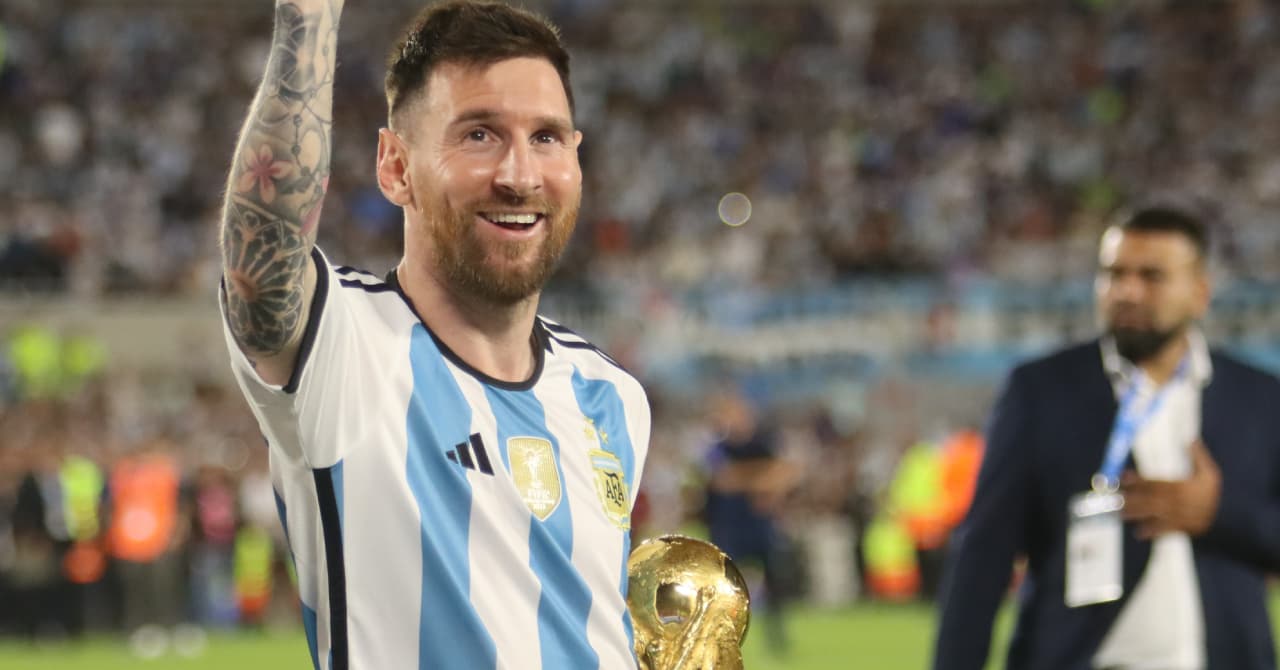
This time they arrive as holders, as serial winners under Lionel Scaloni, and as the team carrying the weight of a farewell. Lionel Messi will turn 39 during these finals. It is almost certainly his last World Cup. North America is his stage and his long goodbye.
Around him, three very different stories circle: Algeria, back after a painful exile; Austria, reborn under Ralf Rangnick; and Jordan, stepping into the World Cup light for the first time. It is a group with pedigree, power and a debutant with nothing to lose. Upsets live in that kind of mix.
Algeria: Petkovic’s Return to the Big Stage
After missing two straight World Cups, Algeria are back with the memory of 2014 still burning bright. That year they went toe-to-toe with Germany, dragged the future champions into extra time in the last 16 and left Brazil with respect, scars and a sense of unfinished business.
Vladimir Petkovic now leads the mission. The Bosnian and Herzegovinian coach has already shown he can handle tournament pressure. He took Switzerland to the 2018/19 Nations League finals and then into the Euro 2020 quarter-finals, knocking out Turkiye and France before losing to Spain on penalties. He understands how to build a side that can suffer, then strike.
The current Algeria squad is sprinkled with Bundesliga steel and attacking edge. Mohamed Amoura was ruthless in qualifying, scoring 10 times – seven more than anyone else in their group – including a hat-trick against Mozambique. His season with Wolfsburg told a tale of two halves: eight goals in his first 19 league games, then a barren run of 11 without scoring. If Petkovic can tap into the first version, Algeria gain a genuine cutting edge.
There is craft around him. Houssem Aouar, once capped by France and shaped by Roma and Lyon, offers guile in midfield. Amine Gouiri, back fit and back among the goals with a brace in a 7-0 friendly demolition of Guatemala in Genoa in March, gives them a forward with top-level experience. Nabil Bentaleb, now at Lille, adds know-how and bite.
At the back, there is a familiar surname with a very different story. Goalkeeper Luca Zidane arrives at his first World Cup having recovered from a broken jaw and chin with Granada, carrying the weight and wisdom of a father who lifted both the World Cup and the EURO. Out wide, Anis Hadj Moussa brings end product after a superb season at Feyenoord, contributing 14 goals and seven assists.
Rayan Ait-Nouri, caught between Manchester City’s depth chart, an ankle injury and AFCON duty, endured a stuttering club campaign, starting the first three matches then fading from view before Pep Guardiola handed him a run of seven consecutive starts in February and March. Fresh and hungry, he offers thrust from the flank.
Star man: Riyad Mahrez, still the reference point
Riyad Mahrez remains the heartbeat and the headline. Now at Al-Ahli in the Saudi Pro League, the 35-year-old is closing in on Algeria’s all-time scoring record, needing eight more to stand alone at the top. His international numbers are already formidable: 38 goals, 43 assists, 113 caps, and the defining role in the 2019 AFCON triumph, the country’s second continental crown.
He scored three times in two games as Algeria cruised through the group stage at the 2025 AFCON with a perfect record. His CV glitters – Leicester City’s miracle Premier League title in 2016, African Footballer of the Year that same year, and the treble of Champions League, Premier League and FA Cup with Manchester City in 2023. For this generation of Algerians, Mahrez is both talisman and template.
Prediction: Set for the knockouts again
Group dynamics point to a decisive final-day showdown with Austria. Both nations will expect to beat Jordan, which turns their meeting into a likely shootout for an automatic place in the last 32. With eight third-placed teams also advancing, Algeria have more than one route through. This feels like the moment Les Fennecs reach the knockouts for only the second time in their history – and in their fifth World Cup, that would matter.
Argentina: The Champions Chase a Rare Double
No team has defended the World Cup since Brazil’s back-to-back triumphs in 1958 and 1962. Argentina land in North America with that piece of history in their sights and a manager who has already redefined an era.
Lionel Scaloni has turned La Albiceleste into a winning machine. Copa America 2021 broke the drought. The World Cup in 2022 delivered the third star. Copa America 2024 confirmed it was no one-off. No Argentina coach had ever married continental and world titles before him; now he arrives at his second World Cup with a group that knows how to handle expectation and pressure.
The core from Qatar remains. Emiliano Martinez, the penalty-box showman and penalty-kick specialist, still guards the goal. Cristian Romero and Lisandro Martinez anchor a defence that mixes aggression with composure. In midfield, Rodrigo De Paul, Alexis Mac Allister and Enzo Fernandez form one of the most complete trios in the tournament: legs, balance, craft, and an unshakeable understanding of Messi’s rhythms.
Up front, Julian Alvarez offers Scaloni a tactical Swiss army knife. Wide, central, second striker – he does it all, and he does it with a work rate that sets the tone. Lautaro Martinez leads the line, still one of the most prolific No 9s in the game.
There are changes too. Angel Di Maria, one of the great figures of the 2022 triumph, has retired from international football. His absence removes a big-game specialist and a left-footed reference point. Franco Mastantuono, the teenage Real Madrid midfielder and one of the most watched youngsters during qualifying, is the headline omission, a reminder that this squad is built for the now, not the next decade.
The one cloud on the horizon has been Messi’s fitness. A hamstring issue with Inter Miami in May triggered alarm across Argentina and beyond. Scaloni moved quickly to cool the panic, describing early reports as not that bad. The expectation remains that Messi will be ready for the opener against Algeria in Kansas City.
Star man: Messi, still the axis
Messi’s presence in this World Cup is not just a footballing event; it is a cultural moment. He arrives at 38 for a record sixth World Cup. No one seriously imagines there will be a seventh.
On the pitch, he is still decisive. He finished as top scorer in CONMEBOL qualifying with eight goals. He remains the player around whom everything orbits, the one figure Argentina cannot replace by committee. The cast has grown, the supporting roles are stronger, but the script still runs through him.
Prediction: Group J should be theirs
Argentina have the best squad, the deepest experience and the clearest identity in Group J. They should control this section. The real examination will not come here; it will come when the bracket tightens, the margins shrink and Messi’s last World Cup turns into a knockout gauntlet.
Austria: Rangnick’s Relentless Pressers
Austria have waited 28 years to return to a World Cup. They do not arrive as tourists. Under Ralf Rangnick, they come as one of the tournament’s most awkward underdogs.
Rangnick has not just coached a team; he has reshaped a system. His blueprint is familiar: aggressive pressing, vertical football, relentless intensity. It is the same philosophy that helped build the Red Bull network and influence a generation of coaches and players across Europe. Now it underpins an Austrian side that has already proved it can punch above its weight.
At Euro 2024, Austria reached the last 16 and, more importantly, finished above France and the Netherlands in their group. That performance set the tone. World Cup qualification confirmed it. This is, arguably, their strongest squad since the 1954 side that finished third.
The spine is soaked in Bundesliga experience. Fourteen of the 26 players are based in Germany. At RB Leipzig alone, Christoph Baumgartner, Xaver Schlager and Nicolas Seiwald give Rangnick a midfield unit built in his own image, schooled in his principles. Marcel Sabitzer, now a leader at Borussia Dortmund, brings 95 caps and a calm head. Konrad Laimer, starting at Bayern Munich, drives the wide midfield zones with stamina and aggression.
David Alaba, at 33, wears the armband and the responsibility. He remains the reference point, capable of organising from the back or stepping into midfield. Around him, a new generation is emerging. Carney Chukwuemeka has committed his international future to Austria over England, while Paul Wanner of PSV Eindhoven, also 20, is another who could use this stage to announce himself.
Up front, Marko Arnautovic returns for what may be his last dance. At 36, with 47 goals from 132 caps, he is Austria’s all-time record scorer and now the vice-captain. His presence gives Rangnick a focal point, a personality, and a reminder of how far this team has come.
Star man: Baumgartner at full throttle
Christoph Baumgartner arrives in the form of his life. The RB Leipzig midfielder produced 13 goals and 10 assists in the Bundesliga this season, numbers that put him among the most productive central players in Germany.
His movement between the lines, the timing of his late runs and his finishing in tight spaces give Austria a threat that does not rely solely on their forwards. In a group where small details will decide second place, Baumgartner’s ability to arrive unmarked and punish hesitation could be decisive.
Prediction: Built to chase Argentina
Rangnick’s structure, the squad’s depth and their cohesion make Austria the most likely side to challenge Argentina at the top of the group. The opener against Jordan in Santa Clara offers a launchpad. Take three points there, and the meeting with Algeria starts to look like a straight fight for position rather than survival.
Jordan: A First World Cup, a Giant Task
For Jordan, this is uncharted territory. Their first World Cup. Their first walk into the noise, colour and chaos of football’s biggest stage. They have not been handed a gentle introduction.
Qualification alone tells you what this group is made of. Al-Nashama finished second in their AFC third-round group, behind South Korea but ahead of Iraq, Oman, Palestine and Kuwait. That is no soft route. It is a campaign that forges resilience.
On the touchline stands Jamal Sellami, a Moroccan coach with a strong track record in his homeland and a continental pedigree after guiding Morocco’s local-national team to the 2018 African Nations Championship title. He has been open about his ambition: to mirror, in some way, what Morocco did in Qatar, when they became the first African and Arab nation to reach a World Cup semi-final.
Half of his squad – 13 of the 26 – play their club football in Jordan. That domestic core brings familiarity, shared habits and an understanding that can take other nations weeks to find at a tournament. It is a subtle advantage in a group where Jordan will need every edge they can get.
There has been a significant blow. Striker Yazan Al-Naimat, one of their key attacking options, suffered an ACL injury in December and misses the tournament. His absence strips away a focal point and forces Sellami to reconfigure his front line.
Defensively, captain Ehsan Haddad marshals the backline from Al-Hussein, while Yazan Al-Arab, one of the few players based outside the Middle East, arrives with experience from FC Seoul. They will be busy. They will also be vital.
Star man: Al-Tamari, the hope and the spark
All roads to a Jordanian upset run through Mousa Al-Tamari. The Rennes forward is the finest player the country has produced and the first Jordanian to play in Ligue 1. At home he carries a nickname that says everything about the expectations on his shoulders: the ‘Jordanian Messi’.
His pace, dribbling and willingness to take responsibility give Jordan a weapon that can trouble any defence on the counter. If this group is to witness a shock with Jordan at its centre, Al-Tamari will almost certainly be the architect.
Prediction: Ready to fight, whatever the odds
Jordan’s best shot comes early. The opener against Austria in Santa Clara is their most winnable fixture; a point there would echo around the tournament. Anything taken from Algeria would be historic. And then comes Argentina at AT&T Stadium in Dallas, a final group game that will be the biggest night Jordanian football has ever known, regardless of what the table says.
So Group J offers a defending champion chasing history, a legend nearing his last bow, a resurgent Algeria, a relentless Austria and a fearless debutant. Argentina should lead. The real tension lies just beneath them.
Who blinks first when everything is on the line: Mahrez and Algeria’s golden generation, or Rangnick’s pressing machine? And if Messi does stride into the knockouts on top of this group, who will be left standing behind him, still dreaming?