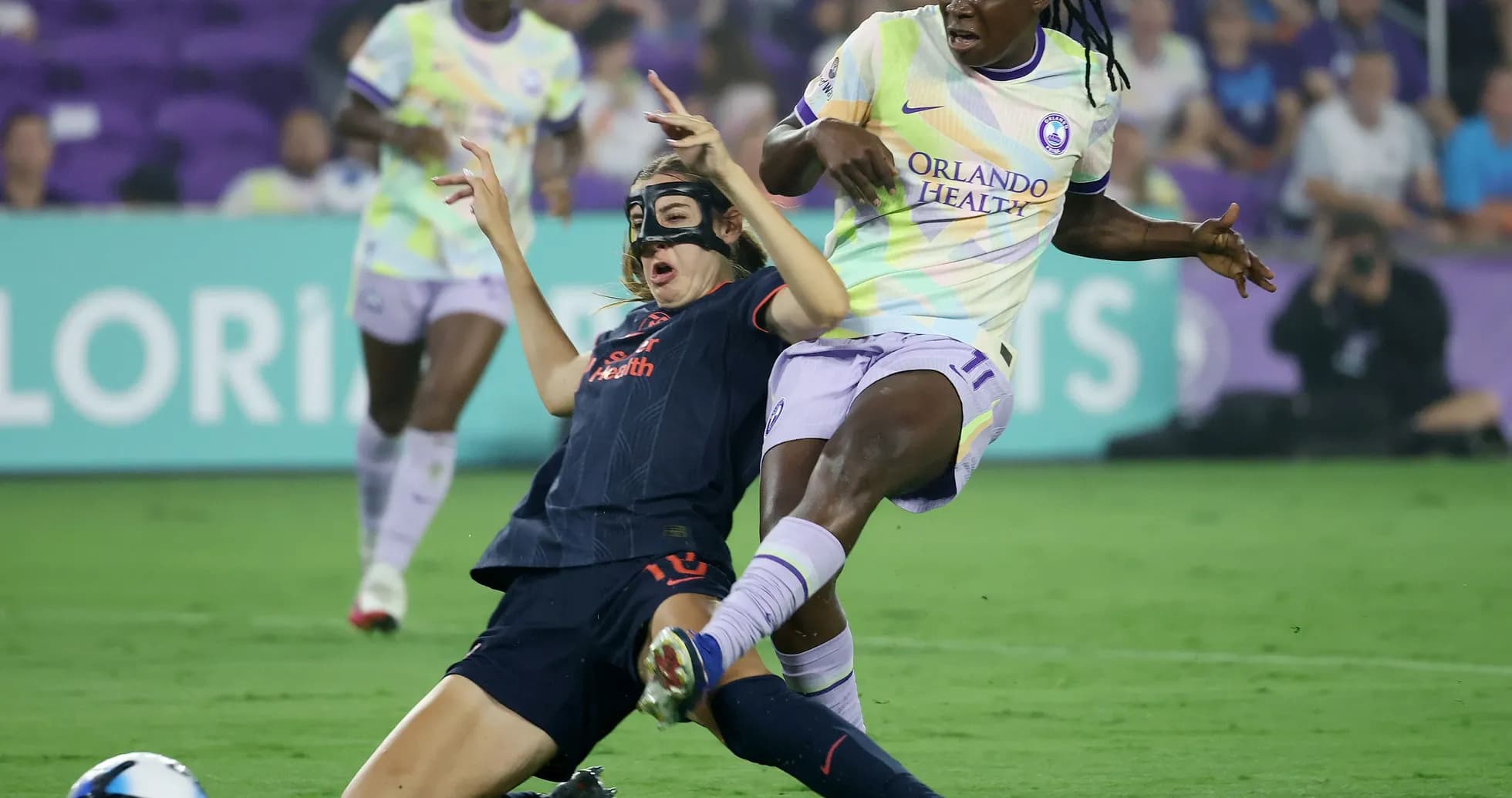
Gotham FC Edges Racing Louisville 1–0 in Tactical Showdown
Under the lights at Sports Illustrated Stadium, NJ/NY Gotham FC W turned a statistical trend into a statement, edging Racing Louisville W 1–0 in a Group Stage contest that felt like a tactical case study in control versus chaos. Following this result, it was the profile of a top-four side tightening its grip on identity against a team still searching for a way to make its attacking talent coexist with defensive stability.
The Big Picture – Gotham’s defensive DNA vs Louisville’s volatility
Heading into this game, the league table already drew a stark contrast. Gotham sat 4th with 14 points from 8 matches, their overall goal difference of 4 built on a miserly 4 goals conceded in total. The numbers told a clear story: at home, Gotham averaged just 0.8 goals scored but only 0.4 conceded, leaning on structure and clean sheets rather than attacking fireworks. Six clean sheets overall and only 3 matches in which they failed to score underlined a team that plays on fine margins but usually bends the game to its tempo.
Racing Louisville arrived as the league’s paradox. They were 15th with 4 points from 7 games, their overall goal difference of -4 the product of 10 goals scored and 14 conceded. On their travels, they had lost all 5 away matches, scoring 5 and conceding 10. An away average of 1.0 goal for and 2.0 against encapsulated their season: they can hurt you, but they hurt themselves more.
Both sides lined up in a 4-2-3-1, but the shared formation masked radically different personalities. Gotham’s version was about compression and control; Louisville’s, about verticality and risk.
Tactical Voids and Discipline – Who could walk the tightrope?
There were no listed absentees, so both coaches had close to full decks. That put the spotlight on players walking disciplinary tightropes rather than injury ones.
For Gotham, J. Dudley and J. Carter entered the night as two of the league’s most card-prone figures. Dudley, already on 2 yellow cards this season, is a high-impact, high-contact attacker who had committed 12 fouls and drawn 15. Carter, also on 2 yellows, is a front-foot defender with 14 tackles, 3 successful blocks and 15 interceptions. Gotham’s season-long card profile reinforced the picture: 44.44% of their yellow cards had come in the 76–90 minute window, a clear late-game surge of aggression when game states tighten.
Louisville’s discipline was even more volatile. Their yellow cards were scattered across the 90, but with a spike of 30.00% in the 91–105 range, they often lost control in stoppage time. K. O’Kane and M. Hodge both carried 2 yellows into the fixture, while T. Flint (listed here as T. Kornieck in the disciplinary data) combined 19 tackles, 9 blocks and 26 interceptions with 2 bookings of her own. This is a midfield that lives on the edge.
In a one-goal game, that discipline profile mattered. Gotham’s ability to keep their penalty record clean (1 penalty taken, 1 scored, none missed) contrasted with Louisville’s reliance on spot kicks—2 penalties taken, 2 scored, but with no defensive clean sheets at all this season. Any reckless challenge in the box was always going to tilt the balance toward the home side.
Key Matchups – Hunter vs Shield, Engine Room vs Enforcer
The “Hunter vs Shield” duel was personified by S. Weber against Gotham’s defensive core. Weber came in as Louisville’s top scorer with 3 goals and 1 assist from 7 appearances, converting 5 of 8 shots on target and engaging in 62 duels, winning 25. She is not just a finisher but a constant physical presence.
Opposite her, Gotham’s back line has been one of the league’s most efficient units. Carter, with 478 completed passes at 88% accuracy and 3 blocked shots, anchors a back four that had allowed just 4 goals overall before this match. Flanked by T. Davidson and G. Reiten, and shielded by the double pivot of J. M. Howell and S. McCaskill, Gotham’s 4-2-3-1 is built to compress the central lane where Weber likes to operate. The 1–0 scoreline was the natural outcome of that duel: Weber was forced into crowded zones, and Louisville’s main weapon was blunted.
In the “Engine Room”, the battle ran through Dudley and R. Lavelle for Gotham against Louisville’s central trio of O’Kane, Flint and K. Fischer. Dudley is one of the league’s most complete attacking midfielders: 2 assists, 1 goal, 9 key passes, 25 dribble attempts with 10 successes, and 83 duels contested, winning 39. She is Gotham’s chaos agent between the lines, the one who turns their low scoring averages into decisive moments.
Louisville’s answer came from Fischer and Sears. Fischer, with 2 assists and 10 key passes, is the connective tissue in transition, while Sears adds 3 assists, 1 goal and 16 tackles from the attacking band. Both started here, but their influence was repeatedly funneled wide and away from central danger zones by Gotham’s disciplined double pivot. O’Kane’s 14 tackles and 7 key passes this season highlight her dual role as enforcer and distributor, yet in this match-up, she was often forced to chase rather than dictate.
Statistical Prognosis – Why 1–0 fit the script
Even without explicit xG numbers, the season data points toward a low-scoring Gotham win as the most probable outcome. At home, Gotham’s average of 0.8 goals for and 0.4 against suggests tight margins and a high likelihood of a 1–0 or 1–1 scoreline. On their travels, Louisville’s 1.0 goals scored and 2.0 conceded, combined with 5 straight away defeats and zero clean sheets overall, point strongly toward them conceding at least once and struggling to keep the game level.
Layer on top Gotham’s six clean sheets in total and Louisville’s complete absence of any, and the 1–0 full-time score feels less like a surprise and more like an almost inevitable statistical convergence. Gotham’s late-game yellow-card surge did not cost them; Louisville’s habit of losing control in added time did not rescue them.
In narrative terms, this was a night where structure beat volatility. Gotham’s 4-2-3-1, marshalled by Carter at the back and animated by Dudley between the lines, did exactly what the season numbers said it would: restrict chances, seize one, and then strangle the game. Louisville’s stars—Weber, Sears, Fischer—had flashes, but without a defensive platform, their attacking promise once again dissolved into another away defeat, perfectly aligned with the story their statistics have been telling all season.