Gornik Zabrze vs Fenerbahçe: Tactical Draw Analysis
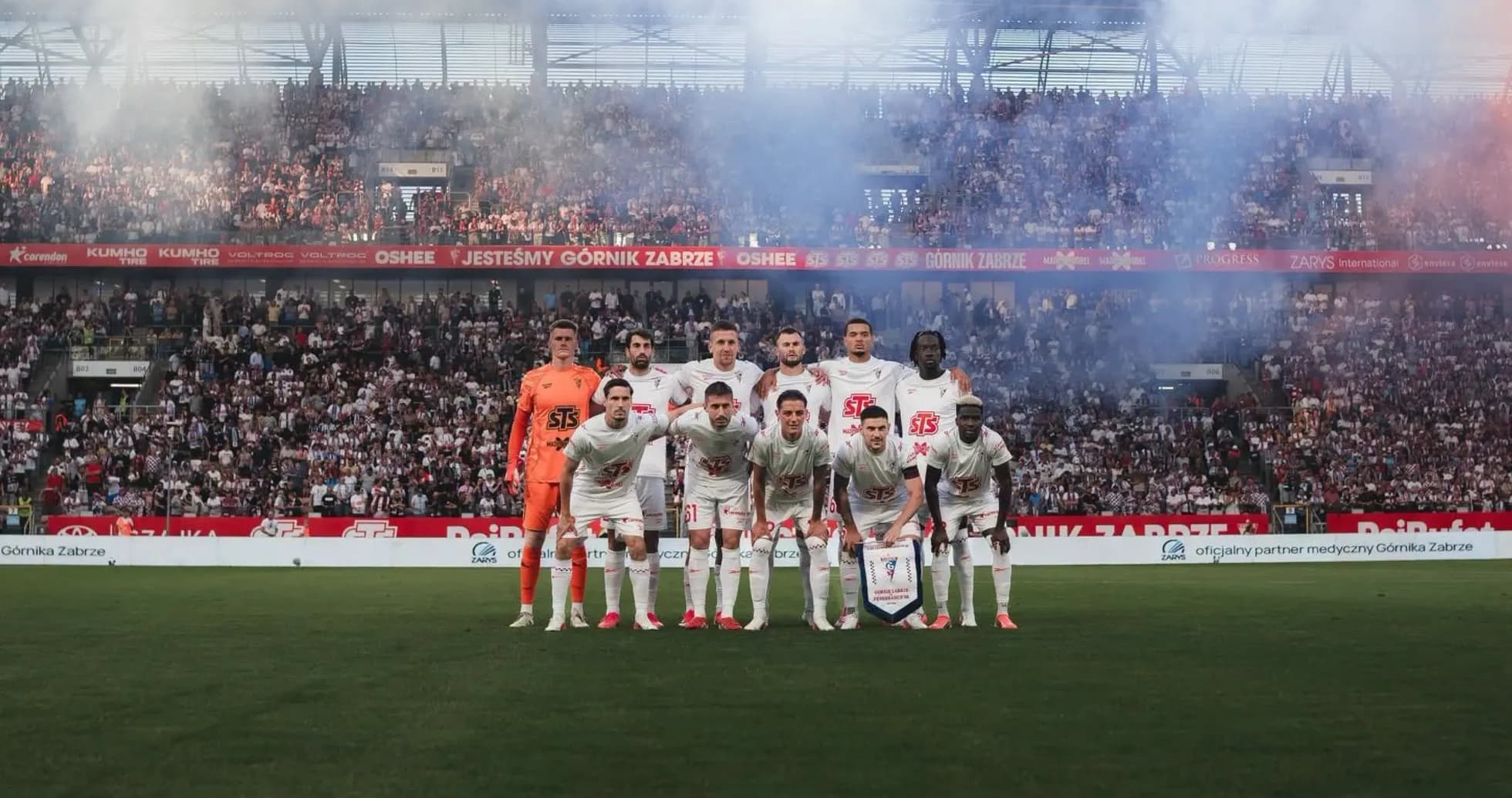
The 1-1 draw at Stadion im. Ernesta Pohla unfolded as a classic qualifying-round arm-wrestle: Gornik Zabrze using a compact 4-1-4-1 and aggressive wide running to disrupt Fenerbahçe’s more polished 4-2-3-1, which leaned on superior passing and territorial control. Despite Fenerbahçe edging possession 52–48 and completing more passes with higher accuracy, Gornik generated more shots on goal (6 to 2) and repeatedly threatened in transition. The late first-half equaliser shifted the psychological balance, and from there the game became a tactical stalemate: Gornik protecting central zones and counters, Fenerbahçe probing patiently but rarely breaking the last line.
Tactical Analysis
Tactically, Gornik’s 4-1-4-1 was built around Maximilian Dietz as the single pivot screening in front of a narrow back four. With Erik Janža and Michal Sáček as full-backs and Rafał Janicki–Josema as the central pair, the hosts prioritised compactness between the lines over high pressing. Dietz’s role was to block access into Talisca’s feet and force Fenerbahçe wide, where Gornik could double up using the wide midfielders Taofeek Ismaheel and Yvan Ikia Dimi.
Ahead of Dietz, the quartet of Ismaheel, Lukáš Sadílek, Kacper Urbański and Ikia Dimi tried to stay connected enough to help circulation while being ready to spring forward. The structure paid off in chance creation: Gornik produced 15 total shots, with 5 from inside the box and 6 on goal, a clear indicator that their attacks, though less frequent in sustained possession, were more direct and penetrative once they broke Fenerbahçe’s first line.
Erik Prekop, the lone striker, was used as a reference point to pin Milan Škriniar and Nathan Aké, with runners from midfield attacking second balls. The equaliser at 45+10’ encapsulated the plan: Prekop providing the assist for Sáček, the right-back arriving from deep, underlining how Gornik’s full-backs were encouraged to join late into the box once the first line was bypassed. Nine corner kicks to Fenerbahçe’s seven also show how Gornik’s verticality and wide service consistently forced last-ditch defending.
Defensive Organization
Out of possession, Gornik were disciplined but increasingly stretched as the game wore on. Eight fouls and four yellow cards—Sadílek for “Holding”, Janža and Janicki for “Unsportsmanlike conduct”, Josema for “Roughing”—tell the story of a side willing to break rhythm and accept bookings to slow transitions or stop Fenerbahçe’s more talented attackers turning in space. The single recorded goalkeeper save for Philipp Schulze (Gornik Zabrze) underlines how effectively the defensive block limited clear looks at goal; Fenerbahçe reached 14 shots but only 2 on target, many attempts being rushed or from less favourable zones.
Fenerbahçe's Tactics
Fenerbahçe’s 4-2-3-1, with Fred and Mattéo Guendouzi as a double pivot behind an attacking line of İrfan Can Kahveci, Marco Asensio, Kerem Aktürkoğlu and Talisca, was designed to dominate the ball and progress methodically. Their 432 total passes at 86% accuracy versus Gornik’s 379 at 78% reflect a technically superior, possession-oriented approach. Guendouzi dropped frequently to form a three with Škriniar and Aké, allowing full-backs Nélson Semedo and Jayden Oosterwolde to push high and stretch Gornik’s 4-1-4-1 horizontally.
This structure, however, had two tactical consequences. First, while it helped Fenerbahçe advance, it also exposed them to counters if possession was lost with full-backs high. Gornik’s higher shot volume and corners came largely from such moments. Second, the reliance on wide circulation often left Talisca isolated between Gornik’s centre-backs and Dietz. Even though Talisca converted the early penalty, Fenerbahçe struggled to consistently find him in dangerous central pockets afterwards.
Substitutions and Adjustments
The second-half substitutions from Ismail Kartal were clear tactical adjustments. İsmail Yüksek (IN) came on for Asensio (OUT) at 46’, effectively reinforcing the midfield line, while Mason Greenwood (IN) replaced Kahveci (OUT) to add more direct running and individual creation from the right. Later, Anthony Musaba (IN) for Aktürkoğlu (OUT) at 70’ and Oğuz Aydın (IN) for Talisca (OUT) at 80’ signalled a move towards more pace and vertical threat rather than a classic target 9. Yet, despite these changes, Fenerbahçe’s shot profile did not significantly improve in quality; they remained limited to 2 shots on goal.
Mert Günok (Fenerbahçe) was far busier than his opposite number, making 5 saves. This, combined with Gornik’s 6 shots on goal, suggests that Fenerbahçe’s back line—Škriniar and Aké centrally, Semedo and Oosterwolde wide—was repeatedly forced into last-line defending. The visitors’ 15 fouls and five yellow cards (Oosterwolde for “Tripping”, Semedo for “Tripping”, Greenwood for “Roughing”, Fred for “Unsportsmanlike conduct”, Guendouzi for “Delay of game”) highlight both the intensity of Gornik’s counters and Fenerbahçe’s increasing frustration and game-management attempts late on.
Statistical Verdict
From a statistical verdict, the draw reflects a clash of styles: Fenerbahçe’s control versus Gornik’s punch. Fenerbahçe’s superior possession (52%) and passing efficiency (432 passes, 372 accurate, 86%) underline their ability to dictate tempo, but their lack of incision—only 2 shots on goal and 10 shots inside the box—reveals a structural issue in turning circulation into clear chances against a compact block. Gornik, with 48% possession and a lower pass accuracy (379 passes, 297 accurate, 78%), nonetheless engineered more threatening moments, as shown by their 6 shots on goal and 9 corners.
Discipline tilted heavily towards the visitors: Gornik Zabrze collected 4 yellow cards, Fenerbahçe 5, for a total of 9. That imbalance mirrors the tactical storyline—Fenerbahçe forced to foul more often as they chased control and then defended transitions, Gornik using fouls selectively to protect their structure. With no red cards and both teams finishing 1-1, the data points to a finely poised tie in which Gornik maximised their compact, transition-based plan, while Fenerbahçe’s possession game lacked the vertical precision needed to turn dominance of the ball into a decisive away win.