FK Crvena Zvezda vs Hapoel Beer Sheva: UEFA Champions League Qualifier
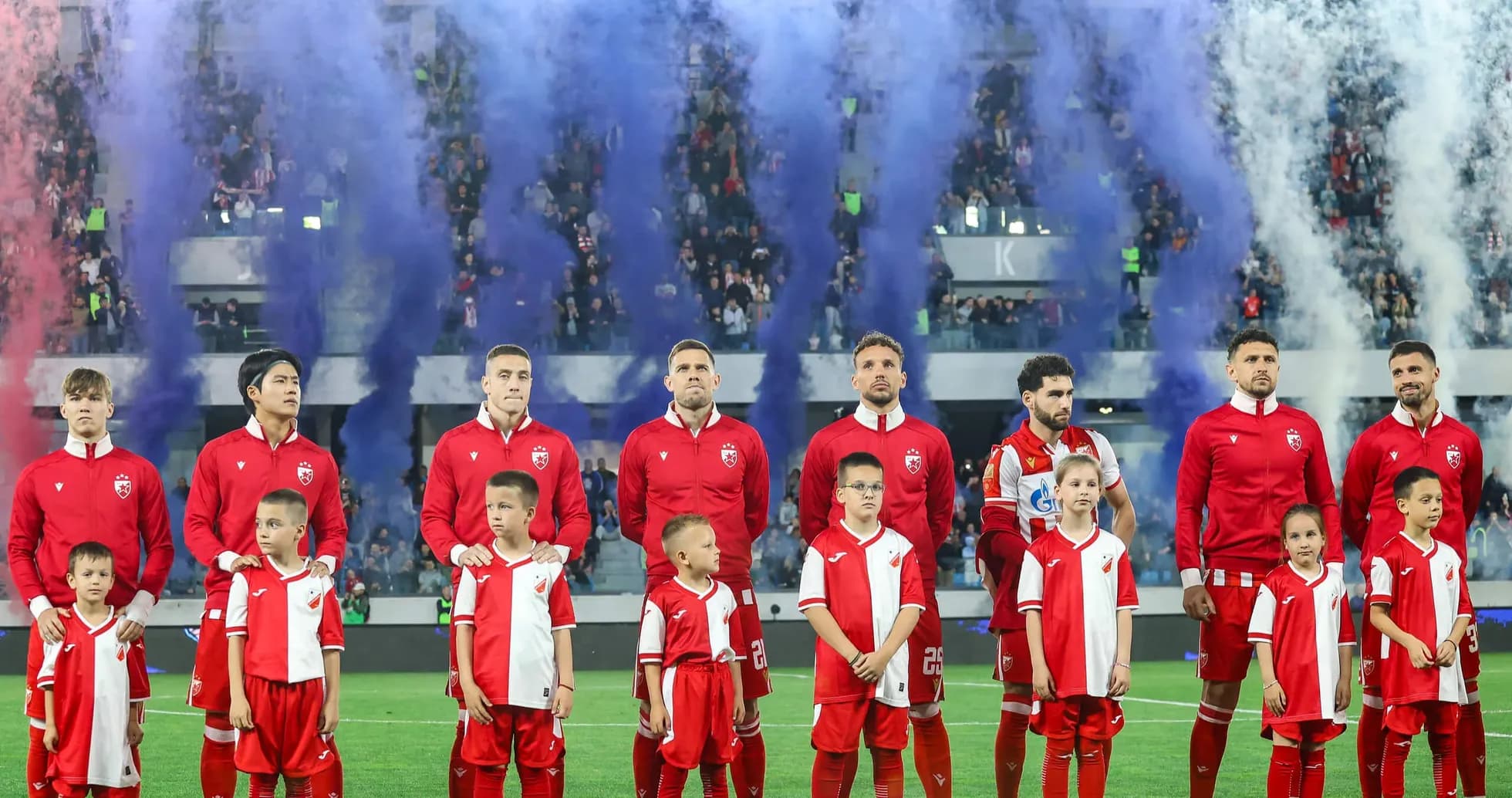
In Belgrade’s Stadion Rajko Mit, FK Crvena Zvezda host Hapoel Beer Sheva in the second leg of a UEFA Champions League 3rd Qualifying Round tie that will decide who moves to the brink of the group stage and who drops out of the main Champions League path. With no league standings data available yet for 2026, this knockout qualifier effectively defines each club’s European trajectory for the year: progression keeps the group-stage dream alive and preserves significant financial and sporting upside, while elimination sharply reduces the season’s ceiling.
Head-to-Head Tactical Summary
The only recent meeting between these sides came in the first leg on 4 August 2026 in Szombathely’s Haladás Sportkomplexum, where Hapoel Beer Sheva, as the home team, beat FK Crvena Zvezda 1–0. The half-time score was also 1–0, indicating that Hapoel struck early and then managed the game effectively, preserving a clean sheet over 90 minutes. That narrow margin sets up a finely balanced second leg: Crvena Zvezda must overturn a single-goal deficit, while Hapoel Beer Sheva know that one away goal in Belgrade would dramatically increase the pressure on the hosts.
Global Season Picture
- League Phase Performance: There is no standings data provided for either FK Crvena Zvezda or Hapoel Beer Sheva in the 2026 UEFA Champions League, so current rank, points, and goals for/against in any league or group-stage context cannot be quantified from the available information.
- Season Metrics: In the league phase of this Champions League campaign, FK Crvena Zvezda have played 3 matches, winning 2 and losing 1, with 9 goals scored and only 1 conceded. They have been explosive at home (5 goals scored, none conceded in 1 match) and very efficient away (4 scored, 1 conceded in 2 matches). They have kept 2 clean sheets and failed to score just once, suggesting a generally high offensive floor. Their disciplinary profile shows 6 yellow cards distributed mainly late in games, with half of them in the final quarter-hour, and no red cards so far. Hapoel Beer Sheva have also played 3 matches, winning 2 and losing 1, scoring 4 and conceding 2. All their wins have come at “home” (2 matches, 3 goals for, none against), while away they have 1 goal scored and 2 conceded in a single loss. They have kept 2 clean sheets and have scored in every match, but they already have 1 red card and a cluster of yellow cards between minutes 46 and 75, pointing to a more volatile disciplinary pattern under pressure.
- Form Trajectory: FK Crvena Zvezda’s form string “WWL” shows they opened this European run with two consecutive wins before the first-leg defeat to Hapoel Beer Sheva broke their streak. That pattern indicates strong initial momentum now checked by a setback that must be corrected at home. Hapoel Beer Sheva’s “LWW” sequence is the inverse: an early loss followed by two straight wins, including the 1–0 first leg. Their curve is upward, suggesting growing confidence and tactical cohesion as the qualifiers progress.
Tactical Efficiency
Across these qualifiers, FK Crvena Zvezda’s attacking efficiency has been outstanding: 9 goals in 3 matches, with a home profile of 5 goals in a single game and an away profile of 4 in 2 games. They have also conceded just 1 goal, combining a high-scoring attack with a very tight defense and 2 clean sheets. This points to a side that can sustain pressure in the final third while remaining structurally sound at the back, especially in front of their own crowd. Hapoel Beer Sheva’s attack is more modest in raw output (4 goals in 3 games) but consistent, as they have scored in every match. Defensively, 2 goals conceded and 2 clean sheets underline a compact block that can protect leads, as seen in the first leg. However, their away sample (1 goal scored, 2 conceded) suggests they are less secure when they have to defend higher quality chances on the road. Disciplinary trends matter tactically: Crvena Zvezda’s lack of red cards and more evenly spread yellows support a stable game model, while Hapoel’s single red card and concentration of bookings after half-time hint at potential vulnerability if the second leg becomes stretched or emotionally charged. Overall, the numbers suggest Crvena Zvezda have the higher attacking ceiling and a defense capable of playing on the front foot without completely opening up, whereas Hapoel Beer Sheva rely more on compactness, game management, and efficiency in key moments.
The Verdict: Seasonal Impact
This second leg is season-defining for both clubs. For FK Crvena Zvezda, elimination here would turn a statistically dominant early campaign (9 scored, 1 conceded) into a story of underachievement, forcing them into a lower-tier European route and reducing both revenue and competitive exposure. Progression, by contrast, would validate their attacking and defensive metrics, maintain their upward European profile, and keep them on course for the group stage, where their high-scoring home form could be a major asset. For Hapoel Beer Sheva, defending a 1–0 lead away offers a rare opportunity to shift their European status: reaching the next qualifying round would reinforce their recent upward form (“LWW”), confirm that their compact defensive model can travel, and keep alive the prospect of group-stage football and its financial and reputational gains. Failure to hold the aggregate advantage would underline existing concerns about their away resilience and disciplinary volatility. In strategic terms, this tie will likely shape how both clubs are perceived for the rest of 2026—Crvena Zvezda either as a potent side that delivers when it matters in Europe, or one that falls short in key knockout moments; Hapoel Beer Sheva either as a rising, tactically disciplined presence on the continental stage, or a team whose limitations away from home cap their seasonal ceiling.