Fenerbahçe's Tactical Dominance Over Gornik Zabrze
Fenerbahçe’s 1-0 win over Gornik Zabrze at Chobani Stadium was a tactical siege: one team installed in the opposition half, the other almost entirely in survival mode. The scoreline was narrow, but the structural dominance from Ismail Kartal’s side was overwhelming, reflected in 79% possession, a 15–2 shot count and a 9–2 edge in corners. Gornik’s 4-3-3 never really functioned as an attacking unit; it flattened into a deep 4-5-1 and accepted long spells without the ball, hoping to compress space in front of their box and trust their goalkeeper and centre-backs to absorb pressure.
Kartal set Fenerbahçe up in a 4-2-3-1 that behaved like a 2-3-5 in sustained possession. With 765 total passes and 703 accurate (92%), the home side built in patient, almost training-ground fashion, using the double pivot to pin Gornik’s first line and then circulating until a lane opened between or outside the visitors’ compact midfield. The passing volume tells the story: Fenerbahçe completed more than three times as many passes as Gornik attempted (203), which turned the match into a question of whether the hosts could translate territory into clean chances.
The back four was crucial to that territorial lock. Nathan Aké and Milan Skriniar formed a high, aggressive central pairing, stepping into midfield whenever Gornik tried to play into feet. Full-backs Nelson Semedo and Jayden Oosterwolde pushed on simultaneously, effectively creating a five-man first line in possession with the two pivots behind. That allowed Fenerbahçe to hem Gornik into their own third, with quick counterpressing after any turnover preventing the Polish side from launching transitions. The fact Gornik managed only one shot on goal and one off target across 90 minutes underlines how rarely they escaped that pressure.
In midfield, Matteo Guendouzi and Bartug Elmaz were the metronomes. Their role was less about line-breaking dribbles and more about relentlessly recycling the ball, shifting Gornik’s block from side to side. With such a high pass completion across the team, they consistently chose low-risk options to maintain pressure rather than force vertical passes that could trigger counters. Ahead of them, Irfan Kahveci and Fred worked between the lines, frequently rotating positions to disrupt Gornik’s midfield three. Kerem Aktürkoğlu, starting from the left, attacked the half-space aggressively, while Talisca operated as a hybrid between a classic No 10 and a false nine.
Decisive Moment
The decisive moment in the first half came from that central overload. At 37', Talisca found the pocket between Gornik’s centre-backs and midfield, receiving in the seam where the visitors’ 4-3-3 was most vulnerable. With Gornik’s line compressed so close to their box, any half-turn in that zone was dangerous. His finish for 1-0 was the logical outcome of sustained occupation of those interior channels rather than a chaotic break or set piece. From that point, the match state suited Fenerbahçe perfectly: they could keep the ball, dictate tempo, and choose when to accelerate.
Gornik’s 4-3-3, on paper, offered width and potential outlets in Y. Ikia Dimi and M. Khlan, but in practice both wingers were forced so deep that the shape resembled a 4-5-1 without real counterthreat. The midfield trio of L. Sadilek, M. Dietz and Kacper Urbanski were primarily engaged in lateral shuffling and blocking passing lanes, rarely stepping out to press because of the risk of being played around. Their 203 passes at 73% accuracy highlight how little time they had on the ball and how often they were forced into clearances or hopeful vertical balls rather than structured build-up.
The goalkeepers’ roles mirrored the tactical balance. Mert Günok (Fenerbahçe) faced only one shot on target and made 1 save, acting more as an auxiliary sweeper behind a high line than a traditional shot-stopper. His involvement was about positioning and starting the build-up calmly when Gornik cleared long. At the other end, P. Schulze (Gornik Zabrze) was far busier, making 5 saves as Fenerbahçe registered 6 shots on goal. His interventions, combined with 1 blocked shot from his defenders, were the main reason the score remained within reach.
Second Half Substitutions
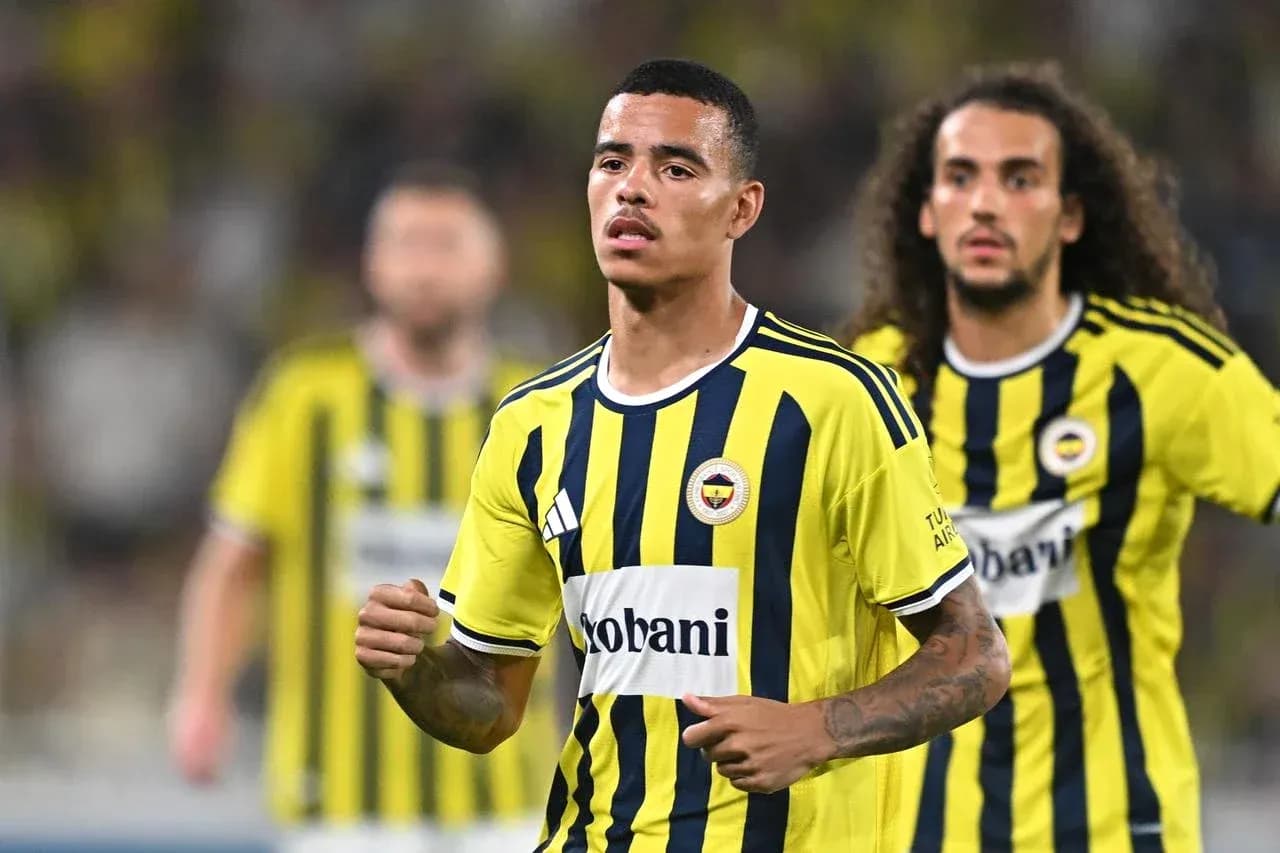
Second-half substitutions from Kartal were clearly aimed at maintaining intensity and adding fresh technical quality rather than changing the basic structure. At 46', Luan Peres Mercan (IN) came on for Nathan Aké (OUT), a like-for-like change that preserved the high defensive line and left-footed balance in the back four. At 69', Marco Asensio (IN) replaced Bartug Elmaz (OUT), injecting more creativity and shooting threat from the right half-space, while Oguz Aydın (IN) for Kerem Aktürkoğlu (OUT) kept the left flank dynamic and direct. Later, at 83', Mason Greenwood (IN) came on for Irfan Kahveci (OUT), adding another ball-carrying and shooting profile between the lines, and at 87' Souleymane Cherif (IN) replaced Talisca (OUT), giving Fenerbahçe fresh legs to press from the front and attack depth.
Michal Gasparik’s changes for Gornik were more reactive. At 72', Sondre Liseth (IN) came on for Kacper Urbanski (OUT) and Oskar Zmrzly (IN) for Y. Ikia Dimi (OUT), moves that slightly adjusted the front line but did not alter the deep defensive posture. At 76', Bilel Donio (IN) replaced M. Dietz (OUT), offering more energy in midfield but still within the same compact block. Finally, at 90+2', P. Warczak (IN) came on for M. Khlan (OUT), a late substitution that had minimal tactical impact given the lack of time and Gornik’s continued inability to sustain attacks.
Statistical Overview
Statistically, the match underlines a clear tactical script: Fenerbahçe’s structure produced volume and control, while Gornik’s plan was damage limitation. The home side’s 15 total shots, 6 on goal and 4 blocked, alongside 9 corners, show repeated access to the final third and box. Their 79% possession and 765 passes at 92% accuracy reflect a side comfortable circulating under minimal pressure and repeatedly resetting attacks. Gornik, with just 2 total shots and 2 corners, never turned their 4-3-3 into a genuine offensive platform.
Without explicit xG values, the territorial and shooting profile still suggests that Fenerbahçe’s 1-0 probably underrepresents their control. Defensively, they conceded only 2 shots and forced Gornik into long spells without meaningful possession, pointing to a strong defensive index built on high positioning, counterpressing and compact rest defense. In the context of a UEFA Champions League 2nd Qualifying Round tie, this performance projects a side capable of dominating weaker opponents through structure and ball circulation, even if the finishing on the night did not translate that dominance into a larger margin.