FC Cincinnati II vs Chattanooga: A Clash of Development Stages
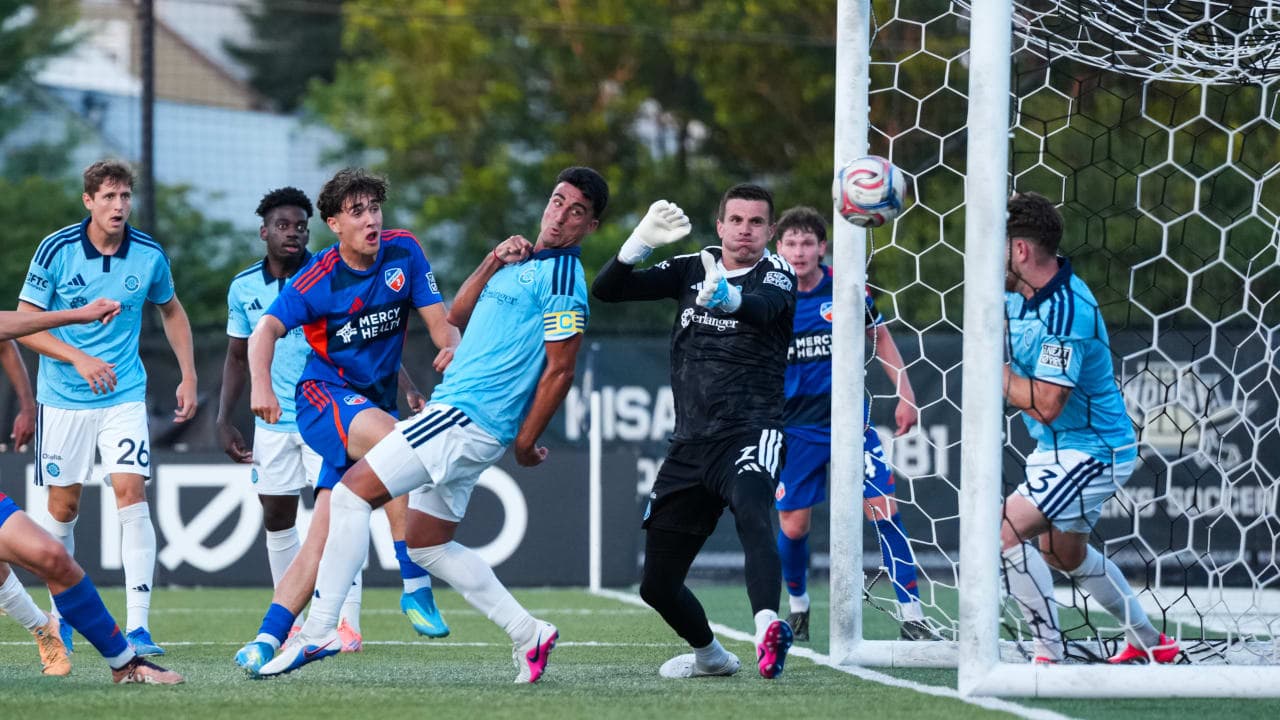
Under the lights at NKU Soccer Stadium, this MLS Next Pro Group Stage meeting between FC Cincinnati II and Chattanooga felt, for long stretches, like a clash between two different stages of development. The visitors arrived as a side angling toward the Eastern Conference play-off picture; the hosts, a talented but fragile group still learning the rhythms and ruthlessness of senior football. The 3–1 scoreline to Chattanooga, sealed by half-time and merely managed after the break, distilled that gap in game management and collective maturity.
Heading into this game, the standings framed the narrative starkly. FC Cincinnati II were 7th in the Northeast Division and 13th in the Eastern Conference, with 9 points from 10 matches and a goal difference of -7, built on 12 goals for and 19 against overall. At home they had been far more convincing: 3 wins from 5, scoring 10 and conceding 7, an average of 2.0 goals for and 1.4 against at NKU Soccer Stadium. On their travels, though, they had lost all 5, scoring just 2 and shipping 12. Chattanooga, by contrast, came in as a playoff-placed unit: 4th in the Central Division and 7th in the Eastern Conference, with 16 points from 10 and a goal difference of 2 (18 scored, 16 conceded overall). Their attacking profile was balanced—2.0 goals at home and 1.6 away on average, with 10 home goals and 8 away in 5 fixtures each.
I. The Big Picture: A Match Decided Early
The fixture status tells its own story: “Match Finished” after 90 minutes, with Chattanooga 3–0 up by the interval and ultimately 3–1 winners. For a Cincinnati II side whose form line read “LLLLWLWWLL” overall, that first half felt like a regression to their worst tendencies—slow starts, structural looseness, and a vulnerability when the game becomes stretched.
Without a recorded formation, we read FC Cincinnati II’s intentions through personnel. B. Dowd anchored the side, with a youthful spine around him: F. Samson and S. Lachekar in the defensive line, W. Kuisel and C. Holmes offering outlets, and a midfield core of D. Hurtado, M. Sullivan and L. Orejarena tasked with knitting play. Ahead of them, A. Chavez and M. Vazquez supported S. Chirila, the nominal spearhead. It is a group built for development: technical profiles, interchangeable roles, but still searching for a hardened identity.
Chattanooga’s XI, meanwhile, carried the air of a more settled senior side. Veteran goalkeeper E. Jakupovic set the tone from the back, protected by T. Robertson, F. Sar-Sar, M. Hanchard and A. Sorenson. In front, the trio of S. Louis, L. Husakiwsky and D. Mangarov offered a blend of physicality and guile, with A. Krehl and Y. Cohen flanking central striker D. Barker. Heading into this game, Chattanooga’s season form—“LWLLWWLLWW”—spoke of volatility, but also of a side capable of stringing wins together when the balance clicks.
II. Tactical Voids and Discipline
With no injury or suspension list provided, both coaches appeared to have close to full decks, yet the tactical voids emerged in how each squad interpreted the contest’s tempo.
For Cincinnati II, the structural weakness was defensive cohesion. Overall this campaign they had conceded 19 goals in 10 matches, an average of 1.9 per game, and the first half here mirrored those numbers: space between lines, difficulty tracking runners, and an inability to protect the central zones in transition. Their season card profile underlines a team that often defends reactively: 21.74% of their yellow cards arrive in both the 0–15 and 46–60 minute windows, with another 17.39% between 31–45. They also carry a notable late-game risk, with 13.04% of yellows and 100.00% of their red cards coming between 76–90 minutes. This is a side that can become frantic when chasing games.
Chattanooga’s disciplinary map is more front-loaded around pressure phases. A significant 27.27% of their yellows fall between 31–45 minutes, with 22.73% in both the 61–75 and 76–90 windows. They also show a dangerous edge late on: their red cards are split evenly, 50.00% between 61–75 and 50.00% between 76–90. In this match, however, the early three-goal cushion allowed them to control risk, step off slightly, and avoid the kind of over-committing that has cost them in other fixtures.
III. Key Matchups: Hunter vs Shield, Engine Room vs Enforcer
Without individual goal tallies, the “Hunter vs Shield” narrative becomes unit-based. Chattanooga’s attacking unit, averaging 1.8 goals in total per game this season, met a Cincinnati II defence conceding 1.9 overall. The first half played out exactly to that statistical script: Chattanooga’s front line, led by Barker and supported by Mangarov and Cohen, repeatedly found pockets between Cincinnati’s midfield and back line. The visitors’ 18 goals in total this campaign—10 at home, 8 away—reflect a side that can travel with menace, and at NKU they exploited a home defence still learning collective distances.
In the “Engine Room” battle, the contrast was stylistic. Cincinnati II’s central trio of Hurtado, Sullivan and Orejarena are tasked with progression and control, but they often faced numerical and physical overloads. Chattanooga’s midfield triangle—Louis as a destroyer, Husakiwsky as the link, Mangarov as the creative pivot—pressed high in the first half, forcing turnovers and denying Cincinnati the chance to build on their otherwise decent home attacking numbers (2.0 goals per home game on average).
Once Chattanooga surged to 3–0 by half-time, the dynamic shifted. Cincinnati II’s response after the break, culminating in a solitary goal, echoed their season-long pattern: at home they can punch back, with 10 home goals in 5 matches, but the defensive damage is often already done. The introduction of options like D. Paz, J. Mize, G. DeHart, Y. Ramos, N. Gray, D. Mosquera, C. Sphire, G. Marioni and C. Niang from the bench added energy but not a full tactical reconfiguration; the game state had already tilted too far.
Chattanooga, for their part, could lean on a deep bench—G. Huff, D. Ortiz, A. Gordon, A. Garcia, N. Koehler, K. Ancelin, Y. Tcheuyap, J. Flores and F. Amoateng—to manage legs and tempo rather than chase further goals. Their season record of only 1 clean sheet overall underlines that they are not a naturally conservative side, but here game management trumped ambition.
IV. Statistical Prognosis and What Follows
Following this result, the season-long numbers feel reinforced rather than reshaped. Cincinnati II remain a paradox: strong enough at home to score freely, but undermined by defensive frailty that leaves them with a negative goal difference of -7 (12 for, 19 against overall) and a record of 3 wins and 7 losses in 10. Their 2 home clean sheets show potential, yet the pattern of conceding early and often in their worst outings persists.
Chattanooga, now with 5 wins and 5 losses from 10, and a goal difference of 2 (18 for, 16 against overall), continue to inhabit that intriguing middle ground: flawed, occasionally wild, but capable of top-end attacking performances. Their away profile—2 wins and 3 defeats, with 8 scored and 7 conceded—suggests they rarely die wondering on the road.
From an xG and defensive solidity standpoint, the underlying story is clear even without explicit expected goals numbers. Chattanooga’s attack, averaging 1.8 goals in total per match and able to hit their biggest away win at 3–1, projects as the higher-ceiling unit. Cincinnati II’s defence, conceding 1.9 overall and 2.4 on their travels, lacks the robustness to withstand sustained pressure, and even at home their 1.4 goals against per game can balloon when their structure collapses.
The tactical verdict, then, is that this match was less an anomaly and more a crystallization of existing trajectories. Chattanooga’s more experienced core and sharper attacking patterns made the difference in the decisive first 45 minutes. Cincinnati II’s task going forward is clear: harness the attacking promise that has given them a 5–0 home high, while tightening the spaces that currently turn every aggressive opponent into a potential three-goal threat.