Everton vs Manchester United: Tactical Breakdown and Match Insights
Hill Dickinson Stadium felt like a junction of two projects heading into very different futures. On one side, Everton arrived unbeaten, sitting 8th with 5 points from 3 matches, their overall goal difference a neat +2 (5 scored, 3 conceded). On the other, Manchester United came in 11th with 4 points, their overall goal difference +1 (7 scored, 6 conceded), a side already oscillating between exhilarating attacking bursts and defensive vulnerability.
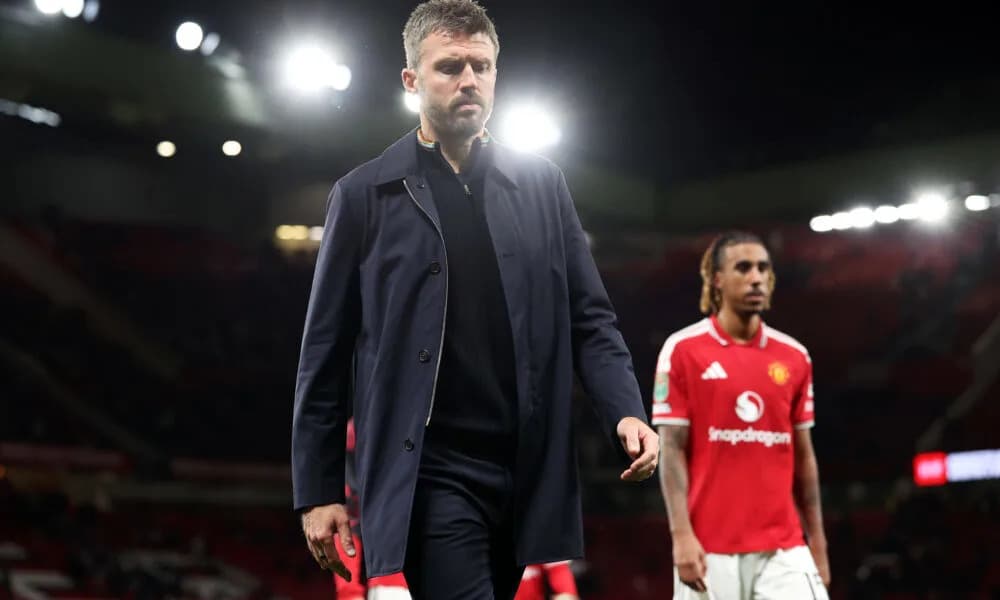
Both managers doubled down on a mirrored 4-2-3-1, but the shapes carried very different intentions. Leighton Baines’ Everton used the system as a protective shell for a young, aggressive front four. Michael Carrick’s Manchester United treated the same formation as a launchpad for his creators, particularly Bruno Fernandes and Bryan Mbeumo, to attack the half-spaces.
Everton's Seasonal DNA
Everton’s seasonal DNA is clear. At home they have been assertive: 2 matches played, 1 win, 1 draw, 4 goals scored and 2 conceded. An average of 2.0 goals for and 1.0 against at home underlines a side that is willing to commit numbers forward but not at the cost of structure. Overall, they have not failed to score once in 3 league matches, and they already own 1 clean sheet. Baines has built a platform that is resilient without being conservative.
The back four of M. Rohl, J. Tarkowski, J. Branthwaite and V. Mykolenko is the spine of that platform. Tarkowski and Branthwaite offer an old‑school centre‑back pairing: aerially strong, happy to defend their box, and crucial when Everton drop into a low block to protect leads. Mykolenko’s left‑back role is more balanced, often tucking in to form a back three in build‑up, allowing Rohl to push a little higher on the right and support transitions.
Ahead of them, J. Garner and H. Armstrong form a double pivot that is more about tempo than glamour. Garner, right‑sided in the pivot, is the primary distributor, linking into the advanced midfield line. Armstrong’s task is to shadow the opposition’s number 10 and screen passing lanes into the feet of M. Cunha and Fernandes, limiting United’s ability to receive between the lines.
The real intrigue in Everton’s structure lies in the trio behind lone forward T. Barry: B. Johnson, K. Dewsbury-Hall and T. George. Dewsbury-Hall, operating centrally, is the natural connector, driving Everton between thirds. Johnson, listed as a midfielder here but used as an attacker across the front line this season, brings direct running and a willingness to press from the front. His disciplinary profile matters: in total this campaign he has already taken 1 yellow card, with 4 fouls committed across his league appearances. He is a trigger for Everton’s press, but also a candidate for tactical fouls when transitions break down.
Barry’s role is deceptively simple: stretch the back line, occupy the centre-backs and create space for runners. With Everton averaging 1.7 goals overall per match so far, his movement is less about volume of shots and more about destabilising defensive structures.
Manchester United's Statistical Profile
Manchester United arrive with a very different statistical profile. Overall they have scored 7 and conceded 6 in 3 matches, an average of 2.3 goals for and 2.0 against per game. At home they have been explosive (5 goals scored, 2 conceded in 1 match), but on their travels they have struggled: 2 away matches, 0 wins, 1 draw, 1 defeat, with 2 goals scored and 4 conceded, averaging 1.0 for and 2.0 against away. This is not yet a side comfortable controlling away fixtures.
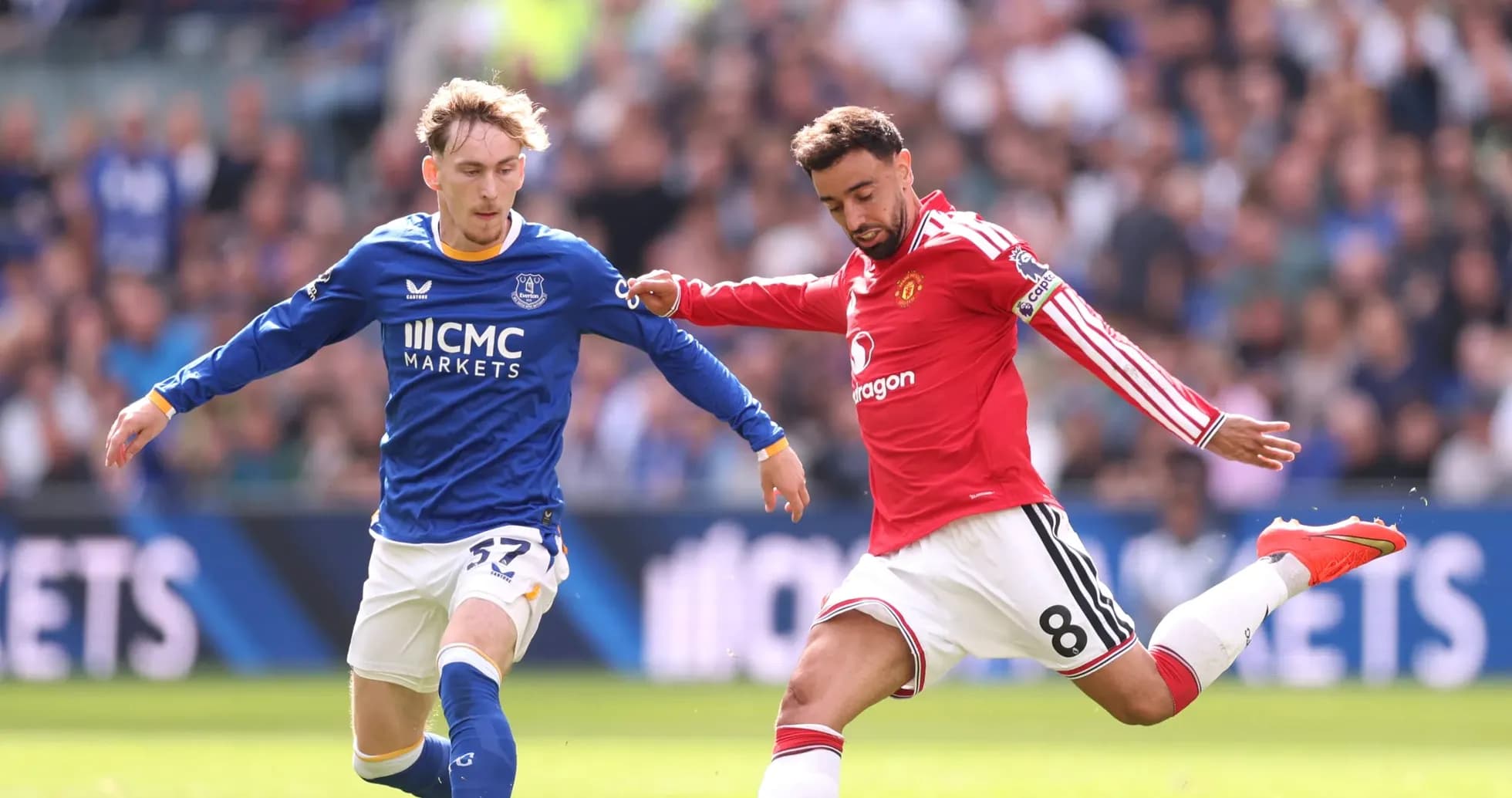
Carrick’s 4-2-3-1 is built around the “hunter vs shield” duel between his leading scorer and Everton’s defensive block. Bruno Fernandes is currently one of the league’s standout performers: in total this campaign he has 3 goals and 1 assist from midfield, with 9 shots (4 on target) and 8 key passes across 203 completed passes at 84% accuracy. He is both United’s primary finisher and their main creator, a dual role that Everton’s pivot must account for constantly.
Flanking him, B. Mbeumo offers a different kind of threat. He has 2 goals in total this campaign, 7 shots (4 on target) and 5 key passes, and he loves to attack the channel between full-back and centre-back. His duel with Mykolenko and Branthwaite is a critical pressure point: if he consistently isolates Mykolenko 1v1, United can tilt the game towards Everton’s left side and open central lanes for Fernandes and M. Rashford.
Behind them, K. Mainoo and Y. Tielemans form United’s “engine room”. Mainoo is the metronome, recycling possession and offering a press‑resistant outlet, while Tielemans is tasked with early forward passes into Cunha and the advanced midfield line. The absence of M. Ugarte through a knee injury removes a more destructive option at the base of midfield, leaving United slightly lighter in defensive duels. That places even more emphasis on Mainoo’s positioning and Tielemans’ discipline when Everton break.
Defensive Issues
Defensively, United’s issues are as much about game state as structure. They have yet to keep a clean sheet in any competition match this league season, and in total they have failed to score only once, which encourages them to open games up. Their card profile is telling: 40.00% of their yellow cards arrive between 76-90 minutes, with another 20.00% in the 91-105 range. This late‑game surge in bookings suggests fatigue and desperation when protecting or chasing results. Everton, by contrast, spread their yellow cards more evenly, with 20.00% in each of several time ranges, including 0-15, 31-45, 46-60, 61-75 and 91-105, indicating a side that uses tactical fouls as a consistent tool rather than a last resort.
Injuries and Tactical Voids
Injuries sharpen the tactical voids for both managers. Everton are without C. Norgaard, whose absence removes a seasoned screen in front of the defence and pushes more responsibility onto Armstrong and Garner to manage space. For United, the list is longer: C. Baleba, A. Diallo, T. Heaton, M. Ugarte and M. de Ligt all miss out. The absence of de Ligt in particular keeps the onus on H. Maguire and L. Martinez as the central pairing, a duo that must cope with Barry’s running and Johnson’s aggressive pressing without the added depth of a marquee alternative.
On the bench, there are clear swing pieces. For Everton, H. Hackney offers control and progressive passing if Baines wants to stabilise the midfield late on; he already has 1 assist in total this campaign and a passing accuracy of 89%, with 3 key passes and 3 tackles, underlining his ability to influence both sides of the ball. For United, J. Zirkzee and B. Sesko present Carrick with two very different number 9 profiles if he wants to move Cunha wider or add aerial presence.
Discipline and the Narrative
Discipline could tilt the narrative. P. Dorgu, a United defender who sits near the top of both yellow and red card charts with 1 yellow and a combative profile (4 fouls committed in just 75 minutes), is a potential high‑risk, high‑reward option from the bench. His introduction would raise United’s physical ceiling but also their red‑zone risk in a fixture where Everton’s wide players thrive on drawing contact.
From a statistical prognosis, the clash feels finely poised. Everton’s home scoring average of 2.0, combined with United’s away concession rate of 2.0, points towards the hosts finding routes to goal. Conversely, United’s overall attacking average of 2.3 goals per game meets an Everton defence that, while organised, still concedes 1.0 goal per match overall and has only 1 clean sheet so far.
With no penalties missed by either side this season and United perfect from the spot with 1 scored from 1, any decision in the box could be decisive. But the broader pattern suggests a contest defined by the central corridor: Fernandes and Mbeumo probing between the lines, Dewsbury-Hall and Garner trying to compress that space, and two back fours asked to defend large areas in transition.
Tactically, Everton will try to keep the game compact, pressing in coordinated waves and attacking quickly once possession is regained. United, by contrast, will accept a more open rhythm, trusting the quality of Fernandes and Mbeumo to outscore the structural flaws that still shadow their away form. On this evidence, another high‑event, finely balanced encounter between an emerging Everton structure and a still‑volatile Manchester United attack feels almost inevitable.