
England's World Cup Challenge: Finding a Settled Team
England’s World Cup run has plenty of promise. What it does not have, three games in, is a settled team.
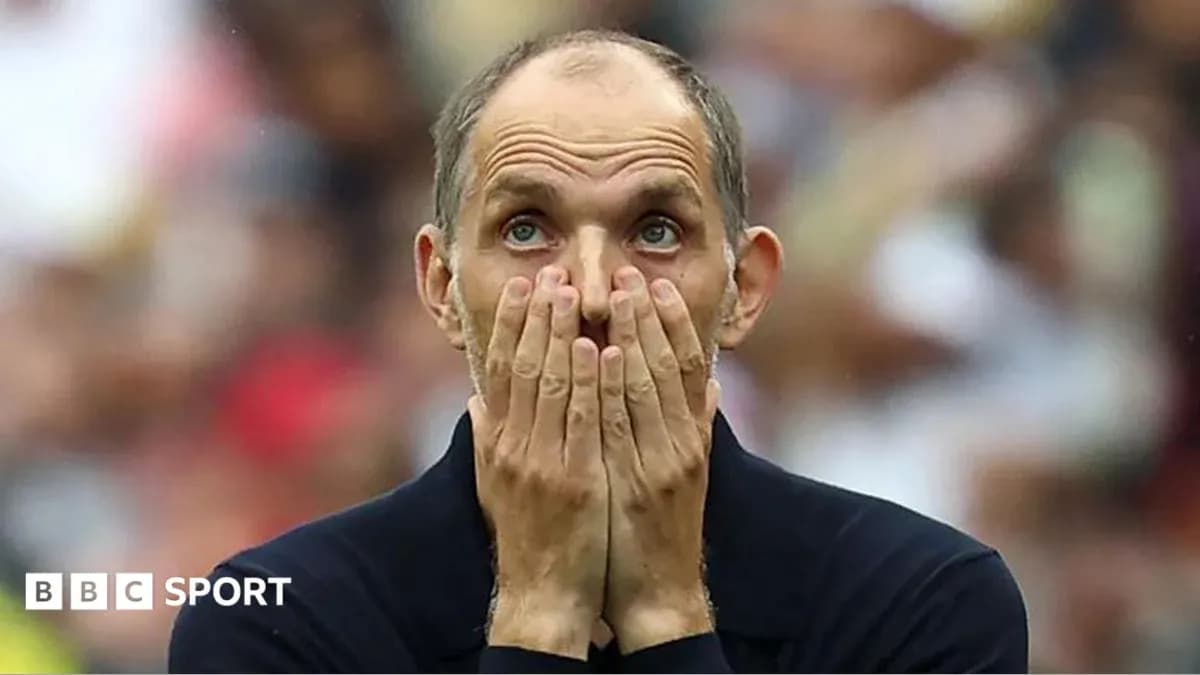
They have done the first job, topping the group and easing into the last 32. On paper, that looks routine. On the pitch, it has been anything but. Thomas Tuchel arrives at the knockout phase still juggling pieces, still searching for the right shape, still unsure what his best XI actually looks like.
For a manager of his experience, that is a curious place to be.
A team still in pencil, not ink
Tournament football always demands tweaks. Injuries, suspensions, form – they all drag coaches away from their ideal plan. But England’s constant reshuffling has gone beyond normal fine-tuning. It has become a theme.
Across 270 minutes, Tuchel has already used nine different full-back–winger combinations, spread across eight players. Both flanks have been a laboratory. The outcome? No consistent threat out wide and no rhythm in either direction of play.
Reece James and Jarell Quansah breaking down at right-back has clearly hurt. Bukayo Saka operating below full sharpness has not helped either. Yet the net effect is stark: England look blunt on the wings and brittle at the back. Every time an opponent has run at them, the back line has looked uncomfortable, unsure, exposed.
That is the worry that lingers beneath the positive headlines.
The spine that refuses to bend
Amid the uncertainty, a core has emerged – and it is carrying this team.
Elliot Anderson was outstanding against Panama, driving the game with a maturity that belied his experience. Jude Bellingham dominated, took the man-of-the-match honours and, crucially, decided it. Harry Kane did what Harry Kane does: found his goal, again, when England needed it.
Behind them, Jordan Pickford and Declan Rice continue to anchor the side. That group – Pickford, Rice, Bellingham, Anderson, Kane – is the spine you can trust. When matches tilt and the plan frays, they are the ones you can hang your hat on.
England are not yet getting enough from every department. The collective pattern of play is still patchy, still searching for fluency. But when the system stalls, the big-hitters have stepped in and dragged games in England’s direction.
It is not ideal. It is invaluable.
Living off moments, not a machine
Tuchel would prefer a side that creates chances in waves, that suffocates teams with structure and repetition. Instead, England have been leaning on moments. Bellingham’s winner against Panama summed it up.
The corner from Saka was nothing special. A routine delivery, if anything slightly underwhelming. Then Bellingham transformed it. He muscled his way into position, adjusted his body, and turned a mediocre ball into a match-winning one. Strength. Balance. Technique. Desire. Once it hit the net, there was only ever going to be one winner.
That is the upside: England know they have players who can conjure something from very little. The downside is obvious. You cannot build a whole World Cup campaign on improvisation and individual brilliance.
Set-pieces have always been a vital weapon at major tournaments, and England are right to lean on them. But the open-play structure still looks incomplete. They are not consistently dangerous before the breakthrough arrives. Too often, the goal feels like a bailout, not the natural conclusion to sustained pressure.
The wide conundrum
Now comes DR Congo in Atlanta, a tie that will almost certainly echo Ghana and Panama. Deep block. Numbers behind the ball. Quick counters. A test of patience and precision.
England have already seen that picture twice. The question is whether they have learned enough from it.
One simple adjustment stands out: how and where the ball is delivered into the box. Against Panama, Marcus Rashford and Saka kept cutting inside to whip in inswinging crosses – Rashford from the left on his right foot, Saka mirroring him from the opposite flank. Those balls are food and drink for centre-backs facing play. Easy to read. Easy to clear.
England looked far more threatening when their wide players went on the outside and drove crosses in from the byline or near it. Bellingham’s delivery for Kane’s goal was the template. The forward knows the ball is coming, can time his run and attack it. The defenders are the ones reacting, not dictating.
That is the sort of detail that can unlock a packed defence. It is also the sort of detail England must get right from here on.
Cracks at the back
For all the focus on attacking patterns, the biggest red flag is at the other end.
England have been opened up in every game. Croatia carved them apart in the first half and scored twice. Ghana and Panama did not punish them to the same extent, but both found chances, both exposed the gaps. The fact England got away with it does not change the underlying picture.
The further you go into a World Cup, the less forgiving it becomes. Better forwards will not need a second invitation. The same mistakes that went unpunished in the group stage will end campaigns in the knockouts.
Previous tournaments offered at least one comfort: even when England’s defence was not elite, it was usually settled. Partnerships had time to breathe. This time, the back four feels like a revolving door.
DR Congo will probably face yet another different unit. Djed Spence could return at right-back. Ezri Konsa might shuffle across from centre-back. John Stones may come back in alongside Marc Guehi – if fitness allows. Every option comes with a caveat, every solution with a compromise.
Tuchel has made some of these changes by choice, chasing balance and chemistry. Others have been forced on him by the medical room. He also knew the risks when he filled his squad with players whose injury records are, at best, fragile. It was a gamble. It still is.
Time to pick a back four and live with it
England have done enough so far. Group winners, big performances from their stars, a path that should lead to Mexico or Ecuador if they handle their business against DR Congo.
But the margin for error is shrinking. The luxury of “trying things” is almost gone.
Whoever Tuchel picks in that back four on Wednesday, England need more than a patchwork solution. They need a unit that can carry them not just through one tie, but through the next couple of rounds, at least. They need continuity. They need trust.
The World Cup does not wait for a coach to find his perfect formula. At some point, you stop experimenting and you commit.
Tuchel is right up against that moment now.





