England Faces Panama: Injuries and Tactical Challenges Ahead
In another universe, England would stroll into New Jersey with their feet up and their captain wrapped in cotton wool. Harry Kane would be eyeing the Golden Boot race, not another 90 minutes of hard labour. Panama, Group L’s fourth seeds, would be a training exercise, a chance for Ollie Watkins and Ivan Toney to stretch their legs while Kane keeps pace with Lionel Messi, Erling Haaland and Kylian Mbappé from the comfort of the bench.
That world vanished with the goalless draw against Ghana.
Thomas Tuchel’s side failed to finish the job early, failed to win the group with a game to spare, and now a “dead rubber” has turned into a live wire. The schedule is unforgiving: potentially four games in 13 days. Rotation is no longer a luxury; it’s a risk assessment.
And the risks are stacking up.
Injuries, bookings and a fraying plan
There will be changes against Panama, some of them unavoidable. Declan Rice sits a yellow card away from suspension and finished the Ghana match with strapping on his left calf. Losing him now would be reckless. Losing Reece James already is a serious problem.
James’s hamstring has betrayed him again. He is out for at least two games, stripping England of their most natural attacking outlet from right-back and handing Tuchel another headache against the kind of deep, organised defence that has so often blunted his teams.
This was the gamble. James’s injury record is no secret – he missed almost two months at the end of the season – but Tuchel still went light on attacking full-backs. Tino Livramento, himself fragile, has already left the camp and been replaced not by another raiding full-back but by a centre-back, Trevoh Chalobah. Nico O’Reilly, talented but raw, suddenly carries the burden of providing width and thrust.
The other options at right-back – Ezri Konsa, Jarell Quansah, Djed Spence – are all more comfortable defending than flying forward. Every minute James spends in the treatment room makes the decision to leave Trent Alexander-Arnold at home look even bolder, and even more exposed.
What should have been a straightforward assignment against Panama now carries edge and jeopardy. The price of that 0-0 with Ghana is clear: England cannot ease off.
Kane, Bellingham and the cost of control
So does Kane go again? Does Jude Bellingham? Tuchel knows he cannot strip out all his stars. Top spot in the group still needs to be secured, and he will not want the path through the last 32 skewed by a careless second-place finish. Just as importantly, England need to rediscover some rhythm after beating Croatia and then stuttering, again, in their second group game at a major tournament.
Tuchel is not panicking, but he is not blind either. England struggled badly against Ghana’s compact 4-5-1. They will likely face something even more entrenched from Panama. Thomas Christiansen’s team are already out after narrow 1-0 defeats to Ghana and Croatia, yet they have been stubborn and organised. They are a long way from the side England shredded 6-1 at the 2018 World Cup.
Tuchel expects a back five that can quickly become a back six or seven. He knows the pattern: England at their best when the game opens up, exhilarating when Croatia, Serbia and Wales left space; stodgy and predictable when Andorra, Albania and Latvia dug in. Ghana fell into that latter category. They were obdurate, disciplined, and they almost stole it on the break.
Thomas Partey shadowed Kane relentlessly, cutting off the captain’s favoured move of dropping deep to link play. The numbers told the story. Kane had just 19 touches. He exchanged only three passes with Bellingham. England hogged 78.8% of the ball but did not register a shot on target until after the interval.
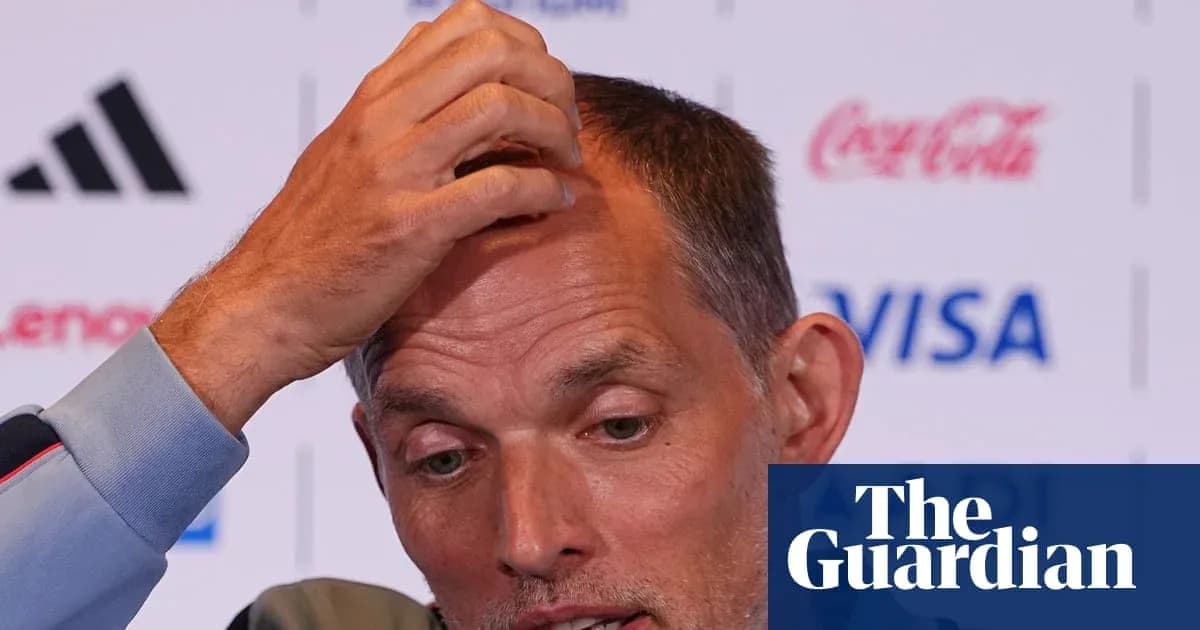
Tuchel has not cracked the code. “I haven’t found the recipe where: ‘They do this, then we do this and then we are fine,’” he admitted. He wants England to be active, aggressive, but not foolish. He rails against the idea of simply piling seven players on the last line and leaving three to defend the counter. “It’s not serious enough,” he said. Control still underpins everything he does.
The plan is clear: create overloads in key zones, then speed up the play. The problem? “There was no overload against Ghana,” Tuchel said. “There will very likely be no overload against Panama.” When the opposition refuse to commit numbers forward, the board gets crowded and the patterns break down.
So England must take more risks with the ball. They must resist the fouls, the stoppages, the niggles that Panama will use to fracture any rhythm. Bellingham’s frustration against Ghana boiled over in a needless free-kick just before half-time, a small moment that summed up a wider irritation.
Left side dulled, right side uncertain
Tuchel wants more intensity, especially from the back line. The centre-backs have to step into midfield with greater conviction. Kobbie Mainoo, with his composure in tight spaces, could come in for Rice and help unlock the central block.
Out wide, the demands are blunt: run at your full-back, win your duels, force the issue.
On the right, Bukayo Saka is expected to return in place of Noni Madueke. On the left, patience is wearing thin. Anthony Gordon, so bright in the friendly win over Costa Rica when he dovetailed with O’Reilly, has faded. “I thought: ‘OK, left side is solved,’” Tuchel reflected. Then came the competitive games. “We played the first match and they’re not clicking. It was not the same penetration, not the same verticality, and this was the same in the second match.”
Spence, a right-footer, offered little going forward when he replaced the more adventurous O’Reilly at left-back against Ghana. Marcus Rashford did not appear until the 83rd minute and has yet to make a compelling case that he can dominate a game from the start. Still, Tuchel calls him “a candidate to start” and makes no attempt to disguise his dissatisfaction. “The left side in general needs to provide more threat.”
Other routes exist. Eberechi Eze or Morgan Rogers could start wide and drift inside, offering extra link play around Bellingham. The midfielder constantly showed for the ball against Ghana but his team-mates did not find him often enough. England’s best player cannot spend another evening gesturing for passes that never arrive.
Tuchel talks about one-against-one duels with almost evangelical zeal. He wants his players to relish them, to break the game open in those small moments. Yet he knows Panama will pack the zones where England want to create overloads, forcing the match into a grind. So he looks for other marginal gains: more precise crossing, more aggressive arrivals into the box, more shots from distance, more chances for a deflection to turn half-chances into goals.
A manager chasing the spark
Tuchel insists on perspective. Carlos Queiroz’s Ghana, he argues, are a nightmare draw for any heavyweight. He likens the stalemate to cagey Champions League group games where the underdog celebrates every duel, every clearance, every foray over halfway as if it were a goal. “They celebrated a 0-0 like they won,” he said. They had earned the right.
England’s expectations are different. They are not judged on surviving these matches; they are judged on bending them to their will, on finding the moment of quality that breaks the siege. The demand now is not just to beat Panama but to do it with authority, to lift the tension that has crept into this campaign and stride into the knockouts with something more than relief.
The handbrake has to come off at some point. The question for Tuchel, staring at a bruising schedule, a patched-up defence and a misfiring left flank, is simple and unforgiving.
Can he afford to release it now?