
Cristiano Ronaldo's World Cup Farewell: A Career Reflected
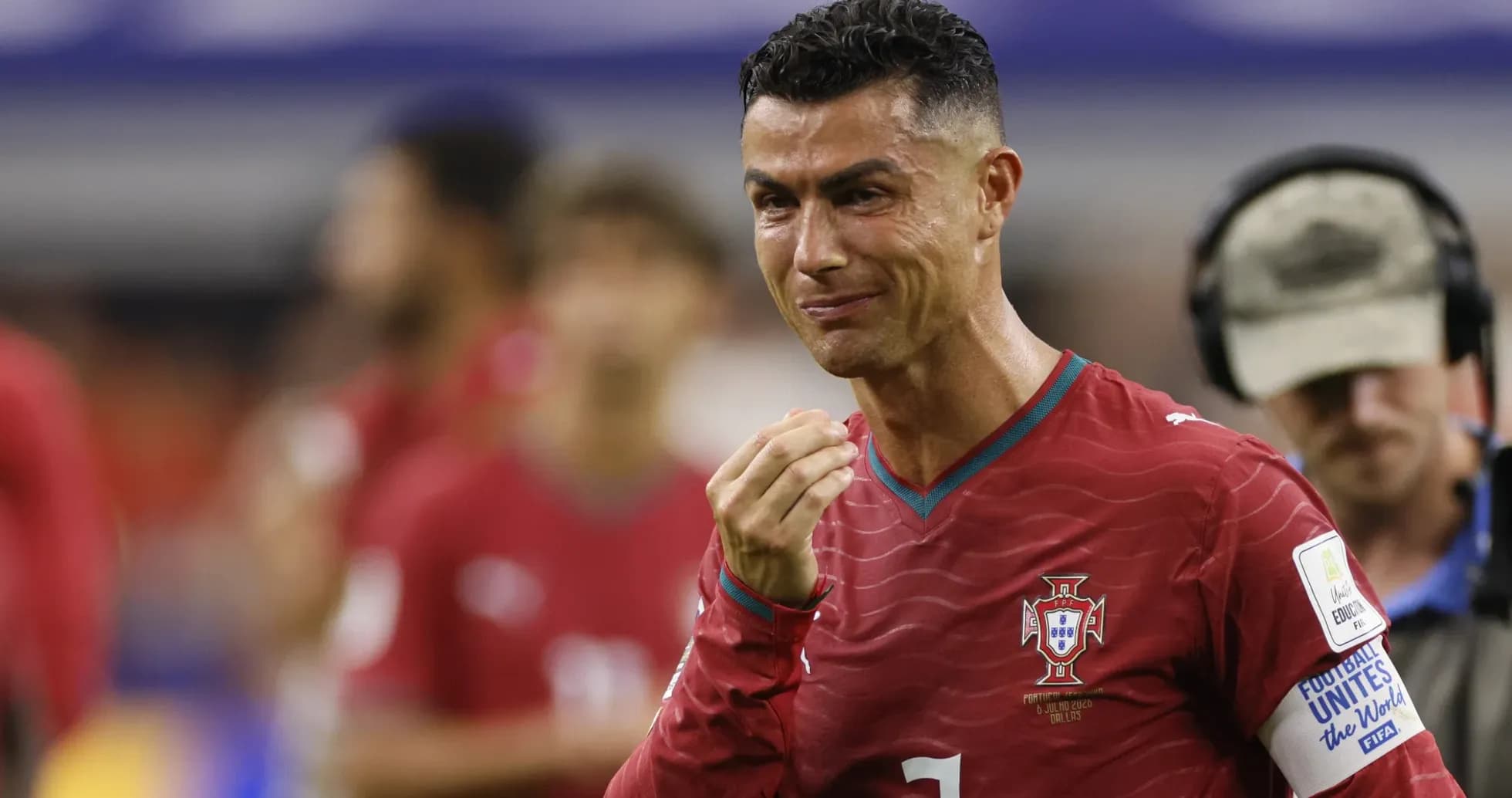
Cristiano Ronaldo walked off alone, head bowed, at the home of the Dallas Cowboys. No wave, no final flourish, just the slow trudge of a man who has lived his entire life in the spotlight and suddenly found the lights a little too harsh.
Spain 1, Portugal 0. World Cup dream over. Career at this level hanging in the balance.
He had fought back tears by the final whistle. At 41, the Portugal captain – one of the defining players of football’s modern era – knew this was it on the biggest stage of all. The last World Cup match. The last chase of the one trophy that always stayed just out of reach.
“I leave with a clear conscience,” he said, voice low, the disappointment almost swallowing the words. “Sometimes you win, sometimes you lose, and you have to move on.”
A giant, reduced to the margins
This was not the Ronaldo of old. Not the winger who shredded full-backs, not the ruthless finisher who bent entire defences to his will. Against Spain in Texas, he was a peripheral figure, stationed through the middle of a Portugal attack that never quite sparked.
Three attempts at goal. No assist. No decisive moment. At one point, as a teammate’s pass drifted away, he threw his arms up in frustration – a familiar gesture, but now tinged with something heavier: the realisation that the game no longer bends to him.
His World Cup in North America had flickers of the old drama. Three goals: two in a 5-0 demolition of Uzbekistan, one from the penalty spot against Croatia in the last 32. Enough to show the instinct is still there. Not enough to drag Portugal beyond the last 16.
Ronaldo’s deepest World Cup run will remain the semi-final appearance 20 years ago, back in 2026. Two decades between those peaks and this flat ending in Texas tell their own story.
A career that rewrote the limits
From a poor upbringing on Madeira, with an alcoholic father and little certainty, to becoming football’s first billionaire. The arc of Ronaldo’s life has always felt improbable, almost scripted. Only this time, there was no Hollywood ending.
His obsession with records, the relentless training, the meticulous care of his body – all of it carried him into his 40s at a level few have ever reached. Five Ballon d’Ors. Champions League titles stacked from Manchester United to Real Madrid and Juventus. European glory with Portugal at Euro 2016, a trophy he still places on the same pedestal as a World Cup.
“The biggest title I won with the national team was in 2016, which for me is just as significant as a World Cup, honestly,” he said. For once, there was no bravado, just a statement from a man taking stock.
Off the pitch, he became something else entirely: a global brand. The most followed person on Instagram, with 671 million followers. The “Siuuu!” celebration copied by kids from Lisbon to Lagos. A commercial phenomenon as much as a footballer, and still the reference point for what superstardom looks like in the modern game.
The late years, and the lingering question
But the game moves on, even for its giants. As the explosive pace faded, so did the days of hugging the touchline. Ronaldo reinvented himself as a penalty-box predator, a classic No 9, living off movement and timing rather than raw speed.
That shift came with scrutiny. As his influence waned, the debate grew louder: had he and Portugal coach Roberto Martinez stretched his international career too far? Was the legend still lifting the team, or had the team begun to carry the legend?
Against Spain, Martinez rolled the dice with two double substitutions late on, chasing the equaliser. Ronaldo stayed on. Of course he did. Even now, even like this, he remains the man you hesitate to take off, the one you fear might still produce something from nothing.
This time, nothing came.
No World Cup, but no regrets
Ronaldo will leave the World Cup stage without the medal he craved most. His trophy cabinet, already overflowing from Sporting Lisbon to Manchester United, Real Madrid, Juventus and now Al Nassr, will always have that one glaring gap.
He has conquered Europe multiple times. He has carried clubs, carried nations, carried expectations. But he will not be a World Cup winner.
On the eve of this final match, he had tried to frame it differently: “I am not going to be more Cristiano Ronaldo or less because I win the World Cup.” It sounded like a man bracing himself for both possibilities.
Now only one remains. No fairytale, no last dance with the trophy, just a long, lonely walk off a pitch in Texas and the promise that he will “go away and think about what comes next.”
For the first time in a generation, the future of international football will be written without him at its centre. The question now is not what more Cristiano Ronaldo can win, but how he chooses to live with everything he already has.





