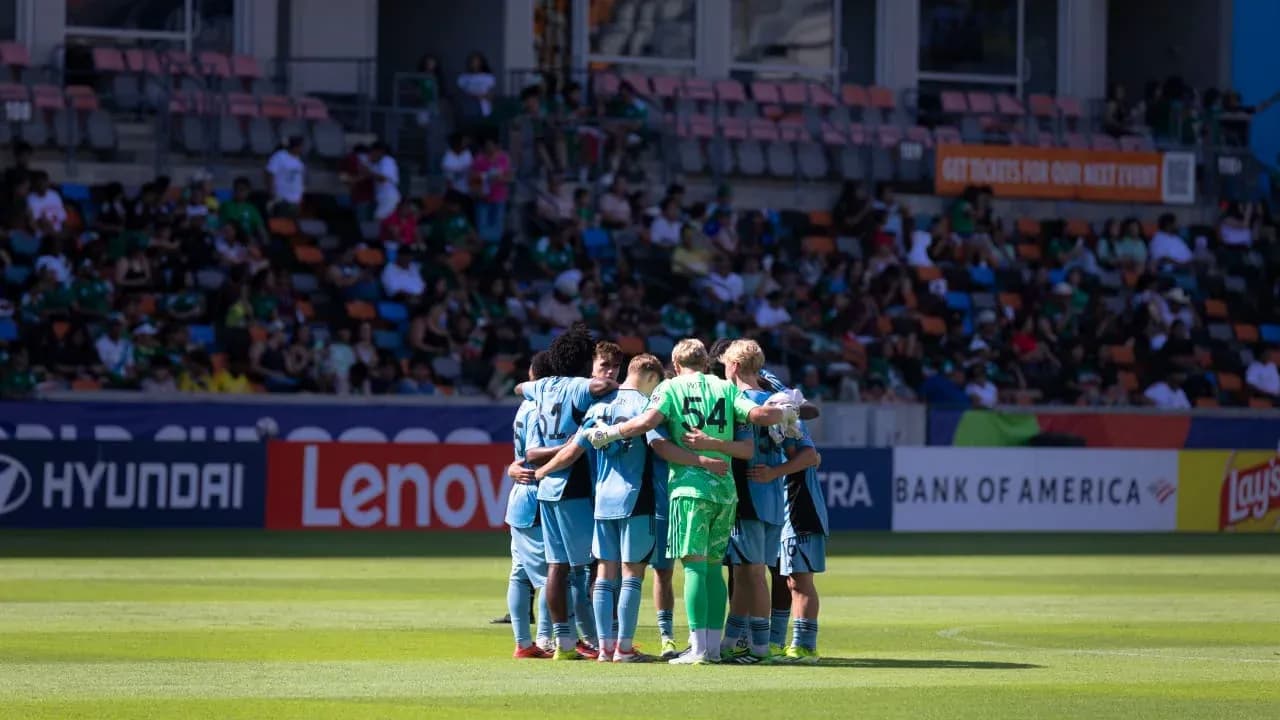
Columbus Crew II Overcome New York City II in Thrilling Comeback
Under the lights at Belson Stadium, New York City II and Columbus Crew II produced a wild, seesaw contest that said as much about their season-long identities as it did about the 90 minutes themselves. The league table framed this as a clash of contrasting trajectories: New York City II heading into this game sat 6th in the Northeast Division and 12th in the Eastern Conference, a volatile, all-or-nothing side with 5 wins, 0 draws and 6 defeats in total. Columbus Crew II arrived as promotion contenders, 2nd in the Northeast and 3rd in the Eastern Conference, firmly in the MLS Next Pro play-off picture with 8 wins and 5 losses from 13 total matches.
The numbers painted the fault lines clearly. New York City II were a high-variance group: in total they averaged 1.5 goals for and 1.8 goals against per game, with an especially fragile home defence conceding 1.8 on average at Belson. Columbus Crew II, by contrast, were a front-foot juggernaut going forward, scoring 1.9 in total per match, but with a porous back line that also allowed 1.8 in total. On their travels, Columbus were both dangerous and vulnerable: 1.7 away goals for, 2.3 away goals against on average.
The match itself mirrored those trends. New York City II sprinted into a 2–0 half-time lead, only to be overrun after the break as Columbus Crew II turned the tide to win 3–2 by full time. It was a textbook case of a team with a sharp attacking ceiling but flimsy defensive structure (New York City II) failing to manage game states against an opponent conditioned to chaos and comeback football (Columbus Crew II).
Tactical Voids and Discipline
With no formal injury or suspension list provided, both coaches leaned heavily on their core groups. Matt Pilkington’s New York City II XI was youthful and aggressive: B. Klein, A. Campos and J. Loiola formed the spine of a side built to press and combine, supported by the energy of K. Acito and K. Smith, and the forward thrust of P. Molinari and C. Flax. Up front, the likes of E. Samb, J. Suchecki and D. Kerr gave New York verticality and direct running lanes, while S. Musu offered a focal point. The bench—A. Suarez, R. Daoud, D. Duque, E. Martin, J. Ponce, D. Randazzo, L. De Pinho, H. Hvatum and G. de Souza—was deep enough to refresh every line, but also full of similarly attacking profiles rather than defensive stabilisers.
Federico Higuain’s Columbus Crew II setup was more balanced on paper, if still adventurous. L. Pruter anchored the side in goal, with a back line fronted by Q. Elliot, C. Ruvalcaba, C. Rogers and O. Presthus. In midfield, T. Karumanchi and N. Rincon provided the structural base, allowing T. Brown and K. Gbamble to roam between the lines and attack space. Up front, C. Adams and Z. Zengue were tasked with stretching New York’s defence and exploiting transitions. From the bench, S. Lapkes, G. De Libera, M. Nyeman, J. Chirinos, B. Adu-Gyamfi and I. Heffess gave Higuain options to adjust tempo and add defensive bite or fresh attacking legs.
Disciplinary trends coming into the fixture shaped the tone. New York City II’s card profile showed a tendency toward late volatility: 33.33% of their yellow cards arrived between 76–90 minutes, with an additional 14.29% between 91–105. They also had a single red card on the season, shown in the 76–90 window. Columbus Crew II, meanwhile, spread their yellows more evenly but still peaked at 61–75 minutes with 29.63%, followed by 22.22% between 76–90. They had already seen one early red card this campaign in the 0–15 minute range.
This disciplinary data foreshadowed a match likely to fray as fatigue and pressure mounted. New York’s tendency to lose control late, combined with Columbus’s mid-to-late game spikes in bookings, created a backdrop where momentum swings and emotional surges were almost inevitable—exactly what unfolded as the visitors stormed back after the interval.
Key Matchups: Hunter vs Shield, Engine Room
The “Hunter vs Shield” dynamic here was less about a single star striker and more about collective units. New York City II’s attack at home averaged 1.7 goals, and they had already produced a biggest home win of 2–0, evidence of their ability to strike early and in clusters. Against that, Columbus Crew II’s away defence, conceding 2.3 on average, was the soft underbelly of a promotion-chasing side. New York’s quick 2–0 half-time lead aligned perfectly with that statistical fault line: a high-energy front line, buoyed by the movement of Samb, Suchecki and Kerr, overwhelmed a Columbus back four that has struggled to keep clean sheets on the road (0 away clean sheets in total).
The flip side was brutal for New York. Their home goals-against average of 1.8 and a season-high home defeat of 0–5 underscored how quickly their structure can collapse once the first line of pressure is broken. Columbus’s attack, scoring 1.9 in total per match and 1.7 away, eventually found its rhythm. Players like Brown, Gbamble and Adams, supported by Karumanchi and Rincon, began to receive the ball higher and more centrally, turning New York’s midfield into a corridor rather than a shield.
In the “Engine Room” battle, New York’s midfield—Molinari, Flax, Acito and Smith—had the early edge, compressing space and feeding quick vertical passes into the front line. But as legs tired, Columbus’s double pivot of Karumanchi and Rincon asserted itself, recycling possession and dragging New York’s shape out of sync. The lack of a true holding specialist on New York’s bench meant Pilkington’s changes were more about like-for-like energy than altering the strategic balance. Higuain, on the other hand, could look to M. Nyeman or B. Adu-Gyamfi to stiffen the middle or inject fresh pressing intensity, tipping the midfield duel in Columbus’s favour as the game wore on.
Statistical Prognosis and Tactical Verdict
Following this result, the numbers reaffirm the narrative. New York City II remain an exhilarating but unstable proposition: 5 wins and 6 losses in total, with 16 goals scored and 20 conceded, a goal difference of -4 that exactly matches their standing data. Their single clean sheet at home and 1 in total highlight how rare it is for them to control a game for the full 90. Even with a perfect penalty record this season—1 taken, 1 scored, 100.00%—their margin for error remains thin because they concede too many chances.
Columbus Crew II, meanwhile, continue to live on the knife-edge of high-risk, high-reward football. In total they have scored 25 and conceded 23, for a slender goal difference of +2. They have 2 clean sheets, both at home; on their travels they have yet to shut anyone out, but their attacking power often compensates. The away numbers—12 goals for, 16 against—fit a side that is comfortable turning matches into shootouts and backing their frontline to land the final punch.
From an Expected Goals perspective, even without raw xG values, the shot and chance patterns implied by these season-long metrics are clear: Columbus are likely to generate a higher volume of quality chances over 90 minutes, especially as games stretch, while New York rely more on early surges and moments of individual incision. Defensive solidity tilts marginally toward Columbus, not because they are watertight, but because New York’s structure is more prone to collapse under sustained pressure.
Tactically, this match stands as a blueprint for both sides’ futures. For New York City II, the challenge is to translate their explosive home attacking average of 1.7 into more controlled, game-managed performances that protect a vulnerable back line. For Columbus Crew II, the task is to preserve their 1.7 away goals-for average while shaving down that 2.3 away goals-against figure—turning wild comebacks like this into more routine, controlled victories.
In the end, Columbus’s resilience and attacking depth overwhelmed New York’s bright start. The comeback from 0–2 at half-time to 3–2 by full time was not an anomaly; it was the statistical and tactical logic of both teams’ seasons playing out in real time on the Belson Stadium stage.