Chelsea and Hull City Draw 2–2: A Tactical Standoff
Stamford Bridge had the feel of a crossroads rather than a routine early‑season date. Under the grey London sky, a fifth‑placed Chelsea side, already leaning into Xabi Alonso’s expansive ideals, met a Hull City team punching above their historical weight, arriving in west London third in the Premier League table. Ninety minutes later, the 2–2 draw felt like a fair reflection of two projects in very different stages of construction, yet converging on the same patch of grass.
Heading into this game, Chelsea’s season had been defined by volatility at both ends. Overall they had scored 10 and conceded 9 across 4 league matches, a goal difference of 1 that encapsulated both promise and fragility. At home they had been even more extreme: 6 goals scored and 5 conceded in just 2 fixtures, an average of 3.0 goals for and 2.5 against at Stamford Bridge. This is not yet a side that controls risk; it is one that embraces it.
Hull City arrived as the antithesis. Unbeaten in 4, with 5 goals scored and only 2 conceded overall, their goal difference of 3 was built on defensive clarity and a disciplined 5‑4‑1. On their travels they had been quietly efficient: 3 goals scored and 2 conceded away from home, with an away average of 1.5 goals for and 1.0 against. Where Chelsea’s matches were open canvases, Hull’s were tightly drawn blueprints.
The absentees added a subtle twist to the tactical story. Chelsea were without M. Caicedo, E. Emegha, J. Henderson and M. Palestra, stripping Alonso of a ball‑winning anchor, an alternative centre‑forward and an experienced midfield voice. That absence of a natural destroyer in front of the defence pushed more responsibility onto R. Lavia and forced Reece James and M. Gusto to be both full‑back and midfielder by committee. For Hull, the list was longer: I. Ansah, J. Butland, D. Gyabi, C. Hughes, E. Matazo and H. Morita all missing. It meant S. Jakirović doubled down on a stable core, trusting K. Tzolakis in goal, a back five anchored by J. Egan, and a midfield where M. Crooks and R. Slater had to cover huge horizontal distances.
Alonso’s choice of a 4‑2‑3‑1 was a deliberate attempt to stretch Hull’s 5‑4‑1 into uncomfortable shapes. E. Martínez behind a back four of W. Fofana, L. Colwill, J. Hato and Pedro Neto gave Chelsea a blend of aggression and ball‑progression. Ahead of them, Lavia and James formed a double pivot that tilted asymmetrically: James stepping into half‑spaces to create a three‑man first line in possession, Lavia staying central to guard transitions.
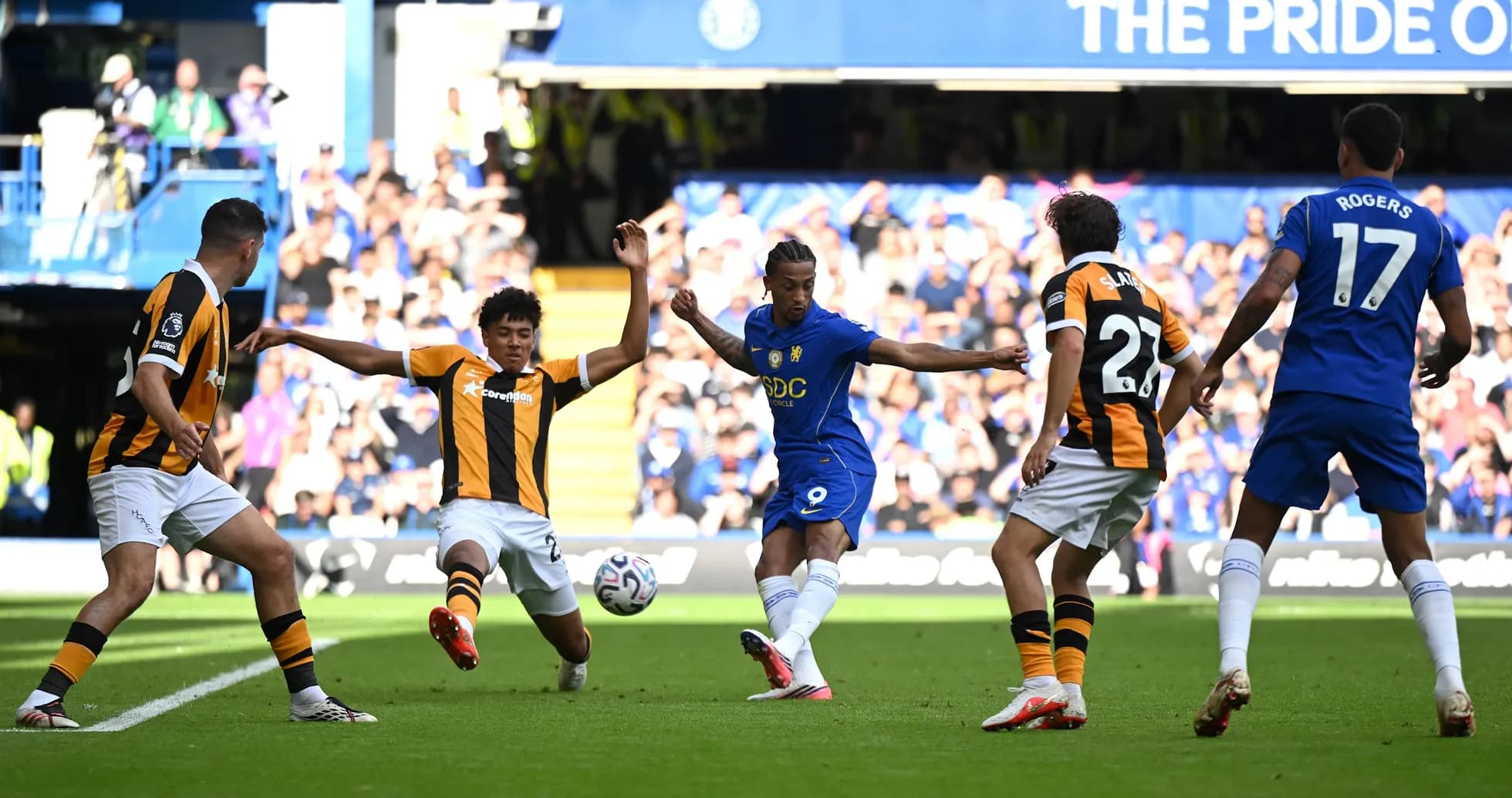
The true artistry lay in the band of three. C. Palmer, M. Rogers and Gusto were tasked with orbiting around Joã o Pedro, who led the line as both finisher and facilitator. Heading into this match, Joã o Pedro had 3 goals and 3 assists in 4 league appearances, with 8 shots (4 on target) and 7 successful dribbles from 10 attempts. He had also drawn 12 fouls and won 34 of 61 duels, a profile of a forward who lives in contact zones and forces defenders into constant decisions. Rogers mirrored that threat from the left: 3 goals and 1 assist, 7 shots (4 on target), 12 dribble attempts with 6 successful, and 10 key passes. Palmer, with 2 goals and 2 assists, 12 shots and 9 key passes, was the metronome between the lines, his 80% pass accuracy a testament to the balance between risk and control.
Hull’s response was to build a wall and then thread a needle. The 5‑4‑1, with Coyle and R. Giles as wing‑backs, Mendy and Ajayi alongside Egan, was less about parking the bus and more about controlling zones. In front of them, Crooks and Slater provided the muscle, while M. Belloumi and E. Stroud offered the creativity and pressing triggers. Belloumi, in particular, arrived at the Bridge as Hull’s most complete threat: 2 goals and 1 assist in 4 games, 8 shots, 10 tackles, 3 blocks and 9 interceptions. He is both playmaker and disruptor, the kind of hybrid profile that allows a 5‑4‑1 to become a 3‑4‑3 in an instant.
The Hunter vs Shield narrative was written down the centre. Joã o Pedro, Rogers and Palmer formed a trident that had already combined for 8 goals and 6 assists overall, against a Hull defence that had conceded only 2 goals in 4 matches. Hull’s defensive timing data underlined their discipline: overall they had allowed just 2 goals, one early (0–15 minutes, 50.00% of their concessions) and one in the 61–75 window (the remaining 50.00%). For long stretches of matches they had simply shut teams out.
Yet Hull’s own attacking rhythm suggested they would not just sit deep and suffer. Their goals were clustered between 16–30 minutes and 31–45 minutes, with 40.00% of their total in each of those periods, plus a late‑game surge of 20.00% between 76–90 minutes. In other words: they like to strike as the first half matures and still carry a sting late on. Against a Chelsea side that had yet to keep a clean sheet at home and conceded 2.5 goals per match at Stamford Bridge, that timing threatened to expose the gaps left by Alonso’s aggressive structure.
Within that structure, the engine room duel was compelling. Lavia and James against Crooks and Slater had the feel of a game within the game. Crooks, already on 2 yellow cards in just 2 appearances, is a combative presence who had made 6 tackles and 2 blocks heading into this fixture. His willingness to step out and engage Palmer or Joã o Pedro risked fouls in dangerous areas, but was essential to preventing Chelsea’s creators from turning on the half‑turn. On the other side, Lavia’s job was to track Belloumi’s drifting runs, particularly when Hull transitioned from 5‑4‑1 to a more adventurous shape with R. Giles and Coyle pushing high.
Discipline always loomed in the background. Chelsea’s yellow cards tended to be spread but with an early‑game spike: 33.33% of their cautions arriving in the opening 15 minutes and a late cluster of 22.22% between 76–90. Hull’s bookings, by contrast, peaked between 46–60 minutes with 30.77% of their yellows, reflecting the intensity of their post‑half‑time press. O. McBurnie embodied that edge: 2 yellow cards in 4 appearances, 74 duels contested and 9 fouls drawn. He is a centre‑forward who turns every aerial ball into a contest, and against Fofana and Colwill that physicality was always going to test the referee’s threshold.
From a statistical prognosis standpoint, the clash felt like a meeting point of trends rather than an outlier. Chelsea, with an overall scoring average of 2.5 goals per match and 2.3 conceded, inevitably dragged games into high‑event territory. Hull, averaging 1.3 goals for and just 0.5 against overall, tried to impose a slower, more controlled tempo. The 2–2 final scoreline effectively split the difference between those identities.
There were no penalties to tilt the narrative – both teams had taken none this season, with zero scored and zero missed – so the match became a purer expression of open‑play structure and set‑piece detail. Chelsea’s inability to translate territorial dominance into a decisive margin echoed their season‑long struggle to turn attacking fluency into clean sheets. Hull’s resilience, meanwhile, reinforced why they sit in the Champions League places: they can absorb pressure, strike in their preferred windows, and manage the dark arts through figures like McBurnie and Crooks without tipping into red‑card chaos.
Following this result, the broader arc is clear. Chelsea remain a high‑ceiling, high‑variance side, powered by an attacking core of Joã o Pedro, Rogers and Palmer that already resembles a top‑tier Premier League trio. Hull leave Stamford Bridge with their unbeaten record intact and their defensive reputation enhanced, proving that their early‑season numbers are not a mirage but the product of a coherent, well‑drilled 5‑4‑1.
In tactical terms, the 2–2 draw reads less like a stalemate and more like a statement from both camps: Alonso’s Chelsea will live and die by the sword of proactive football, while Jakirović’s Hull are building a platform sturdy enough to withstand even the fiercest storms in west London.