Carolina Core vs New York RB II: A Tactical Battle
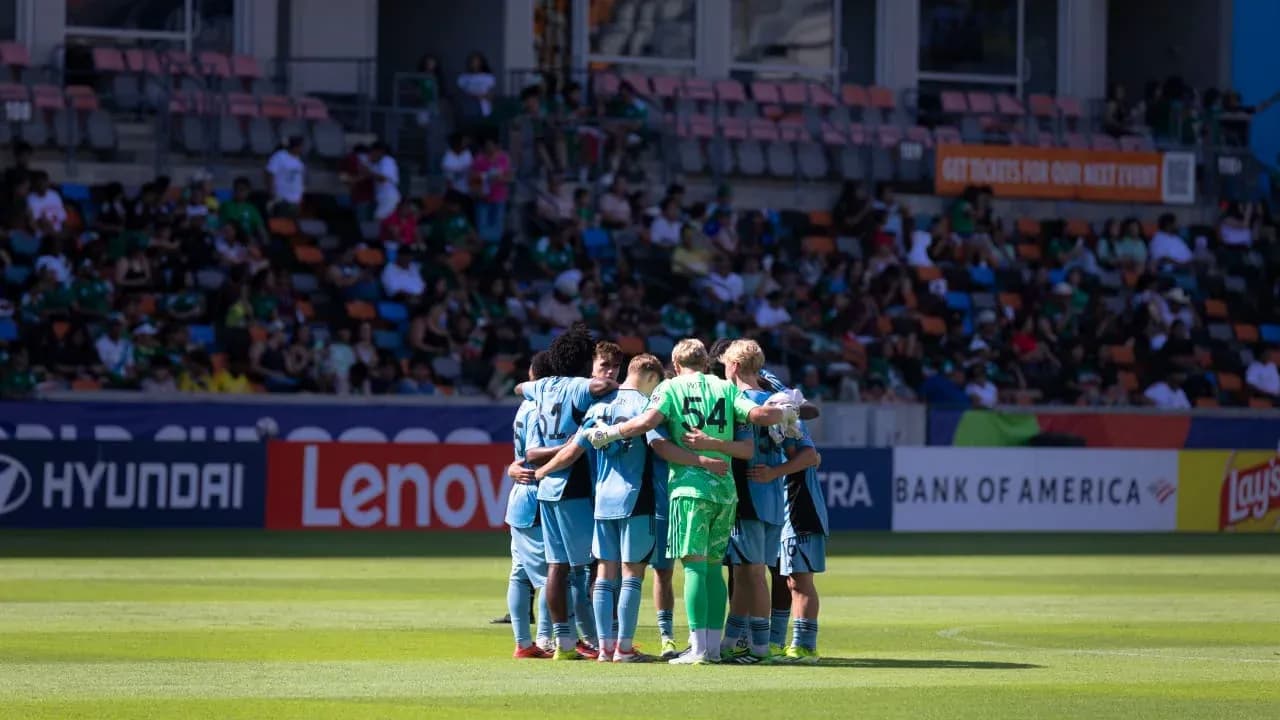
Under the Truist Point floodlights, this MLS Next Pro group-stage tie became a study in contrasts: a struggling Carolina Core side dragging the league’s pace-setters, New York RB II, into 120 minutes and a penalty shootout. The scoreboard froze at 1-1 after normal time, stayed there through extra time, and only tilted in the visitors’ favor from the spot, 6-5, to close a long, tense night.
I. The Big Picture – Underdogs Stretch the Leaders
Heading into this game, the table painted a stark picture. Carolina Core sat 7th in the Central Division and 15th in the Eastern Conference, with just 9 points from 12 matches. Their overall goal difference of -9 came from 13 goals scored and 22 conceded in the conference standings snapshot, and their broader season stats were even harsher: overall they had 14 goals for and 26 against, another goal difference of -12 that underlined their fragility.
At home, though, there was at least a hint of resistance. Carolina had played 6 home fixtures, winning 2 and losing 4, with 10 goals scored and 12 conceded. That works out to 1.7 goals for and 2.0 against at Truist Point, a profile of a team that can punch but often leaves itself open.
On their travels, New York RB II arrived as a far more complete machine. In total this campaign they had 27 goals for and 18 against, a goal difference of +9, and 25 points from 12 games. Away from home they had played 5, winning 4 and losing just 1, scoring 9 and conceding 6 for an away average of 1.8 goals for and 1.2 against. In the Eastern Conference table, they were 2nd, flagged for promotion play-off contention, and in their Northeast Division they sat top with the same 25-point haul.
On paper, this was a mismatch. On the pitch, it became an endurance test.
II. Tactical Voids and Discipline – Edges at the Margins
There were no listed absentees in the data, so both coaches had full decks. Donovan Ricketts sent out Carolina with N. Holliday in goal, shielded by a back line including N. Martinez, N. Evers and C. Orbaugh. In front of them, the Core spine of J. Caiza, R. Montenegro and T. Zeegers had to balance ball progression with emergency defending. Up front, A. Sumo, T. Raimbault, T. Pineda and A. Tattevin were tasked with stretching a New York side used to dictating tempo.
New York RB II, without a listed coach name in the snapshot, trusted A. Stokes between the posts, with a defensive unit anchored by A. Modelo, A. Sanchez, J. Munson and C. Faello. Ahead of them, B. Rodriguez, N. Worth and D. Cadigan formed the engine, while J. Masanka Bungi, D. Nelich and M. Jimenez offered the pressing and penetration that have underpinned their strong start.
Discipline has been a quiet but significant theme for both sides this season. Carolina’s yellow-card distribution is spread but spikes between 46-60 minutes at 20.59%, with 17.65% each in the 16-30, 31-45 and 76-90 ranges. Crucially, all of their red cards in the league have come between 46-60 minutes, where 100.00% of their dismissals fall. That pattern hints at a side that can lose control coming out of half-time, often as intensity and fatigue collide.
New York RB II, by contrast, tend to live on the edge late. Their yellows peak at 36.00% in the 76-90 range, with 20.00% each in the 31-45 and 61-75 windows. Their only red card this season has arrived between 61-75 minutes, again a sign that their aggression in the middle-to-late phase can spill over. Over 120 minutes here, that disciplinary tightrope was always going to matter, especially as legs grew heavy and decisions slowed.
III. Key Matchups – Hunter vs Shield, Engine vs Engine
Without detailed individual goal tallies for the players on the pitch, the “Hunter vs Shield” narrative has to be drawn from team-level profiles. Carolina at home average 1.7 goals for, but concede 2.0. New York away average 1.8 goals for and only 1.2 against. That framed the duel as Carolina’s need to convert limited chances against one of the league’s more efficient back lines.
In that sense, the clash between Carolina’s attacking quartet and New York’s defensive unit became the night’s central storyline. A. Sumo and A. Tattevin, flanked by T. Raimbault and supported by T. Pineda, were constantly trying to pull A. Sanchez and J. Munson into uncomfortable channels, while N. Martinez and N. Evers had to keep their nerve against the direct running of J. Masanka Bungi and the movement of M. Jimenez.
The “Engine Room” duel was equally decisive. Carolina’s midfield trio of J. Caiza, R. Montenegro and T. Zeegers had to stand up to the more assertive, high-tempo core of B. Rodriguez, N. Worth and D. Cadigan. New York’s season form – 8 wins and no draws in 12 league matches – suggests a side that either overwhelms opponents or gets caught in high-risk exchanges. Their overall scoring rate of 2.3 goals per game, combined with conceding 1.5, paints them as proactive and willing to trade blows.
Carolina, with just 2 wins and 10 losses in 12, are the opposite: often reactive, often under siege. That they held New York to 1-1 over 120 minutes implies that Ricketts’ midfield three managed to compress space, deny central overloads, and force New York into wider, less efficient routes to goal. Holliday’s presence behind them, plus the discipline of N. Evers and C. Orbaugh in the box, would have been critical in keeping the visitors to a single strike.
IV. Statistical Prognosis – xG Tilt, Mentality Shift
Even without explicit xG numbers, the season data offers a clear probabilistic verdict. Heading into this game, New York RB II’s attacking profile – 27 goals in 12 matches overall, with only 1 match away from home lost – suggests they typically generate the better chances. Carolina’s 14 goals from 12, paired with 26 conceded, implies they often live with negative xG differentials, especially away but also at home where they concede more than they score.
Overlaying those trends, the expectation would have been a New York win inside 90 minutes, likely by a margin of one or two goals, with the visitors creating the majority of high-quality opportunities. The fact that the match finished 1-1 and went all the way to penalties indicates that Carolina either outperformed their usual defensive baseline – perhaps through a deeper block and more conservative full-back positioning – or that New York underperformed in the box, converting fewer of the dangerous positions they usually exploit.
From a mentality standpoint, New York leave Truist Point with progression and confirmation of their resilience: they survived 120 minutes, then held their nerve from the spot, extending the narrative of a side that can find ways to win. For Carolina, following this result, the league table remains unforgiving, but the performance hints at a possible recalibration. If they can bottle the compactness and concentration that held one of the league’s most potent attacks to a single goal, and pair it with the 1.7-goals-at-home attacking profile they’ve shown in the league, their season arc could yet bend away from the bottom.
In the end, the shootout decided the night, but the 120 minutes before it told a deeper story: a top seed forced into patience, an underdog discovering a more stubborn version of itself, and a tactical battle that, for once, allowed Carolina Core to look New York RB II in the eye and not blink.