Barcelona Faces Major Departures: The Impact of Losing Legends
Barcelona have lived through big goodbyes before. This one feels different.
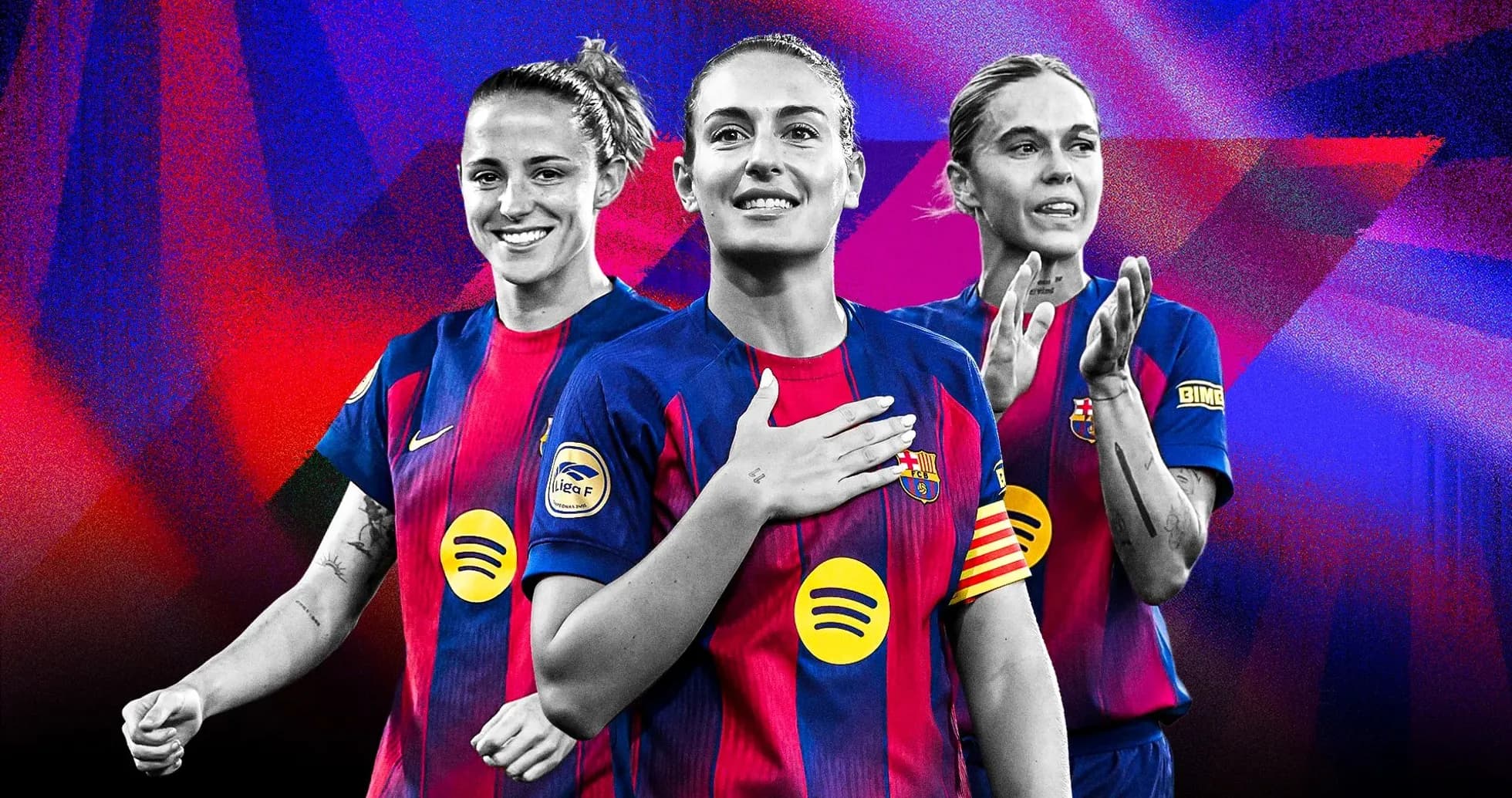
Losing Alexia Putellas, Mapi Leon and Ona Batlle in one sweep is not just a reshaping of a squad; it is the removal of the spine, the aura, the voices that carried the European champions through another dominant season. Between them, Barca are waving off a Ballon d'Or favourite, arguably the best centre-back in the women’s game and a full-back of genuine world-class calibre. Those are not gaps. They are craters.
Yet this club has built an era on knowing what to do when legends walk out the door.
Icons out, questions in
Putellas leaves as more than a midfielder. At 32, with a season so good she may well collect a third Ballon d'Or, she exits as the face of a project, the player who bridged the early years of Barca’s rise with their current supremacy. Leon goes as the defensive general, the left-footed organiser who made chaos look tidy. Batlle departs as the modern full-back prototype: relentless, technically sharp, impossible to ignore in both boxes.
Replacing that level of talent is hard enough. Replacing what they meant is something else entirely.
Barcelona have usually found answers. La Masia has become a conveyor belt unmatched anywhere in women’s club football, churning out players who arrive ready to play Barca’s way. When the academy has not supplied, the transfer market has. The squad has been refreshed, upgraded, recycled. The machine has kept moving.
This summer, though, the mechanics will be under the brightest spotlight.
Money back on the table
Twelve months ago, financial constraints clipped Barca’s wings. The men’s team’s issues under La Liga’s Financial Fair Play rules bled into the women’s side, limiting what could be done in the market and forcing a heavier reliance on internal promotion.
Now the landscape looks different. Hansi Flick’s side have just spent £69 million ($93m) on Anthony Gordon. That kind of outlay sends a clear message: the purse strings have loosened. If the club can sanction that fee on the men’s side, the assumption is obvious – there should be more room to manoeuvre for the women.
Spending, though, is only half the story. Barca must spend well. They are not simply shopping for a right-back, a centre-back and a midfielder. They are shopping for presence.
Because Putellas’ influence went far beyond the passes and the goals.
The captain who carried the next wave
This season, coach Jonatan Giráldez and sporting director Marc Vivés leaned heavily on the club’s youth, by necessity as much as by design. Clara Serrajordi and Aicha Camara, both teenagers, were nudged into regular first-team roles. Martine Fenger, Carla Julia and Adriana Ranera all saw doors open. Sydney Schertenleib, Esmee Brugts, Vicky Lopez and Kika Nazareth were asked to carry more responsibility, more minutes, more pressure.
In that environment, Putellas became the constant guide.
"She's a player who always tries to help other girls, to get the best out of them," Brugts said recently of her captain. "When I talk about the experienced players taking those leading roles, she's, of course, the main example for this. It calms me down a lot to play next to her and she gives me the confidence to play a good game myself."
That is the void no scouting report can fully measure. The dressing-room calm. The training-ground standards. The quiet word to a 19-year-old before a Champions League knockout tie.
Barca now need new voices to fill that silence.
New leaders, same demands
The good news for the champions: they are not short of candidates. Patri Guijarro has long been a reference point in midfield. Aitana Bonmati, the reigning Ballon d'Or winner, already leads by example with her intensity and competitive edge. Irene Paredes brings experience, authority and the natural gravitas of a defender who has seen it all.
This is also a club used to turbulence. Mariona Caldentey, Lucy Bronze, Keira Walsh and Sandra Panos all departed before or during the 2024-25 season. Each exit sparked questions. Each time, Barca answered them on the pitch.
They did not just survive; they dominated, silencing any suggestion that their cycle might be fading.
The core remains world-class. The youth structure remains unrivalled. The trophy cabinet remains open for additions. There will be awkward afternoons and the odd jolt as new combinations settle, but nothing about this feels like the end of an era. It feels like the start of another version of the same relentless machine.
What it means for Spain
The club story bleeds straight into the national one.
Leon is expected to join London City Lionesses, who finished sixth in their first season in the Women’s Super League. Putellas could follow her to the same club. Batlle, meanwhile, is set for Arsenal, fresh from beating Barca in the 2024-25 Champions League final.
For Batlle, the shift looks almost like a straight trade. She leaves a Barca side chasing four trophies every year to join an Arsenal team that will fight on three fronts, with new League Cup rules excluding Champions League participants. The WSL is stronger than Liga F, but the reduction in competitions should balance out the intensity. She will remain a nailed-on starter, just in a different shade of red.
Leon’s move, and potentially Putellas’ too, carries a different weight. London City Lionesses will not be in the Champions League. The schedule will be lighter, the number of high-stakes midweek games far lower than at Barca. The flip side is obvious: the WSL’s weekly grind, with Arsenal, Chelsea, Manchester City and Manchester United on the fixture list, will still test them at a high level.
For Spain, the equation is enticing. Two key players in their 30s, still operating in a top league, but with fewer minutes and less physical load as the 2027 Women’s World Cup approaches? That is a scenario any national coach would welcome.
And back in Catalunya, the ripple effect could be just as positive.
If the gaps left by Putellas, Leon and Batlle open the door for more La Masia graduates – players like Serrajordi, already in the Spain squad for Friday’s clash with England and increasingly assured since her senior debut in October – then La Roja stand to benefit again.
Of the current Spain squad, 11 players are on Barca’s books. Jana Fernandez and Lucia Corrales also came through the club’s system before being sold last summer when finances demanded painful decisions. The production line in Barcelona is not just fuelling a club dynasty; it is underpinning a national team that has already conquered the world.
A summer that shapes a cycle
So the stakes are clear. Barca face a pivotal transfer window, one that will test their recruitment, their belief in La Masia and their ability to evolve without losing their identity. The European champions cannot afford missteps, not with so much quality walking away in a single off-season.
For Spain, though, the outlook is quietly optimistic. Fresher legs for senior stars. Bigger roles for a new generation groomed in the same philosophy. A club in transition that still feeds the national side with elite talent.
The summer will be noisy, the rumours constant, the deals scrutinised. When the dust settles, one question will linger over both Barcelona and La Roja: will this be remembered as the moment the dynasty cracked, or the moment it hardened into something even more durable before 2027?