Arsenal Dominates Coventry 3-0 in Premier League Opener
Under the Friday night lights at the Emirates Stadium, Arsenal opened their 2026 Premier League campaign with a performance that felt less like a first step and more like a continuation of a carefully honed idea. A 3-0 win over Coventry, sealed inside 90 controlled minutes, sent Mikel Arteta’s side straight to 2nd in the table with 3 points and a goal difference of +3, mirroring the authority they showed on the ball and in structure.
Coventry, newly shaped under Frank Lampard and thrown straight into the deep end, leave North London sitting 19th, with 0 points and a goal difference of -3. On their travels so far, they have played 1, lost 1, failed to score, and conceded 3. It is a harsh but honest reflection of the gap in cohesion and quality between the two squads at this early stage.
Arteta’s Blueprint
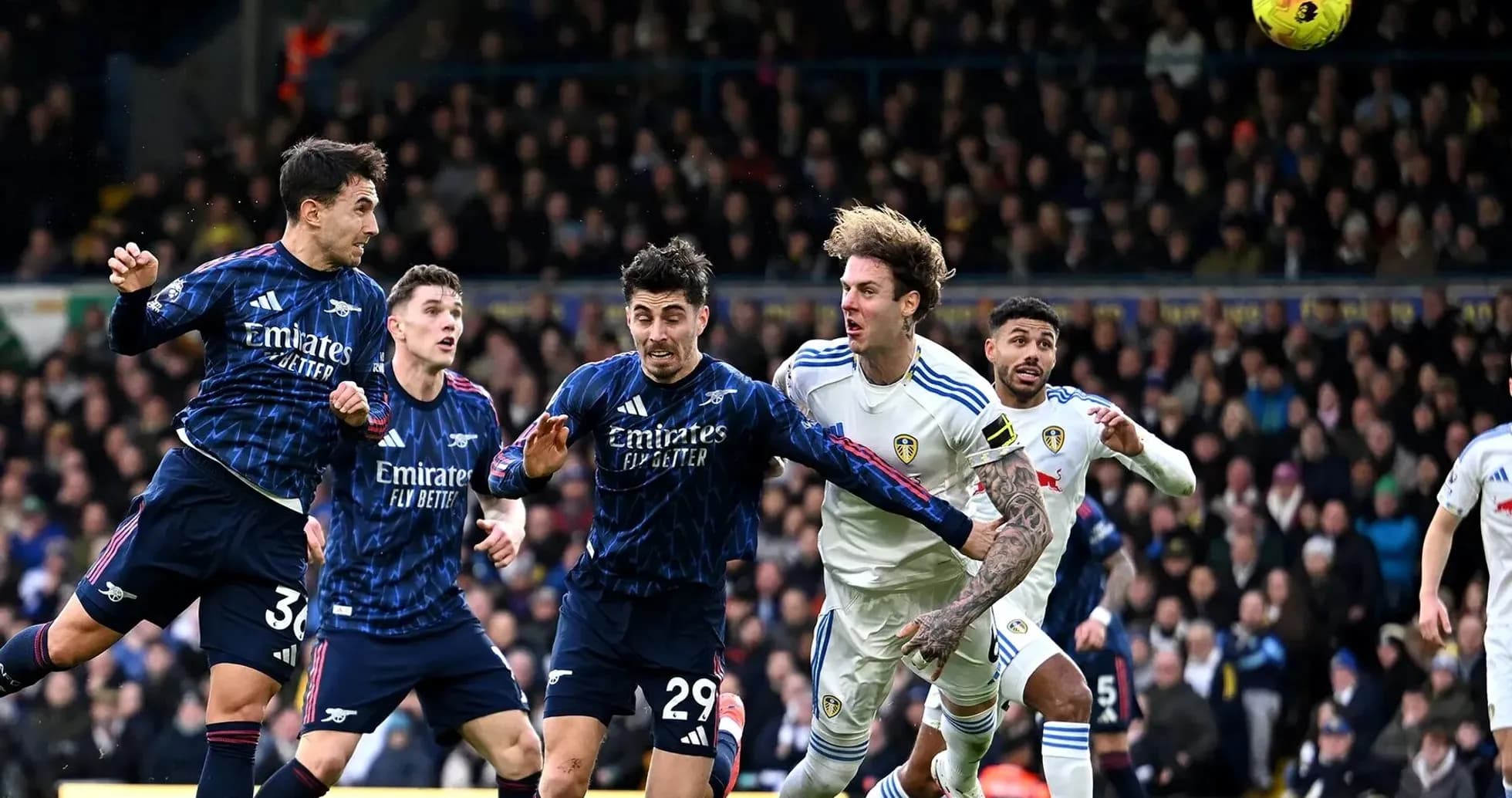
Arteta’s blueprint was instantly recognisable: a 4-2-3-1 that rarely stayed static. David Raya anchored the build-up, with Ben White and Riccardo Calafiori stretching the pitch from full-back. Gabriel and C. Mosquera held a high line, while Declan Rice and M. Lewis-Skelly formed the double pivot that allowed the front four to roam. Ahead of them, Bukayo Saka, Martin Ødegaard and Christos Tzolis floated between lines, feeding Kai Havertz as the nominal striker but, in truth, the first presser and final reference point.
The absences could have unsettled this structure. Arsenal were without W. Saliba, J. Timber and Bruno Guimaraes, all listed as missing the fixture, stripping Arteta of an elite ball-playing centre-back, a flexible full-back and a high-class midfield controller. Instead, the response was to double down on collective mechanisms: White and Calafiori became playmakers from deep, Rice widened his zone of responsibility, and Ødegaard dropped into pockets to act as a secondary regista when needed.
Coventry’s Struggles
Coventry’s own injury list – notably L. Woolfenden and H. Wright – hurt them in quieter but telling ways. Without Woolfenden, Lampard turned to B. Thomas and A. Amenda at the heart of a back four, shielded by M. Grimes in a 4-1-4-1 that was meant to compress the middle third and spring transitions through L. Tchaouna and B. Thomas-Asante. Instead, the structure spent long stretches pinned back into a 4-5-1, with E. Simms increasingly isolated.
The disciplinary undercurrent added another layer. Arsenal’s season data shows a single yellow card so far, arriving between 31-45 minutes – and it belonged to Gabriel, who again walked the line between aggression and risk. Coventry’s caution arrived earlier, between 16-30 minutes, and it was telling that it went to Caleb Marfo Yirenkyi. The 19-year-old, already among the league’s top yellow-carded players, committed 2 fouls in his 62 minutes and looked stretched by Arsenal’s rotations between the lines. That booking effectively dulled Coventry’s ability to step out and disrupt.
Arsenal’s Attack
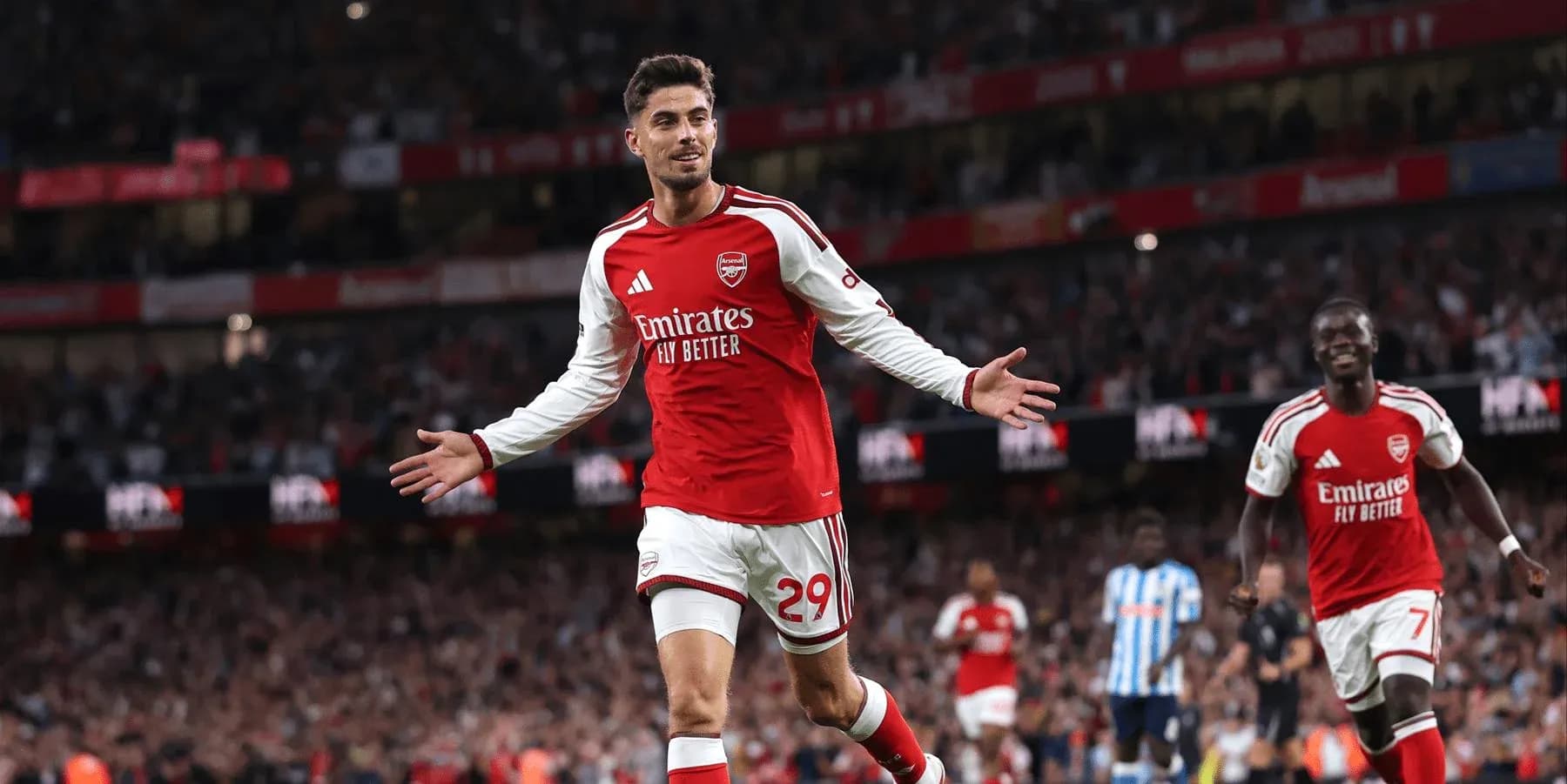
In the “Hunter vs Shield” duel, Arsenal’s attacking trident lived up to billing. Saka, Ødegaard and Havertz each found the net in this match and now sit among the league’s early top scorers with 1 goal each from 1 appearance. Saka’s 34 passes at 88% accuracy, combined with 2 key passes and 1 successful dribble, underlined how hard he is to pin down when he can drift infield. Ødegaard, with 56 passes at 92% accuracy, 3 key passes and 3 tackles, blurred the line between creator and controller, while Havertz’s 10 duels (winning 5) and 90 minutes of non-stop movement gave Arsenal a vertical outlet and a pressing trigger.
Against that, Coventry’s shield looked more like a work in progress. Grimes tried to hold the pivot, but with Tchaouna and Thomas-Asante often dragged wide to cover full-backs, the channels between full-back and centre-back were repeatedly exposed. White’s 78 passes at 94% accuracy and 2 key passes, plus Calafiori’s assist and 24 accurate passes, tell the story: Arsenal’s full-backs became playmakers, and Coventry’s block could not close the angles quickly enough.
The Engine Room Battle
The “Engine Room” battle was just as decisive. Rice and Lewis-Skelly quietly dominated territory, using clean distribution and positional discipline to suffocate Coventry’s attempts to counter. On the other side, Yirenkyi and Onyeka were forced into reactive roles. Yirenkyi’s 13 passes at 76% accuracy and 3 duels (with only 1 won) reflected how little control Coventry could exert; the yellow card only amplified his caution, and with it the team’s.
Tactical Overview
Tactically, the critical intersection of strengths and weaknesses sat in the wide half-spaces. Arsenal’s season numbers show they have, in total, scored 3 goals and conceded none, with an average of 3.0 goals for and 0.0 against at home. Coventry, away, have an average of 0.0 goals scored and 3.0 conceded. Even without explicit minute-by-minute goal distributions, the pattern from this game was clear: Arsenal established dominance early, tightened their grip before half-time, and then managed the second half with the calm of a side fully aware of their superiority.
From a statistical prognosis standpoint, the xG story – while not explicitly provided – would almost certainly mirror the scoreboard. Arsenal’s clean sheet tally now stands at 1 in total, and they have yet to fail to score this season. Coventry, by contrast, have already failed to score once and have no clean sheets. There were no penalties to cloud the picture; both sides remain on 0 taken, 0 scored, 0 missed.
Following this result, Arsenal look every inch a side built for a sustained push at the top, their structures robust enough to absorb injuries and still produce a 3-0 home win. Coventry, meanwhile, leave the Emirates with a clear tactical briefing for the weeks ahead: tighten the midfield shield, protect the full-back channels, and find a way to connect Simms to the rest of the side, or nights like this will become a pattern rather than a one-off.