Spain's World Cup Squad: A Barcelona Dominance
Spain head coach Luis de la Fuente has drawn a hard line before a ball is even kicked in the World Cup: the national badge comes first, and every club crest falls in behind.
His 26-man squad, unveiled with the calm of a man who knew exactly what storm it would provoke, carries a heavy Barcelona imprint and not a single player from Real Madrid. Eight from Barça. None from the Bernabéu. On paper, it is a footballing decision. In Spain, it is never just that.
A World Cup squad with a Clasico edge
Spain arrive at next month’s tournament as European champions and among the favourites to lift the trophy again, 14 years after their triumph in South Africa. De la Fuente has chosen to build around a Barcelona core: Joan Garcia, Pau Cubarsi, Eric Garcia, Gavi, Pedri, Dani Olmo, Lamine Yamal and Ferran Torres all make the plane.
From Real Madrid, there is silence. Dean Huijsen and Dani Carvajal are the most notable absentees, headline omissions in a country where El Clasico fault lines run deep and loud.
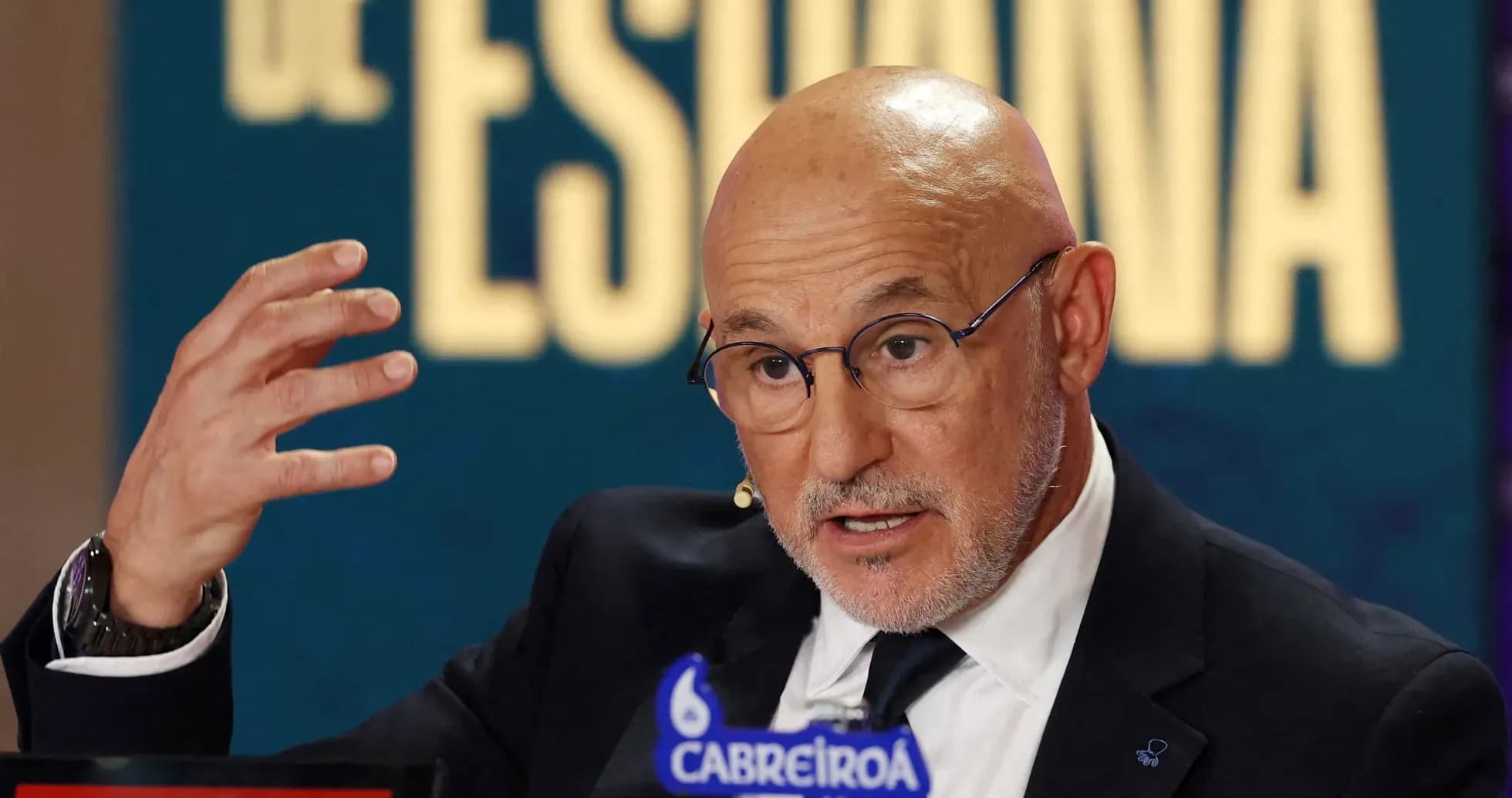
De la Fuente did not flinch when the subject came up during a media breakfast organised by RTVE and EFE. He knew the question was coming. He had his answer ready.
“For me, the greatest team there is – the very greatest – is the Spanish national team,” he said. No club, no matter how decorated, gets near it in his hierarchy.
He pushed away the idea that he risks alienating Real Madrid supporters with a squad list that reads like a Barcelona roll call.
“I don’t look at where players come from or their background,” he insisted. What matters, he said, are “Spanish players who are proud to represent their country’s national team and to be part of a united nation.”
The message was clear: this is not a referendum on club loyalties. This is his Spain.
Selection on the line
Seven of his call-ups come from the Premier League, a nod to the spread of Spanish talent across Europe’s top leagues. Yet the backbone is unmistakably Catalan, and De la Fuente knows every choice will be dissected through that lens.
He framed his decisions in blunt, professional terms.
Sporting criteria, he said, dictated everything. But he did not pretend the job is a science.
“The day I make a mistake, fail to make the right choice, or act in a way that might be beneficial just to get a result, I’m putting my job on the line,” he said.
It was an admission and a challenge rolled into one. He is staking his tenure on this group, on this idea of Spain.
The schedule gives him little margin for error. Spain open Group H against Cape Verde, then face Saudi Arabia and Uruguay. On paper, it is a manageable path into the knockout stages. On the treatment table, it is more complicated.
Managing risk, chasing reward
Lamine Yamal, Nico Williams and Mikel Merino all head into the tournament recovering from fitness issues. They are central to Spain’s attacking structure, and any setback would strip the side of pace, invention and balance.
De la Fuente and his staff have been in constant contact with their clubs.
“We’re in contact with all the clubs,” he said. “We know that these players are in good physical shape; each one is making good progress in their recovery process. I’m very optimistic; I think they’ll be available for the first match.”
Optimism, yes. Blind faith, no.
“If we have to take a risk, mate, we’ll take it in a World Cup,” he said, letting the competitive edge show. Then came the caveat that reveals how he is really thinking.
“Our view goes beyond the first match and also the second. So, if we have to wait a little longer, we’ll wait.”
He wants them fit not just for Cape Verde, but for the weeks that follow, when tournaments are truly won and lost.
Yamal’s moment
At the heart of the excitement – and the concern – sits Lamine Yamal. Just 18, the Barcelona winger is expected to shoulder a significant share of Spain’s attacking threat. The risk is obvious. The reward, potentially era-defining.
De la Fuente, though, sees no trace of fear.
“Yamal is absolutely thrilled and raring to go,” he said. “He’s a very young lad, just 18, but he has a remarkable sense of maturity and knows that this is his moment.”
The coach lingered on that word: moment. It is what World Cups are built on – careers vaulted forward, reputations reshaped, generations marked by a single tournament.
“You have to seize the moment,” he added. “And he knows this is his moment.”
Spain now head into the World Cup with a squad that will ignite debate at home and command attention abroad: Barcelona-heavy, Real Madrid-free, stitched together by a coach who has nailed his colours firmly to the national mast.
The badge, he has said, outranks everything. The next month will show whether that conviction can carry Spain to a second star on it.