Sevilla Edges Real Sociedad in Tense La Liga Clash
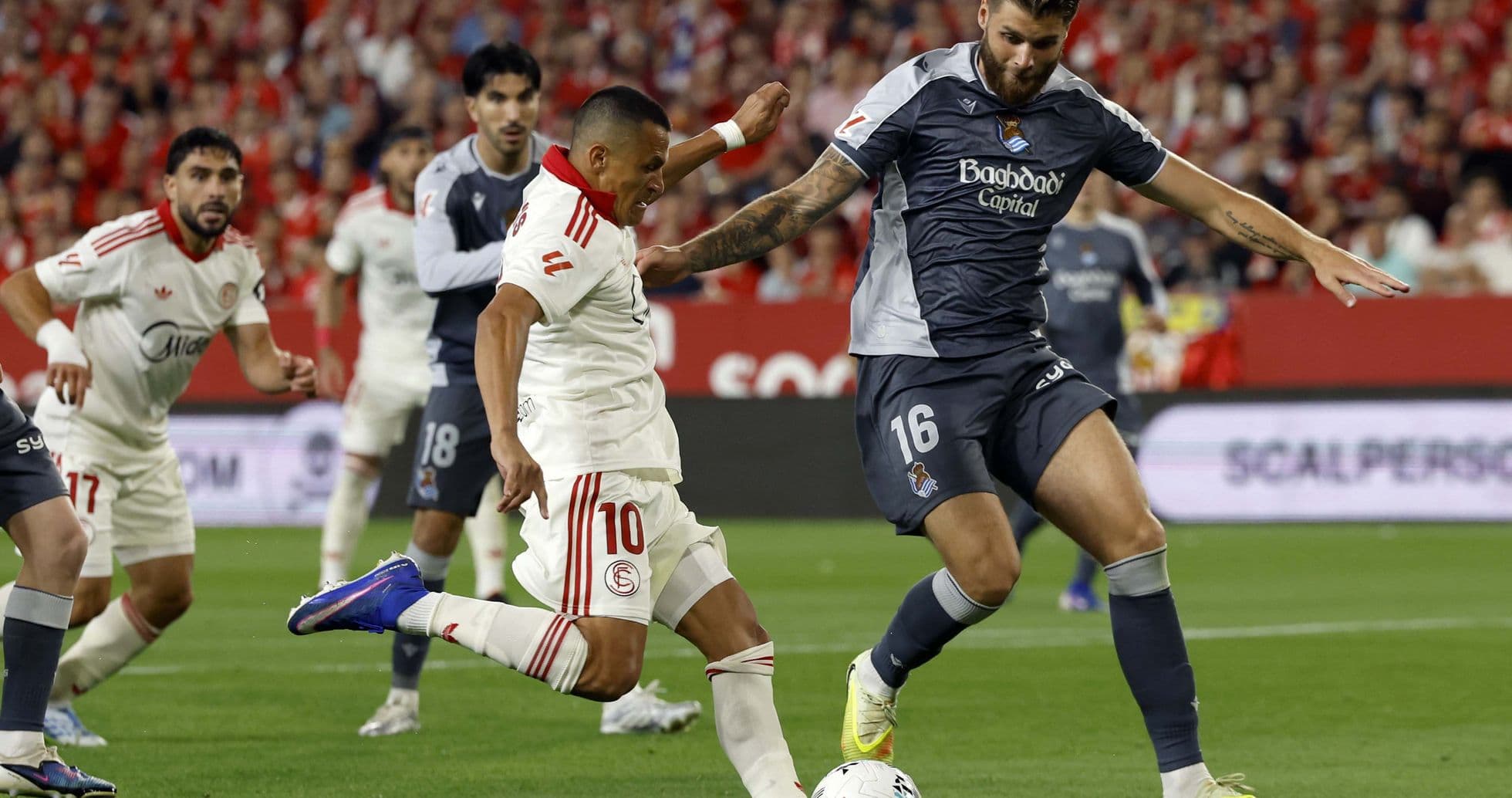
Under the lights of the Estadio Ramón Sánchez Pizjuán, this felt less like a mid-table La Liga clash and more like a survival statement. Sevilla, 17th in La Liga on 37 points heading into this game, edged a 1-0 win over a Real Sociedad side that arrived in Sevilla as Europa League hopefuls in 9th with 43 points. It was a tight, attritional contest, but one that laid bare the tactical identities and fault lines of both squads.
Luis Garcia Plaza set Sevilla up in a 4-4-2 that looked, on paper, conservative; in practice, it was a calculated gamble on verticality and intensity. Ognen Vlachodimos anchored a back four of José Ángel Carmona, Castrin, Kike Salas and Gonzalo Suazo. Ahead of them, a flat but hard-running midfield line – Róber Vargas, Lucien Agoumé, Nemanja Gudelj and Chidera Ejuke – was tasked with closing Sociedad’s passing lanes and springing quickly into space. Up front, Isaac Romero and Neal Maupay formed an awkward, combative front two designed to harass rather than simply finish.
Across from them, Pellegrino Matarazzo stayed faithful to Real Sociedad’s season-long blueprint, rolling out a 4-2-3-1 that has been his most-used structure. Álex Remiro started behind a back four of Jon Mikel Aramburu, J. Martin, Duje Caleta-Car and S. Gómez. Beñat Turrientes and J. Gorrotxategi formed the double pivot, with Ander Barrenetxea and Carlos Soler flanking Pablo Marín behind Mikel Oyarzabal as the lone striker.
The context of the season framed everything. Overall, Sevilla have been porous and inconsistent: 41 goals scored and 55 conceded in 34 matches, a goal difference of -14 that explains why they are hovering just above the drop. At home they have been slightly better, scoring 22 and conceding 23 across 17 games, but the margins are razor-thin. Real Sociedad, by contrast, have a total goal difference of -1 (52 for, 53 against), with a clear split between a strong home attack (32 goals at home) and a more modest return on their travels (20 away goals, 28 conceded).
Those numbers fed directly into the tactical choices. Sevilla’s 4-4-2 was about shoring up a defence that concedes an overall average of 1.6 goals per game, while still finding ways to exploit a Sociedad back line that also allows 1.6 per game overall. The hosts’ season-long flexibility – nine different formations used, with 4-2-3-1 and various back-three shapes – gave way here to a more old-fashioned structure, but one tailored to the personalities on the pitch.
Carmona, the league’s most-booked player with 11 yellows, set the tone at right-back. His profile – 59 tackles, 7 blocked shots, 34 interceptions and 45 fouls committed across the campaign – tells you everything about his edge. He is both an outlet and a risk, the kind of defender who will step out aggressively and either win the duel or leave space behind. On the opposite flank, Suazo offered a more measured, overlapping presence, allowing Ejuke to drift inside and attack the half-spaces.
In central midfield, Agoumé and Gudelj formed Sevilla’s stabilising axis. Agoumé, with 1 goal, 2 assists and 1,199 completed passes at 80% accuracy this season, is the metronome, but he is also combative: 59 tackles, 43 interceptions and 53 fouls committed underline his role as the team’s enforcer. Gudelj, nominally a midfielder, often dropped between Castrin and Salas to create a temporary back three in build-up, giving Carmona and Suazo license to push higher.
Up front, the partnership of Isaac Romero and Maupay was more about disruption than fluency. Isaac’s season numbers – 4 goals, 1 red card, and 2 penalties won but 1 missed – capture his volatility. He runs channels, presses with aggression, and lives on the edge of disciplinary trouble. Maupay, more experienced in his movement, drifted into pockets, linking with Vargas and Ejuke and dragging Caleta-Car and J. Martin into uncomfortable zones.
Real Sociedad’s structure was more recognisably modern. The 4-2-3-1 allowed them to funnel play through Barrenetxea and Soler between the lines, with Turrientes and Gorrotxategi trying to outnumber Sevilla’s double pivot. Barrenetxea, the league’s 20th-ranked provider with 5 assists and 3 goals, is the creative hinge: 42 key passes, 106 dribble attempts with 50 successful, and 655 completed passes at 79% accuracy show a player who can both carry and distribute. His duel with Carmona down Sevilla’s right was one of the game’s central battlegrounds: the winger’s insistence on taking on his man against a defender who thrives on contact but lives on a disciplinary knife-edge.
Ahead of them, Oyarzabal came in as one of La Liga’s deadliest finishers this season. With 14 goals and 3 assists in 30 appearances, 58 shots (34 on target) and 6 penalties scored from 6 taken, he is the pure “Hunter” in this matchup. His movement between the lines was designed to target Sevilla’s soft underbelly: a team that concedes an average of 1.4 goals at home, often when their full-backs are caught high and their centre-backs dragged wide.
The “Shield” he ran into was a Sevilla defence that has quietly shown resilience in certain phases. Six clean sheets overall – split evenly between home and away – may not sound like much, but for a side with such a negative goal difference, it points to a capacity to lock games down when the structure holds. Vlachodimos, protected by a narrow back four and a deeper Gudelj, was less exposed than Sevilla’s season-long numbers might suggest.
In the “Engine Room”, Agoumé’s duel with Turrientes and Gorrotxategi was about tempo and territory. Agoumé’s 26 key passes and willingness to step into tackles made him the pivot of Sevilla’s transitions. Every time he broke up play, Vargas and Ejuke were primed to sprint into space, aiming at a Real Sociedad side that, on their travels, concedes 1.6 goals per match and has kept only 1 away clean sheet all season.
Discipline was always going to be a hidden storyline. Sevilla’s yellow-card distribution shows a pronounced late-game surge: 19 yellows in the 76-90 minute window, 19.79% of their total. Real Sociedad’s own peak comes slightly earlier, with 22.22% of their yellows between 46-60 minutes. That pattern suggested a second half increasingly shaped by fatigue and risk-taking. Both sides also carry red-card threats: Sevilla through Isaac’s single dismissal this season, Sociedad through Brais Méndez’s red and his 43 fouls committed. Even from the bench, Méndez represented a combustible wildcard for Matarazzo.
Injuries and suspensions carved out tactical voids on both sides. Sevilla were without M. Bueno (knee), Marcao (wrist) and D. Sow (suspended for yellow cards). The absence of Marcao, in particular, removed a natural left-sided centre-back, forcing Salas and Castrin to shoulder greater responsibility in aerial duels and first contacts. Sow’s suspension stripped Garcia Plaza of a dynamic runner in midfield, increasing the burden on Agoumé to cover ground and break lines with his passing.
Real Sociedad’s absentees – G. Guedes (toe), J. Karrikaburu (ankle), A. Odriozola and I. Ruperez (both knee) – limited Matarazzo’s options for late attacking reshuffles. Without Guedes’ direct running or Karrikaburu’s penalty-box instincts, the coach leaned heavily on the starting quartet of Barrenetxea, Soler, Marín and Oyarzabal, with the likes of O. Oskarsson, Takefusa Kubo and Wesley held in reserve as different profiles of chaos from the bench.
Following this result, the statistical prognosis for both squads diverges. Sevilla’s narrow win does not erase an overall average of 1.6 goals conceded per game, but it reinforces a narrative: at home, with a compact 4-4-2 and a ferocious right flank led by Carmona and Vargas, they can grind out results. Their perfect penalty record this season – 5 scored from 5, with no misses – adds another weapon in tight games, especially in the high-pressure late phases where they so often collect cards.
For Real Sociedad, the defeat is a reminder that their away profile remains fragile. Scoring an average of 1.2 goals on their travels while conceding 1.6 leaves little margin for error, even with an elite finisher like Oyarzabal and a creator of Barrenetxea’s calibre. Their tactical framework is sound, but without sharper defensive concentration and more ruthless exploitation of opponents’ late-game nervousness, their push for Europe will continue to be undermined by nights like this in Sevilla – nights where the Hunter finds the Shield thicker and more stubborn than the season’s numbers might have suggested.