Sevilla's 2–1 Victory Over Espanyol: A Tactical Analysis
Under the late-afternoon light of the Estadio Ramón Sánchez Pizjuán, Sevilla and Espanyol met as neighbours in the La Liga table but with very different emotional trajectories. Following this result, Sevilla’s 2–1 home win in Round 35 felt like a small act of defiance against a season that has often dragged them down; Espanyol’s defeat, by contrast, was another step in a worrying slide.
I. The Big Picture – Two flawed sides, one sharper edge
The table frames the story. Heading into this game, Sevilla sat 13th on 40 points with a goal difference of -13, built from 43 goals scored and 56 conceded overall. Espanyol arrived in 14th on 39 points, their own goal difference of -15 coming from 38 goals for and 53 against overall. Two sides with almost identical records, separated by nuance rather than identity.
Sevilla’s seasonal DNA is contradiction. At home they had won 7, drawn 4 and lost 7 from 18, scoring 24 and conceding 24 – a perfectly balanced home profile masking wild swings, from a 4–0 home high to a 0–3 low. Their average of 1.3 goals scored and 1.3 conceded at home underlined that unpredictability.
Espanyol’s identity on their travels was similarly fragile: 4 wins, 5 draws and 9 defeats away, with 20 goals for and 30 against. An away average of 1.1 goals scored and 1.7 conceded painted them as competitive but often overmatched once games stretched.
Against that backdrop, the 2–1 scoreline felt almost pre-written: Sevilla’s chaotic home edge just about trumping Espanyol’s brittle away resilience.
II. Tactical Voids – Who was missing, and what that changed
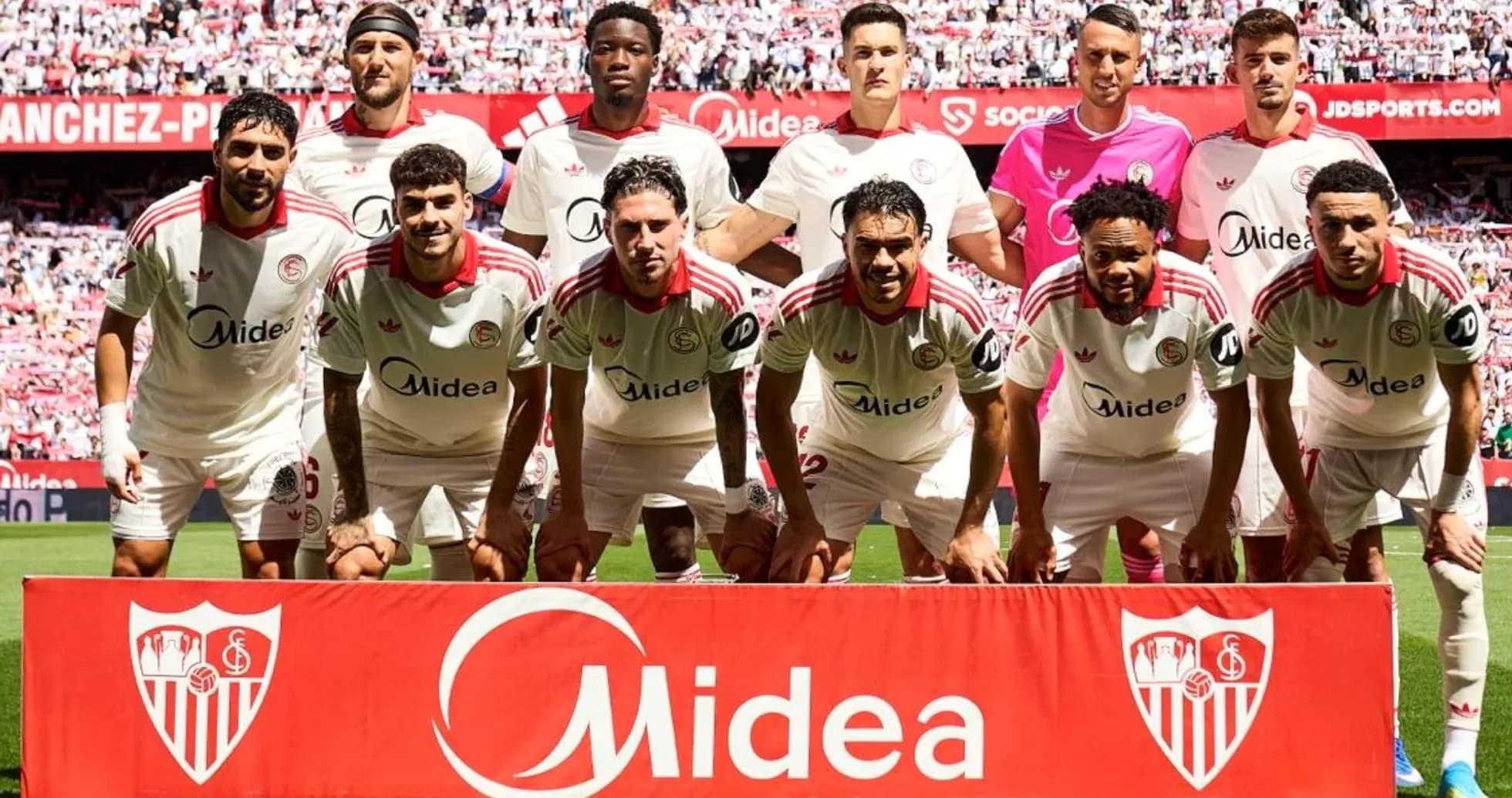
Both coaches had to navigate significant absences. Sevilla were without M. Bueno and Marcao, both ruled out with injuries. The knock-on effect was clear in the back four: Castrin and K. Salas formed the central axis, with José Ángel Carmona and G. Suazo as the full-backs in a 4-4-2. Without Marcao’s presence, Sevilla leaned on organisation and aggression rather than pure authority in the air.
Espanyol’s attacking options were thinned by the absence of C. Ngonge and J. Puado, both sidelined with knee injuries. That pushed R. Fernandez Jaen into the lone striker role in a 4-2-3-1, supported by T. Dolan, R. Terrats and R. Sanchez. It meant fewer explosive one-v-one threats and more reliance on combination play and deliveries.
Discipline hung over this fixture like a storm cloud. Sevilla’s season-long card profile showed a late-game spike: 18.81% of their yellow cards between 76–90' and an even more dramatic 19.80% between 91–105'. Espanyol were no calmer, with 29.89% of their yellows in the 76–90' window and a further 16.09% in 91–105'. This was always likely to be a match where tempers frayed as legs tired.
On an individual level, Sevilla’s back line carried risk. Carmona, the league’s top yellow-card collector with 12 yellows, is an aggressive defender who lives on the edge. In midfield, L. Agoume had amassed 10 yellows, a sign of his willingness to break play up at all costs. For Espanyol, Pol Lozano (10 yellows, 1 yellow-red) and Edu Expósito (9 yellows) added their own combustible energy, while O. El Hilali’s 9 yellows from right-back hinted at a duel-heavy evening down Sevilla’s left.
III. Key Matchups – Hunter vs Shield, Engine Room vs Enforcer
Hunter vs Shield
Without official top-scorer data, the “Hunter vs Shield” narrative turned on structure rather than names. Sevilla’s front two of N. Maupay and Isaac Romero operated against an Espanyol defence that, away from home, had been conceding 1.7 goals per match. L. Cabrera and F. Calero were tasked with holding a line in front of M. Dmitrovic, with O. El Hilali and C. Romero pushed back by the width of C. Ejuke and R. Vargas.
Sevilla’s home scoring average of 1.3 suggested they would create enough moments; the question was whether Espanyol’s back four, which had shipped up to 4 goals in their heaviest away defeat, could withstand sustained pressure. The 2–1 outcome told its own story: Sevilla’s forwards did enough to crack a defence that has rarely travelled comfortably.
Engine Room – Agoume vs Expósito
The central duel was compelling. L. Agoume, Sevilla’s midfield anchor, had accumulated 62 tackles, 5 blocks and 47 interceptions over the season, a classic enforcer profile. His job was to shield a makeshift centre-back pairing and give N. Gudelj licence to step into passing lanes.
Opposite him, Edu Expósito was Espanyol’s creative metronome. With 6 assists and 75 key passes from 925 total passes at 76% accuracy, he arrived in Seville as one of La Liga’s more productive playmakers. His 41 dribble attempts (30 successful) and 40 fouls drawn underlined his ability to carry the ball and invite contact.
This was the “Engine Room” collision: Agoume looking to disrupt, Expósito seeking rhythm. With Sevilla ultimately edging the game, the balance tipped towards the enforcer. The home side’s compact 4-4-2 narrowed central spaces, forcing Expósito to receive deeper and wider, where his influence was easier to contain.
Wide battles and defensive grit
Out wide, Carmona’s duel with Espanyol’s left-sided combinations was central. The Sevilla right-back had blocked 7 shots over the campaign, a testament to his willingness to throw himself in front of danger. On the opposite flank, O. El Hilali’s 68 tackles, 13 blocks and 38 interceptions framed him as Espanyol’s own defensive workhorse, but Sevilla’s use of Ejuke’s dribbling threat and Suazo’s overlaps consistently asked questions.
IV. Statistical Prognosis – xG in the shadows, structure in the light
Without explicit xG numbers, the Expected Goals story has to be inferred from patterns. Sevilla’s overall scoring average of 1.2 goals per match and conceding 1.6, combined with Espanyol’s 1.1 for and 1.5 against overall, suggested a game tilted towards multiple chances and defensive imperfections on both sides.
Sevilla’s six clean sheets overall and Espanyol’s nine hinted that neither defence is hopeless, but both are prone to lapses under pressure. The 2–1 scoreline fits neatly with those season-long profiles: Sevilla’s attack performing slightly above their home average, Espanyol’s defence conceding close to their away norm.
Following this result, the tactical verdict is clear. Sevilla’s decision to lean into a direct, two-striker 4-4-2 at home, with a hard-tackling midfield screen and aggressive full-backs, made better use of their chaotic strengths than Espanyol’s more measured 4-2-3-1. In a contest between two flawed squads, the side that embraced intensity, risk and the emotional surge of the Sánchez Pizjuán emerged with the points – and, for once in a turbulent season, with their game plan vindicated.