Real Monarchs Edge The Town in Tense MLS Next Pro Showdown
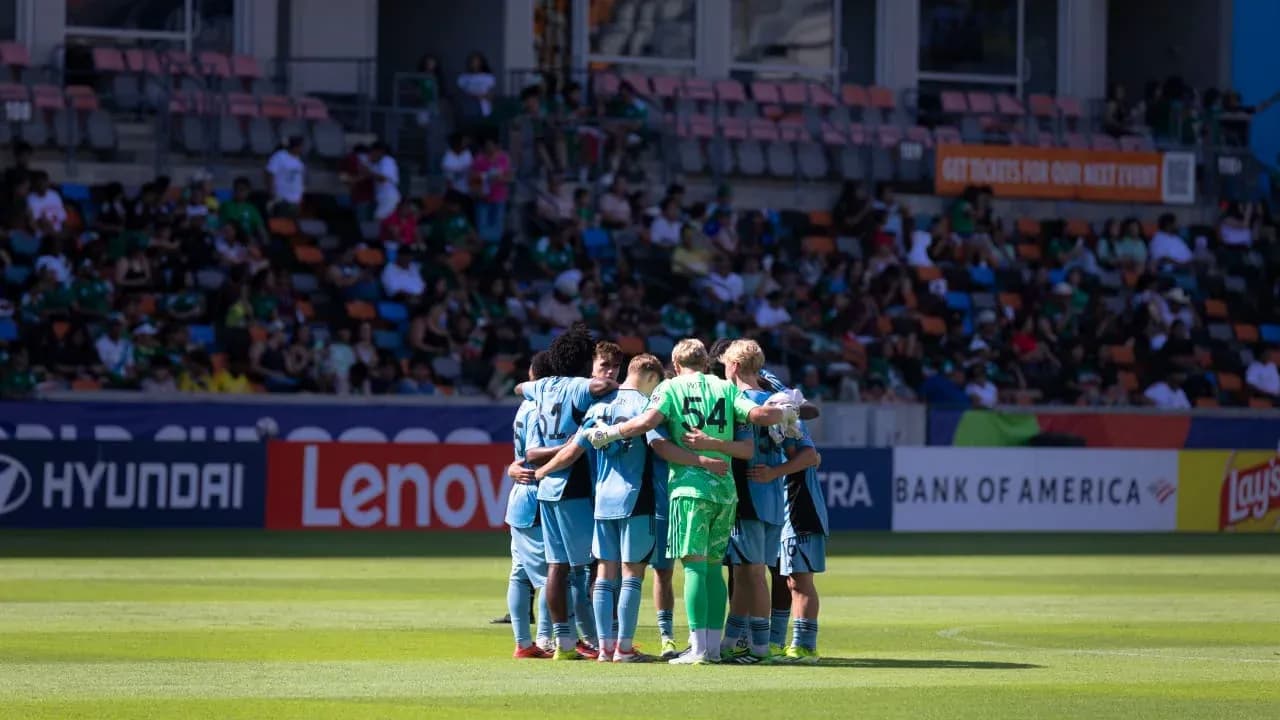
The lights at Zions Bank Stadium had long since taken over from the Utah dusk when this MLS Next Pro group-stage tie between Real Monarchs and The Town finally resolved itself from a chess match into a nerve test. After 120 minutes and a 1–1 draw, the penalty shootout became the ultimate filter of temperament, and it was the home side who edged it 4–3, bending a clash of contrasting footballing identities to their will.
Heading into this game, the league table framed the story. Real Monarchs sat with 12 points from 9 matches, a side defined by volatility: 5 wins, 4 defeats, no draws, and a goal difference of -2, built on 14 goals for and 16 against overall. At home they had been both dangerous and fragile, with 8 goals scored and 11 conceded across 6 matches. The Town arrived as the more complete outfit: 17 points from 9, 21 goals for and only 9 against overall, a goal difference of 12 that underlined their status as one of the league’s most ruthless attacking units. Their home dominance (11 goals scored, 2 conceded in 3 matches) had not quite translated fully on their travels, but 10 away goals in 6 games still marked them as a side that expects to score wherever they go.
I. The Big Picture: styles colliding over 120 minutes
This was a meeting of two very different seasonal profiles. Real Monarchs’ campaign has been defined by high-scoring chaos: overall they average 1.9 goals for and 1.8 goals against per match, with a home average of 1.8 both for and against. They do not do sterile control; they do volatility. The Town, in contrast, are more balanced and clinical: overall they average 2.3 goals scored and 1.1 conceded, with a particularly explosive attacking profile at home (3.7 goals for on average) and a more measured but still effective 1.7 goals per game on their travels, conceding 1.3 away.
On the night, that macro picture condensed into a tight, nervy contest. Real Monarchs took a 1–0 lead into half-time, reflecting their tendency to come out with intent at home. The Town, used to imposing themselves, were forced to chase, and eventually dragged the game level by full-time. Extra time brought more fatigue than fluency, and the match slipped inevitably toward penalties, where the psychological baggage of each team’s season came into play.
II. Tactical Voids and Discipline: walking the disciplinary tightrope
With no official absentees listed, both coaches had their core groups available. Mark Lowry set out Real Monarchs with a blend of physicality and verticality, while Daniel de Geer leaned on The Town’s fluid attacking trident and mobile midfield.
Across the season, discipline has been a live wire for both sides. Real Monarchs’ yellow-card distribution shows a propensity for chaos in the middle and late phases: 23.81% of their yellows arrive between 46–60 minutes and another 23.81% between 76–90, with 14.29% in both the 31–45 and 91–105 ranges. There is also a notable flashpoint: their only red card of the season has come in the 31–45 window, underlining how emotionally charged the final stretch of the first half can be for them.
The Town mirror that volatility in their own way. Their yellows cluster heavily in the final quarter of normal time, with 33.33% between 76–90 minutes and 20.00% in both the 16–30 and 46–60 windows. Like Real Monarchs, their solitary red card has fallen between 31–45 minutes. This shared tendency toward late-half indiscipline made the closing phases of both normal time and extra time feel like walking a disciplinary tightrope, with both teams aware that one misjudged tackle could tilt the entire tie.
III. Key Matchups: Hunter vs Shield, Engine Room vs Chaos
Even without explicit goals and assists data by player, the lineups themselves told a tactical story.
For Real Monarchs, the attacking burden fell on the fluid front line built around Lineker Rodrigues, V. Parker, and A. Riquelme. Rodrigues, with his 70 shirt, often acts as the reference point, while Parker and Riquelme threaten in the half-spaces. Behind them, G. Villa and L. Moisa form the connective tissue, tasked with turning second balls into attacks and protecting a back line marshalled by K. Henry and G. Calderon.
Their “hunter vs shield” dynamic was about whether that front unit could punch through a The Town defence that, heading into this game, had conceded only 10 goals overall, with an away average of 1.3 goals against. The Town’s back line, anchored by A. Cano and N. Dossmann, has been part of a structure that rarely collapses, even when stretched.
In the engine room, the duel between Real Monarchs’ central operators like L. O’Gara and Moisa and The Town’s midfield pairing of D. Baptista and R. Rajagopal was decisive. The Town rely on that axis to feed a dangerous attacking band featuring E. Mendoza, T. Allen, and S. de Flores, with Z. Bohane offering a focal point. Their season-long attacking return of 21 goals, including 10 on their travels, is built on those vertical connections.
Real Monarchs’ defensive profile—16 goals conceded overall, 11 at home—meant this was always going to be a test of their ability to compress space between the lines. The fact they held The Town to a single goal across 120 minutes represents a tactical success for Lowry’s structure, even before the shootout heroics.
IV. Statistical Prognosis and Penalty Nerve
From a statistical standpoint, The Town came into the tie with the more robust underlying profile: more goals scored, fewer conceded, and a steadier form line of LWLWWLWWD compared to Real Monarchs’ streaky WWWWLLLLW. Yet penalties introduced a different metric entirely: temperament under pressure.
Season data added an intriguing subplot. Real Monarchs had taken 1 penalty this campaign and scored it, a perfect 100.00% record from the spot. The Town, by contrast, had 5 penalties, scoring 3 and missing 2, a 60.00% conversion rate that underlined a vulnerability from 12 yards. Those 2 missed penalties this season were not an abstract statistic; they foreshadowed the fine margins that would decide this match.
In the end, the shootout became an extension of that pattern. Real Monarchs, already comfortable in games that swing wildly, approached the spot-kicks with a certain grim familiarity. The Town, usually so free-flowing in open play, carried the weight of their 2 previous misses into the moment. The 4–3 shootout win for the hosts was not just a coin flip; it was a statistical echo of their respective penalty histories.
Following this result, Real Monarchs can claim a statement victory over one of the league’s most potent attacks, reinforcing the idea that their volatility can be weaponised in knockout-style scenarios. The Town, despite their superior seasonal metrics, discovered that in the crucible of 120 minutes and a penalty shootout, the margins between hunter and hunted can be as slim as a single kick from 12 yards.