Klement's World Cup Predictions: Can the Netherlands Win?
Paul the Octopus needed only a tank, two boxes and a dead mussel to become a global phenomenon at the 2010 World Cup.
Joachim Klement needs a spreadsheet.
Four years after Paul called all of Germany’s results correctly in South Africa, the German economist quietly built a statistical model that has done something even the famous cephalopod never managed: it has nailed the last three World Cup winners in a row.
- Germany in 2014.
- France in 2018.
- Argentina in 2022.
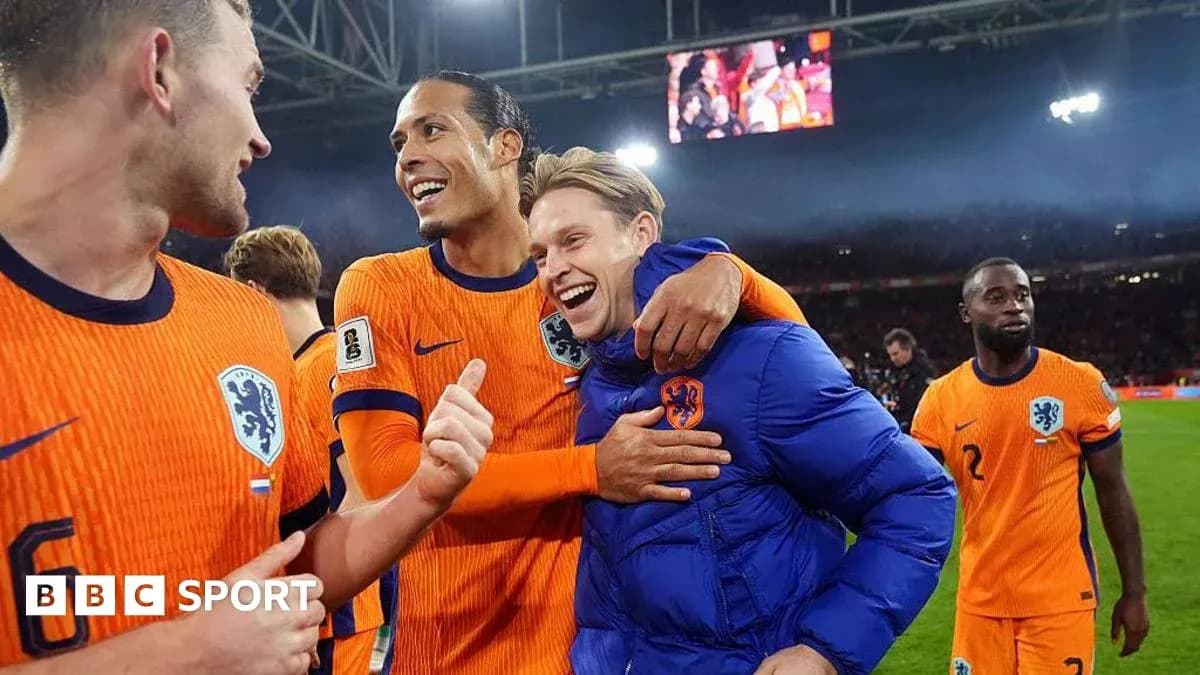
Now the numbers say the Netherlands.
If Virgil van Dijk is lifting the trophy in July, Klement’s unlikely streak will stretch to four from four and his status as football’s most reluctant oracle will harden again.
The reluctant “guru”
Klement is no social-media tipster chasing clicks. He’s a strategist at investment bank Panmure Liberum, a self-described “pessimist” who has lived in the UK for a decade and insists this whole thing began as a joke at his own profession’s expense.
“This started as an exercise in showing the world a hubris of economists who think they can forecast stuff that they actually have no clue about,” he says. “And now it's become an exercise in how, if you're lucky often enough, people will think you're a guru.”
When his native Germany came out on top in Brazil in 2014, the model’s debut success felt like a happy coincidence. Run the numbers again in 2018, he thought, and the illusion would surely collapse.
It didn’t. The model pointed to France. Les Bleus won.
He tried again for Qatar. The data leaned towards Argentina. Lionel Messi finally climbed his mountain and Klement’s inbox filled up.
“Because I was right three times in a row, people now think that this model is unbeatable and that I obviously will have to be right as well next time,” he says.
That next time is here. And the orange shirts of the Netherlands sit at the end of his carefully calibrated path.
Inside the model
Strip away the mystique and Klement’s work is rooted in cold, familiar metrics rather than magic. World Cup success, he argues, is heavily shaped by what he calls “systemic” factors: national population, wealth, climate, Fifa world rankings. The kind of broad, structural advantages that tend to separate serious contenders from plucky stories.
Those inputs map out the 48‑team tournament in striking detail. His latest forecast has Japan springing a shock on Brazil in the second round. Scotland, despite the feel-good narrative, go home at the group stage. England push deep again, only to run into an old scar.
According to the model, Gareth Southgate’s side reach the semi-finals before Portugal stop them – just as they did in 2006. The data does not stretch to “penalties, again”, but the echo is obvious enough for any England fan.
The Dutch, though, emerge as the last team standing.
And yet, for all the precision, Klement keeps hammering the same message: don’t treat this as scripture.
He estimates that those systemic factors explain only about half of what happens.
“The other 50% is luck,” he says. “Every match – especially when you have these high-quality teams playing against each other that are very similar in skills and quality – it really depends on the form of the day, a ref call, a piece of luck in the sense of hitting the post versus the ball going in.
“Things like that are completely unpredictable.”
Forecasts in a fractured world
The World Cup, for Klement, has become a four-yearly escape hatch from a job steeped in market shocks and geopolitical anxiety.
Each time the tournament looms, he dusts off the model and runs the scenarios, not to beat the bookies but to give himself – and his readers – a different kind of chart to follow.
“In particular in 2026, when there are so many crises, wars and things going on, it is something that makes me feel good and hopefully the readers feel good and gives them a little bit of a distraction from all the kind of bad stuff that is going on in the world,” he says.
The irony is that the more he warns people not to believe, the more they seem to.
His quadrennial forecast has grown in reach with every correct pick. Each new success tightens the spotlight and thickens the expectation that he will keep threading the needle in a sport where a deflection, a red card or a sliced clearance can rip up the script in seconds.
Office pressure and Dutch dreams
That expectation follows him into the office. Colleagues now quiz him not just on inflation or bond yields, but on the impact of individual injuries on his World Cup tree.
When Dutch Tottenham midfielder Xavi Simons suffered an ACL injury, the question wasn’t just what it meant for the player. It was: what does that do to the model?
Klement laughs at the idea of one tweak toppling his calculations, but the scrutiny underlines how seriously some around him now take his work.
“I've got several colleagues who bet some money on the Netherlands in response to me publishing that note,” he admits.
So he waits for kick-off with a peculiar mix of dread and curiosity. If the Dutch glide through the chaos and climb to the top step, the myth of the economist oracle will only grow. If they fall early, the spell breaks and the model becomes what he always said it was: an educated guess in a wildly unpredictable game.
“And if the Netherlands get eliminated from the World Cup,” he says, “I think the next day I have to work from home.”
The numbers have had their say. Now the ball, as always, gets the final word.