Kasper Schmeichel Retires: A Warrior Goalkeeper's Journey
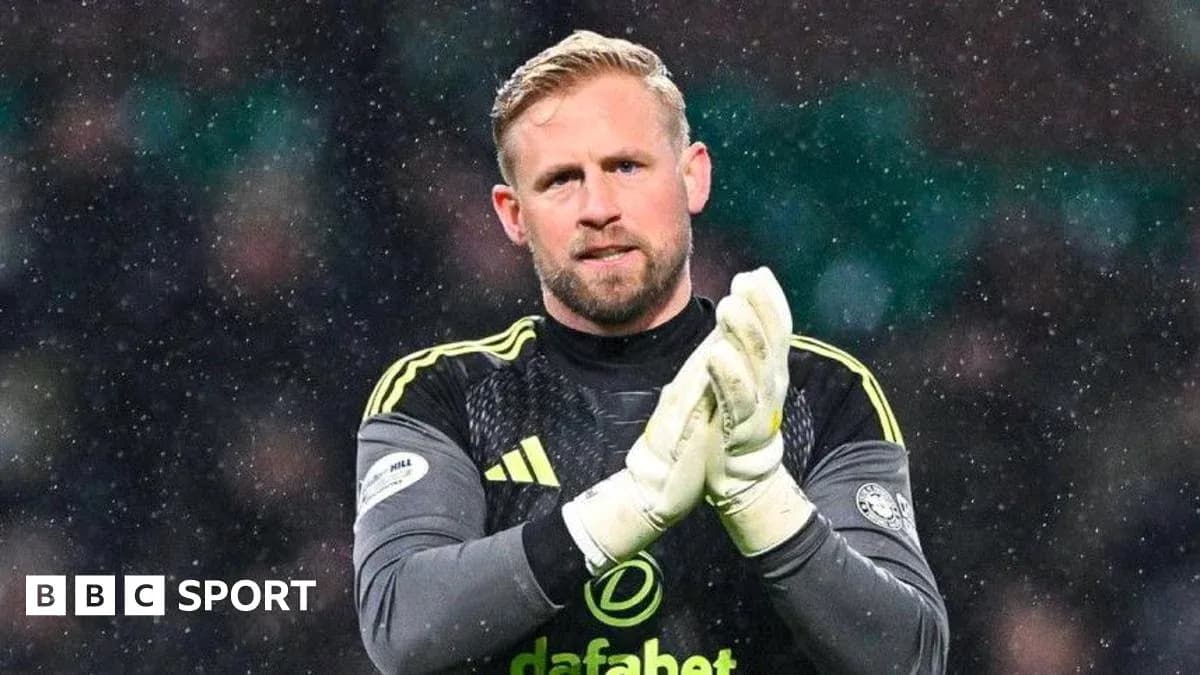
Kasper Schmeichel always looked like the kind of goalkeeper who would have to be dragged off a pitch. In the end, that is more or less what happened.
At 39, the Celtic and Denmark No 1 has retired, his body finally refusing to follow the instructions of a mind still wired for competition. A serious shoulder injury, first suffered on international duty and then brutally reawakened in European battle, has closed the door on a career built on resilience and defiance.
“I believe that now is the right time,” he told TV2, the son of Manchester United great Peter Schmeichel sounding less like a man giving up than one accepting an unavoidable truth.
A shoulder that wouldn’t heal
The injury story stretches back to March 2025, a Nations League quarter-final against Portugal. Denmark had used all their substitutes. Schmeichel went down, damaged shoulder, but stayed on. Of course he did. That has always been his way.
He later admitted he “didn't realise how bad it was back in March”. The warning signs were there. The pain lingered, the joint weakened. Then came the moment that truly changed everything.
In February, during Celtic’s Europa League defeat to Stuttgart, he landed heavily again on the same shoulder. This time there was no disguising it. “I could tell straight away that something was seriously wrong,” he said.
He has not played since.
Surgeons, scans, second opinions – Schmeichel chased every possible route back. He was prepared to face up to a year of rehabilitation if it meant one more stretch at the top. But the verdict from the experts was brutal and final: do not expect to return to top-flight football.
“This is a decision that has been made for me,” he admitted. For a goalkeeper who built his reputation on control – of his box, of his defence, of big moments – that loss of agency cuts deep.
Celtic spell ends on a high, but not on his terms
Out of contract at Celtic this summer, Schmeichel walks away with his second Premiership winners’ medal from two seasons in Glasgow. He featured 39 times for the club this campaign, a commanding presence behind a title-winning side, and a steadying influence in a dressing room that leaned on his experience.
He will not get the farewell he wanted. No final wave to the stands. No last clean sheet, no slow walk off the pitch with the clock running down and the crowd on its feet.
“I think everyone dreams of saying goodbye on the field, but you don't always get what you want,” he said. It was a line delivered without self-pity, just a clear-eyed recognition of how football can be.
Leicester’s captain, Denmark’s constant
Schmeichel’s career has never been about one club or one tournament. It has been about longevity at the highest level, about turning potential into presence.
He began at Manchester City, but it was at Leicester City that he became a symbol. Ten seasons, a captain’s voice, a leader’s aura. The Premier League title in 2015-16 – the greatest domestic fairy tale of the modern era – sits at the heart of his story. So does the FA Cup win in 2021, another improbable chapter written by a group that refused to accept the limits placed on them.
After Leicester came spells with Nice and Anderlecht, then the move to Celtic, where he added Scottish silverware to an already decorated CV.
For Denmark, he became a constant. Schmeichel earned 120 caps, played at the World Cup in 2018 and 2022, and stood in goal as Denmark surged to the semi-finals of Euro 2020, a run soaked in emotion and unity after Christian Eriksen’s collapse. Those nights, those saves, those anthems – they belong to him as much as to anyone in that generation.
What football gave back
If the medals tell one story, his own reflections tell another.
“I've had so much else along the way, so football doesn't owe me anything,” he said. No bitterness, no sense of being short-changed. Just gratitude. “I've had so many opportunities, so many experiences.”
And then the line that reveals what really matters to him now: “What stands out most are the friendships and connections I've made. The moments I've shared with them – for better or worse.”
This is the perspective of a player who has seen everything: the grind of lower-profile loans, the weight of a famous surname, the pressure of being a nation’s No 1, the noise of title races, the silence of treatment rooms.
He leaves having won leagues in England and Scotland, an FA Cup, and the respect of teammates and opponents across Europe. He leaves as one of Denmark’s great modern servants, a goalkeeper who carried his country through some of its most charged nights.
The shoulder finally said no. The rest of him would have played on.
The next chapter will come – in coaching, punditry, or something entirely different. For now, Kasper Schmeichel steps away with a simple, unarguable truth behind him: he emptied the tank.