Bournemouth vs Manchester City: Tactical Analysis of the 1-1 Draw
Bournemouth and Manchester City shared a 1-1 draw at Vitality Stadium in Round 37 of the Premier League, a result that felt very different for each side. Bournemouth led from the 39th minute through E. J. Kroupi and defended that advantage with a compact 4-2-3-1, only to be pegged back by an E. Haaland equaliser on 90 minutes. City’s 4-1-4-1, reshaped aggressively on 56 minutes with a triple change, eventually translated their territorial edge (55% possession, 14 shots, xG 1.68) into a late point, while Bournemouth’s disciplined, transition-focused plan produced 1.99 xG and nearly a signature home win.
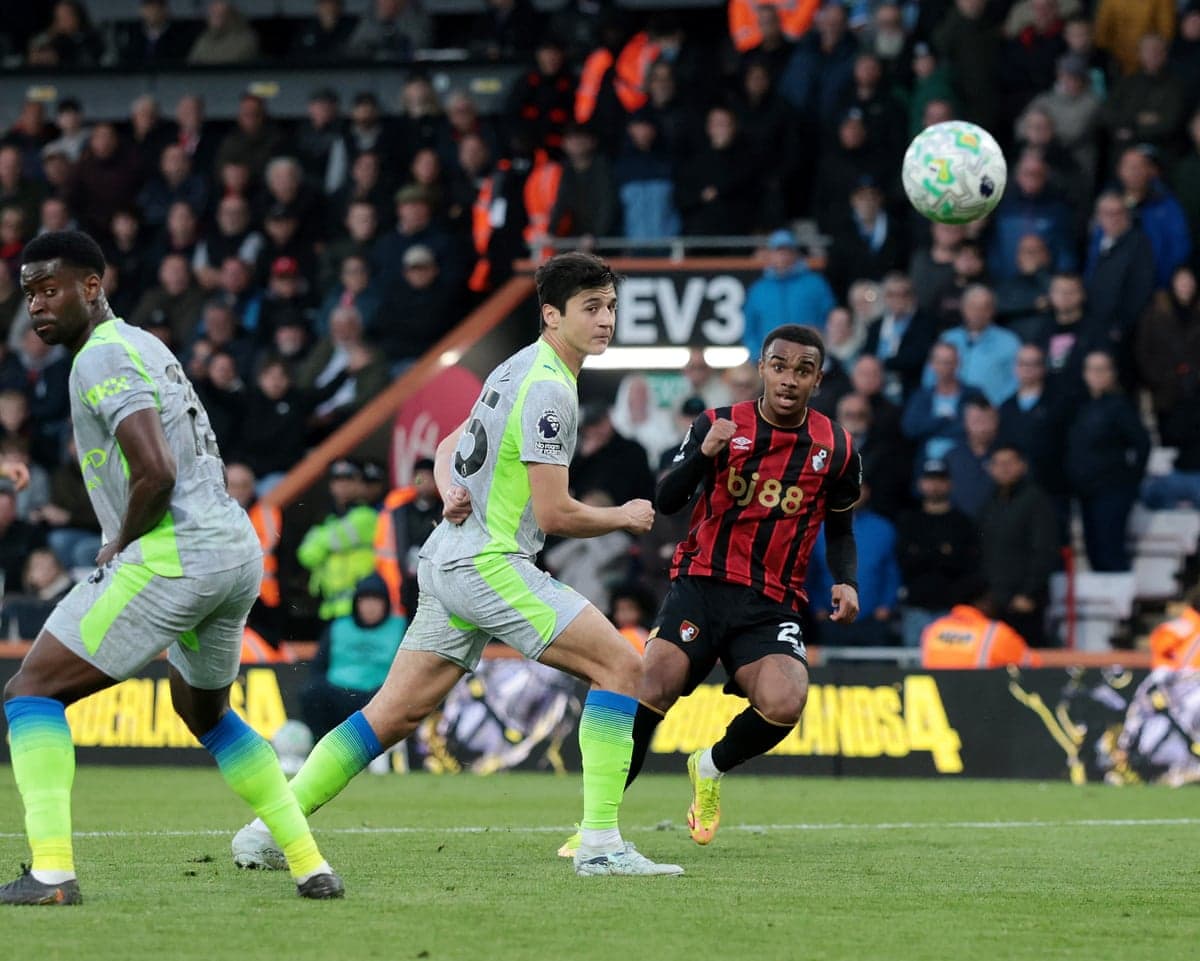
The key scoring moments were sparse but decisive. At 39', E. J. Kroupi (Bournemouth) finished a Bournemouth move, assisted by A. Truffert, giving the hosts a 1-0 lead that they carried into half-time. The visitors’ pressure finally told at 90', when E. Haaland (Manchester City) struck without an assist to level the match at 1-1.
Discipline was heavily tilted towards the hosts, with Bournemouth collecting four yellow cards to Manchester City’s one (total: five). The chronological disciplinary log:
- 37' Tyler Adams (Bournemouth) — Argument
- 59' James Hill (Bournemouth) — Foul
- 90+3' Justin Kluivert (Bournemouth) — Argument
- 90+3' Rodri (Manchester City) — Argument
- 90+6' Adrien Truffert (Bournemouth) — Foul
The late flurry of cards, especially the double Argument cautions for Justin Kluivert and Rodri at 90+3', reflected the tension as Bournemouth tried to protect their lead and City chased the equaliser.
Tactical Overview
Tactically, Andoni Iraola’s 4-2-3-1 for Bournemouth was built on a compact mid-block and fast vertical transitions. The double pivot of Tyler Adams and A. Scott sat in front of a back four of A. Smith, James Hill, M. Senesi and A. Truffert, screening central spaces and forcing City into wider circulation. Bournemouth’s 45% possession with 431 passes, 346 accurate (80%), underlines a plan that accepted less of the ball but sought quality, not volume, in attacks: 10 total shots, with 6 inside the box and an xG of 1.99.
The decisive first-half pattern was Bournemouth’s left-side overload. A. Truffert’s advanced positioning from left-back and M. Tavernier’s inside movements created a lane for E. J. Kroupi between City’s right-back and right centre-back. The goal at 39' came directly from this structure: Truffert’s involvement as the assister shows how Bournemouth targeted City’s right flank, pulling the defensive line across and opening a finishing channel for Kroupi.
Defensively, Bournemouth combined aggressive duels with some risk. Their 16 fouls and four yellows show how often they had to break City’s rhythm, especially once Pep Guardiola’s side accelerated the tempo. James Hill’s yellow for Foul at 59' and Adrien Truffert’s late Foul card at 90+6' both fit a pattern of last-ditch interventions as City pushed numbers forward. Yet the defensive unit largely held: Bournemouth allowed 14 shots but kept City to 10 inside the box and 4 from distance, with D. Petrovic making 3 goalkeeper saves and posting 0.29 goals prevented, indicating a solid but not superhuman performance behind a relatively well-protected box.
City's Tactical Adjustments
Pep Guardiola’s 4-1-4-1 used Rodri as the single pivot behind an attacking line of A. Semenyo, B. Silva, M. Kovacic and J. Doku, supporting E. Haaland. City’s 527 passes, 458 accurate (87%), and 55% possession reveal a familiar territorial dominance, but the first half lacked penetration, with Bournemouth’s narrow block denying easy central combinations.
The match’s tactical hinge came at 56', when City executed a triple substitution that reconfigured their attacking structure:
- 56' P. Foden (IN) came on for M. Kovacic (OUT)
- 56' R. Cherki (IN) came on for B. Silva (OUT)
- 56' Savinho (IN) came on for A. Semenyo (OUT)
These changes injected creativity and one-versus-one threat between the lines and in wide zones. Foden’s ability to receive between Bournemouth’s midfield and defence, Cherki’s drifting into half-spaces, and Savinho’s direct running stretched the 4-2-3-1 horizontally. The effect was to pin Bournemouth deeper, converting their mid-block into a low block for long spells of the second half and steadily increasing City’s box occupation, which ultimately set the platform for Haaland’s 90th-minute equaliser.
Bournemouth's Late Changes
Iraola’s response was to refresh the front four while keeping the defensive structure intact, emphasising fresh legs for pressing triggers and counter-attacks rather than changing shape:
- 76' J. Kluivert (IN) came on for E. J. Kroupi (OUT)
- 84' D. Brooks (IN) came on for Rayan (OUT)
- 89' E. Unal (IN) came on for Evanilson (OUT)
- 90' L. Cook (IN) came on for A. Smith (OUT)
Kluivert and D. Brooks were tasked with carrying Bournemouth up the pitch on the break and contesting second balls, but the late Argument yellow for Kluivert at 90+3' also reflected the emotional load of defending a fragile lead against a mounting City siege.
Statistical Summary
From a statistical perspective, the 1-1 scoreline mirrors a finely balanced contest in chance quality, even if the game state oscillated. Bournemouth’s xG of 1.99 versus City’s 1.68 suggests the hosts carved out slightly better-quality chances relative to volume: 10 shots (2 on goal) for Bournemouth against 14 shots (5 on goal) for City. That Bournemouth led until the 90th minute is consistent with those numbers; City’s late equaliser corrected the scoreboard towards the underlying chance profile rather than overturning it.
Both goalkeepers posted identical goals prevented figures (0.29), with D. Petrovic making 3 saves and G. Donnarumma 2, pointing to defences that generally limited clear, uncontested finishes. The foul count (16 for Bournemouth, 7 for City) and card split (Bournemouth 4, City 1) underline how much more strain the home side’s back line and midfield were under as they protected their lead, especially in the closing stages.
In the end, Bournemouth’s structured 4-2-3-1 and well-drilled transitions nearly delivered a statement win, but City’s bench depth and Guardiola’s aggressive 56' reshaping of the attacking unit ensured that their sustained possession and superior passing accuracy eventually produced the late equaliser their pressure warranted.