Atlético Ottawa Upsets Forge in 2–1 Victory at TD Place
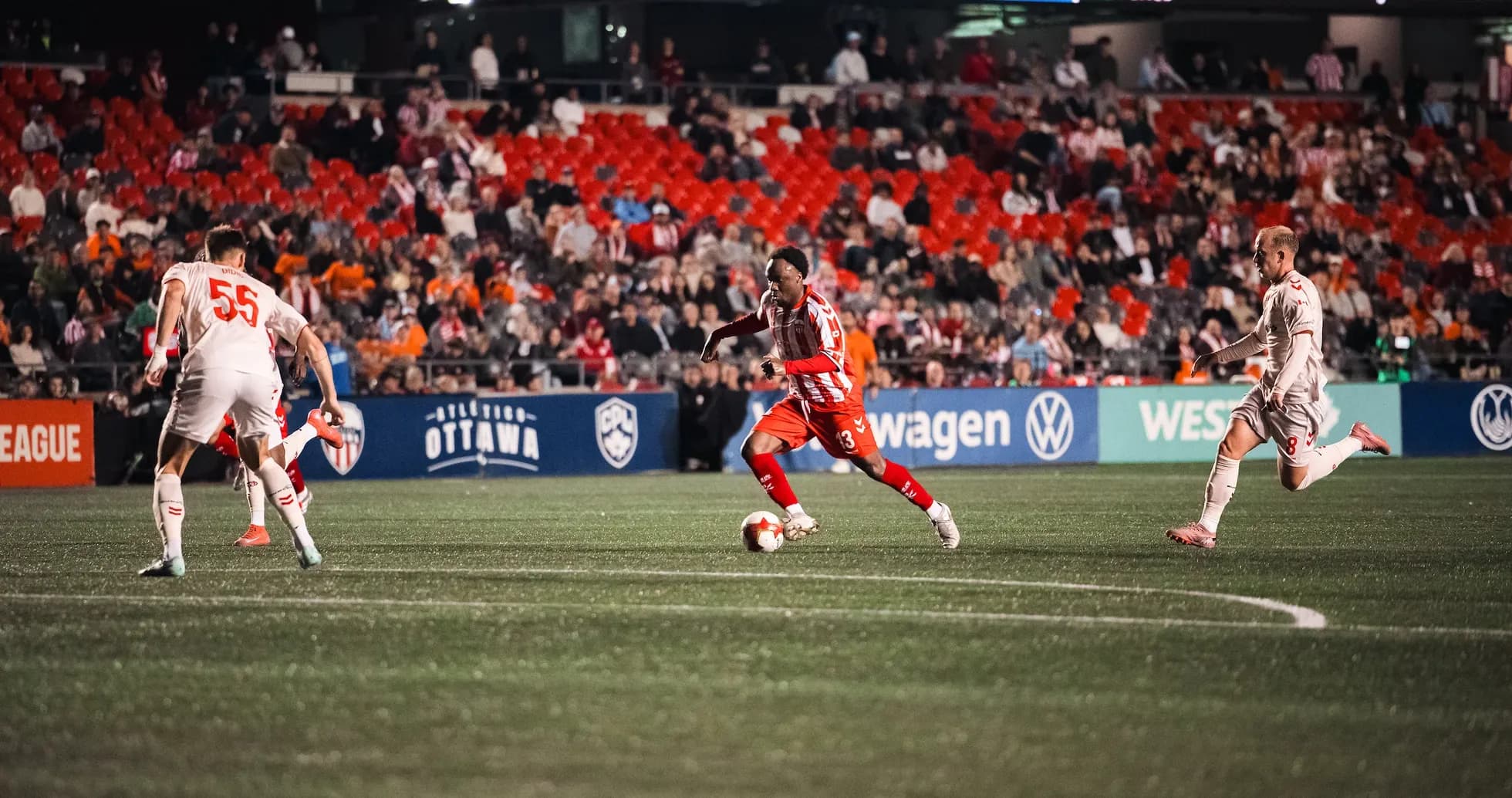
TD Place Stadium had already told the story: a 2–1 win for Atlético Ottawa over Forge, a Group Stage statement in the Canadian Premier League. Following this result, the league table paints a tighter picture than the pre-match narrative ever suggested. Forge arrived as the side in control of the season’s tempo; Ottawa left as the team that bent the match to their late‑game identity.
I. The Big Picture – contrasting blueprints
Across the season overall, Forge have been the more complete machine. They sit 2nd with 16 points from 7 matches, built on a total goal difference of +6 (9 scored, 3 conceded). Their defensive record is elite: just 0.4 goals against on average overall, and on their travels they concede only 0.8 per match. In attack, they carry a steady 1.3 goals for on average overall, rising to 1.5 away.
Ottawa, in contrast, are more volatile. They are 4th with 10 points from 7, with a total goal difference of -4 (7 scored, 11 conceded). But that number hides a split personality. At home they are unbeaten: 3 matches, 2 wins, 1 draw, with 4 goals for and only 2 against. On their travels they have lost 3 of 4, conceding 9. TD Place is not just a venue; it is a shield.
Their seasonal DNA is written in the timing of their goals. Overall, Ottawa score late: 62.50% of their goals come in the 76–90 minute window, with another 25.00% between 61–75. Forge are similar, but more evenly spread: 22.22% in each of the 16–30, 46–60 and 61–75 ranges, and a final 33.33% surge from 76–90. This fixture was always likely to be decided in the closing quarter‑hour, where both sides prefer to land their punches.
II. Tactical Voids – discipline, risk and the missing chaos
There are no explicit absentees listed for either side, so the tactical “voids” come from discipline and structure rather than injuries.
For Ottawa, the disciplinary edge is embodied by Manuel Aparicio. Over the season he has collected 3 yellow cards, and his bookings tend to mirror the team’s emotional spikes: Ottawa’s yellow card distribution peaks between 46–60 minutes at 30.77%, then remains high through 76–90 and 91–105, each at 23.08%. This is a team that grows more combative as matches open up.
Forge’s risk profile is different. Their yellow cards cluster between 46–60 (33.33%) and 31–45 (22.22%), and they have already seen a red card in the 46–60 window this season. That red came from the same stretch where their defensive focus can wobble: they concede 33.33% of their goals in each of 46–60, 61–75 and 76–90. The middle third of the game is where Forge flirt with chaos.
In a match that ended 2–1, it is easy to imagine that the turning points arrived precisely in those windows: Ottawa’s late‑surge DNA against Forge’s tendency to concede in the second half.
III. Key Matchups – Hunter vs Shield, Engine Room vs Enforcer
Hunter vs Shield was written around Brian Wright and a Forge back line that, overall, barely concedes. Wright, with 2 league goals from 7 shots (2 on target) and a perfect penalty record this season (1 scored, 0 missed), is Forge’s most direct threat. His movement between the lines is supported by the creative and industrious Benjamin Paton, who adds 1 goal and 1 assist from deep, with 4 key passes and 14 tackles overall.
The Shield, on this night, was Atlético Ottawa’s collective structure and the home‑field version of their defence. At home they concede just 0.7 goals on average, compared to 2.3 away. Daniel Aguilar, one of their more combative figures with 2 yellow cards this season, embodies their willingness to foul and disrupt in key zones. Wesley‑Thomas Timóteo, listed as a defender but comfortable stepping forward, has blocked 3 shots overall and offers an outlet to relieve pressure.
In midfield, the Engine Room battle pitted Aparicio against Forge’s double axis of Paton and Alessandro Aromatario. Aparicio’s numbers are telling: 180 passes at 82% accuracy, 8 interceptions and 6 tackles. He is the metronome and the first presser. Across from him, Aromatario has made 186 passes at 80% accuracy, with 11 tackles, 12 interceptions and 3 yellow cards. He is Forge’s enforcer‑playmaker hybrid, tasked with both breaking lines and breaking rhythm.
This duel in the centre likely decided where the match was played. Ottawa’s late‑goal profile (62.50% of their strikes in the final 15 minutes) suggests a side that can keep games close and then tilt them with fresh legs and vertical runs. Players like Emiliano García and Kamron Habibullah, both impactful in limited minutes, offer precisely that injection: García has 1 goal from just 111 minutes, while Habibullah has already delivered 1 assist and completed all 3 of his dribbles.
IV. Statistical Prognosis – xG by proxy and the tactical verdict
We do not have explicit xG values, but the season data offers a proxy. Heading into this game, Forge’s overall profile—1.3 goals for and 0.4 against on average, with 5 clean sheets—would have suggested a low‑margin Forge edge, especially given their away record of 3 wins from 4 and only 3 goals conceded on their travels.
Yet Ottawa’s home metrics and timing patterns pull the other way. At TD Place they are unbeaten, with 2 clean sheets in total this season and no home defeats. Their goals for average at home (1.3) matches Forge’s overall attacking output, while their goals against at home (0.7) challenges Forge’s ability to create clear chances.
Layer in the minute distributions and a clearer tactical prognosis emerges:
- Ottawa’s offensive peak: 76–90 (62.50% of goals).
- Forge’s defensive weakness: a flat but vulnerable 46–60, 61–75 and 76–90, each accounting for 33.33% of goals conceded.
The critical intersection is that final quarter‑hour, where Ottawa’s game plan is explicitly designed to climb in intensity, while Forge’s defensive wall finally shows cracks. Over 90 minutes, that dynamic tilts the expected balance of chances toward Ottawa late, even if Forge might shade the early‑game territory and possession.
Following the 2–1 result, the numbers and narrative align: Forge remain the more stable, xG‑friendly project across the season, but at TD Place, against a side whose entire attacking identity is built on late surges and emotional spikes, their defensive solidity was always going to be stress‑tested. Ottawa passed that test, bending a superior statistical profile to their home‑field script—and reminding the league that in this matchup, the final 15 minutes are everything.